Yamaha RX300A and RX500A get AVENTAGE anti-resonance tech
A genuine trickle-down moment worth paying attention to
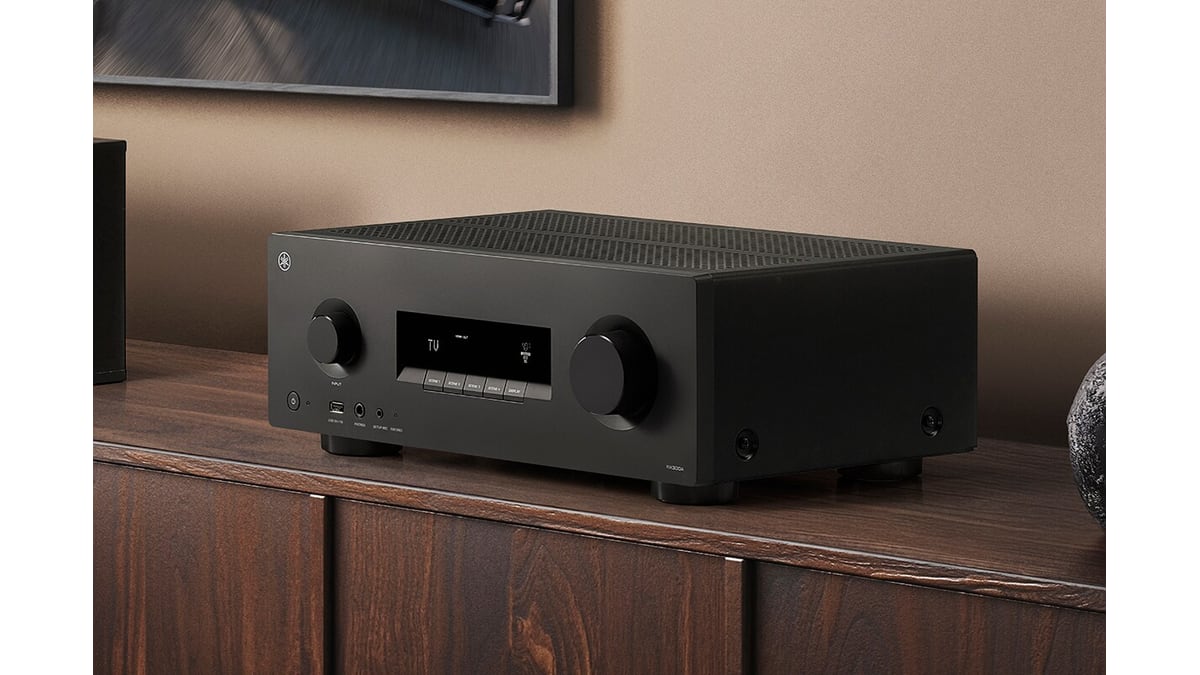
Yamaha announced the RX300A and RX500A on 12 May 2026, and at first glance the press release reads like every other entry-level AV receiver refresh: modest channel counts, Dolby Atmos support, HDMI 2.1, the usual checklist. But buried in the feature list is something that made me sit up. Both models inherit the A.R.T. Wedge anti-resonance foot from Yamaha's premium AVENTAGE line. That detail matters more than it might appear, and it's the reason this announcement deserves real analysis rather than a quick news blurb.
Trickle-down in hi-fi is a phrase that gets thrown around loosely. Usually it means a brand has used a vaguely similar circuit topology or slapped a heritage badge on a budget product. What Yamaha has done here is different. A specific, proprietary mechanical isolation solution, developed for flagship hardware, has been transplanted directly into receivers priced at US$399.95 and US$599.95. That's the kind of engineering decision that suggests someone in Yamaha's product team actually cares about what the thing sounds like sitting on a shelf, rather than just what it measures on a test bench.
Below is what's on offer, why the A.R.T. Wedge matters at this price point, and what Australian buyers should keep in mind before getting too excited. Yamaha's own corporate site is the place to confirm final specifications.
What are the RX300A and RX500A, exactly?
RX300A: the accessible Atmos starter
The RX300A is a 5.2-channel receiver rated at 70 watts per channel, available from June 2026 at a US retail price of US$399.95. It supports Dolby Atmos and carries an HDMI 2.1 implementation that handles 8K/60Hz and 4K/120Hz passthrough, along with Variable Refresh Rate (VRR) and Auto Low Latency Mode (ALLM). HDR format coverage is comprehensive: HDR10+, Dolby Vision and HLG are all passed through without issue.
What the RX300A does not have is onboard streaming. No Wi-Fi, no Ethernet audio. It's a pure AV switching and processing hub that relies on your source devices or TV to handle network content. For a lot of buyers assembling a first proper home cinema, that's a perfectly reasonable trade-off at this price tier. You're not paying for functionality you may already have covered by a smart TV, Apple TV 4K or streaming stick.
RX500A: the more complete package
Step up to the RX500A and the channel count rises to 7.2, DTS:X joins Dolby Atmos in the object-based audio format roster, and critically, Wi-Fi and Ethernet streaming are included. US retail sits at US$599.95, with availability pushed to September 2026. The same HDMI 2.1 suite carries over (8K/60, 4K/120, VRR, ALLM), and HDR passthrough remains identical across both models.
DTS:X matters if you have a significant disc library or consume a lot of streaming content that arrives in DTS:X. It's not a reason to upgrade on its own, but it rounds out the format coverage. If object audio is still a fuzzy concept, our explainer on Dolby Atmos object audio covers what the format does in a room. The onboard networking puts the RX500A in more direct competition with the broader category of streaming amplifiers and all-in-one systems, even if its core identity is still very much a traditional AV receiver.
Replacing the RX-V385
Both models succeed the RX-V385, a receiver that served Yamaha well as a gateway product but was beginning to show its age against the current HDMI 2.1 and HDR landscape. The RX300A and RX500A represent a genuine generational step, not just a spec refresh with a new model number.
The A.R.T. Wedge: what it is and why it belongs here
The A.R.T. Wedge, short for Anti-Resonance Technology Wedge, is a five-point chassis support system that Yamaha developed for its AVENTAGE series. The concept is straightforward. The chassis of an AV receiver sits on four conventional feet plus a fifth point at the centre of the base, which is the wedge itself. That fifth point suppresses resonance modes that would otherwise build up in the chassis floor during operation, particularly around transformer and capacitor vibration.
Why does this matter in a budget receiver? Because resonance that couples mechanically into a chassis can affect the performance of sensitive analogue output stages and DAC circuitry. It's the same principle that drives audiophiles to spend considerable money on isolation platforms and aftermarket feet: controlling microphonic interference at the source is preferable to trying to compensate for it downstream. Yamaha including this in a sub-US$600 product is a signal that the engineering philosophy behind AVENTAGE hasn't been entirely sacrificed in the cost-reduction process.
Now, I want to be measured here. The A.R.T. Wedge alone doesn't make a budget receiver sound like a flagship. The internal component quality, power supply regulation, and output stage design of the RX300A and RX500A will be operating within constraints that a US$2,000+ AVENTAGE unit simply doesn't face. But it is a meaningful differentiator against competitors at this price point, most of which offer no mechanical isolation whatsoever. In my view that's the sort of detail that separates a product built by engineers who care from one assembled purely to hit a price.
HDMI 2.1 at this price is finally becoming standard
HDMI 2.1 with the full feature set has been a persistent sticking point in the budget AV receiver category. Early implementations in the US$300–$600 tier were often incomplete, with some brands including HDMI 2.1 ports that couldn't handle the full 48Gbps bandwidth, limiting actual 4K/120Hz support or VRR functionality in practice. Yamaha's specification sheet for both new models lists 8K/60 and 4K/120 explicitly alongside VRR and ALLM. That's the feature set PlayStation 5 and Xbox Series X owners have been waiting for at accessible prices. The HDMI Forum and licensing organisation publishes the official feature descriptions if you want to check what a given port should support.
VRR in particular is worth highlighting. Variable Refresh Rate synchronises the display's refresh cycle to the GPU's render output, eliminating screen tearing and reducing input latency. When the AV receiver in the signal chain doesn't support VRR passthrough, the feature breaks. Both the RX300A and RX500A pass it through intact, so gamers can run a console through the receiver and into the display without compromising the experience. That's an important consideration given how central gaming has become to modern lounge rooms.
If you're in the process of building a home cinema from scratch or upgrading an older system, full HDMI 2.1 compliance in the receiver is now something to treat as a baseline requirement, not a premium feature. The RX300A and RX500A meet that bar.
HDR format coverage: all three on the table
HDR10+ from Amazon and Samsung, Dolby Vision from Apple and most premium disc releases, and HLG for broadcast content all pass through both models. This is important because the HDR format landscape has not consolidated the way the industry hoped. Dolby Vision remains dominant on streaming platforms and Ultra HD Blu-ray, but HDR10+ has significant traction on Amazon Prime Video and certain Samsung displays, while HLG is the broadcast standard used by many free-to-air 4K services. Dolby's site explains how Dolby Vision and Atmos are specified.
A receiver that chokes on one of those formats forces workarounds, such as bypassing the receiver for certain sources or adjusting display settings manually. None of that is acceptable in a system designed for effortless operation. Full HDR format support across the board means you can route everything through the receiver without worrying about which content is coming from where.
The streaming gap between models
The absence of Wi-Fi in the RX300A is the sharpest distinction between the two models, and it's worth thinking carefully about whether it matters for your use case. If your receiver is living in a rack behind a TV that already handles all your streaming apps, and your audio sources are primarily disc-based, HDMI-connected, or running through a dedicated network streamer, the RX300A's lack of onboard networking is irrelevant.
But if you want the receiver to function as a hub for multi-room audio, or you're relying on it to pull music from a NAS or a Tidal/Qobuz subscription directly, the RX500A's Wi-Fi and Ethernet integration becomes genuinely valuable. Yamaha's network audio implementation has historically been solid. MusicCast, their whole-home audio ecosystem, works reliably and is well-supported, so you're not getting a token checkbox feature here. If you're weighing services, our comparison of Tidal, Spotify, Apple Music and Qobuz may help.
For buyers who fall somewhere in the middle, it might be worth considering whether a standalone network streamer or DAC feeding the RX300A via analogue or optical makes more financial sense than stepping up to the RX500A. At the respective price points, an RX300A plus a modest streamer could offer more flexibility than the RX500A alone, depending on your priorities.
Channel configuration and real-world Atmos layouts
The RX300A's 5.2-channel configuration handles the most common entry-level Atmos layouts. A 5.1.2 setup with two overhead channels is achievable, covering the basic height layer that separates Atmos from conventional surround. For a smaller room or a second lounge, that's a perfectly capable layout.
The RX500A's 7.2 channels open up a 5.1.4 or 7.1.2 configuration, which provides either more overhead localisation depth or a fuller surround field at ear level. For a dedicated cinema room or a larger open-plan living area, the additional amplifier channels give you more to work with. Pairing either receiver with a capable subwoofer, something in the class of the SVS SB-3000 (check price), would make good use of the dual subwoofer outputs that the .2 designation implies. Placement counts for more than price here, as we explain in why subwoofer placement beats price.
Also, room correction will be essential in either setup. Yamaha's YPAO (Yamaha Parametric room Acoustic Optimiser) has been present in the brand's receivers for years and does a competent job of measuring and compensating for room acoustics automatically. At this price point, it's the primary tool for extracting the best performance from whatever speaker placement constraints your room imposes. For a deeper look at the principle, see our piece on what room correction actually fixes.
What about Australian pricing and availability?
Here's the practical catch for local buyers: no Australian pricing or availability dates have been published as of this writing. The US pricing gives us a reference point, US$399.95 and US$599.95, but the conversion to Australian retail is rarely straightforward. Factor in GST, importer margins, and the exchange rate, and you're typically looking at a 40–55% premium over the US price in AUD terms, though that varies by category and distributor.
A rough estimate puts the RX300A somewhere in the A$700–$800 range and the RX500A around A$1,000–$1,100, but treat those as speculative until Yamaha Australia confirms local pricing. The RX300A's June 2026 availability in the US means Australian stock could arrive in Q3 2026, while the RX500A's September US date suggests a local appearance closer to Q4 2026 at the earliest.
If you're planning a cinema build around either of these units, I'd suggest getting a quote from your local Yamaha dealer to understand the likely Australian price, and factor that into your budget alongside speakers. Our piece on the home cinema budget spending order helps with the split, and our guide to the best standmount speakers is worth a read if you're assembling the full system.
The competitive context
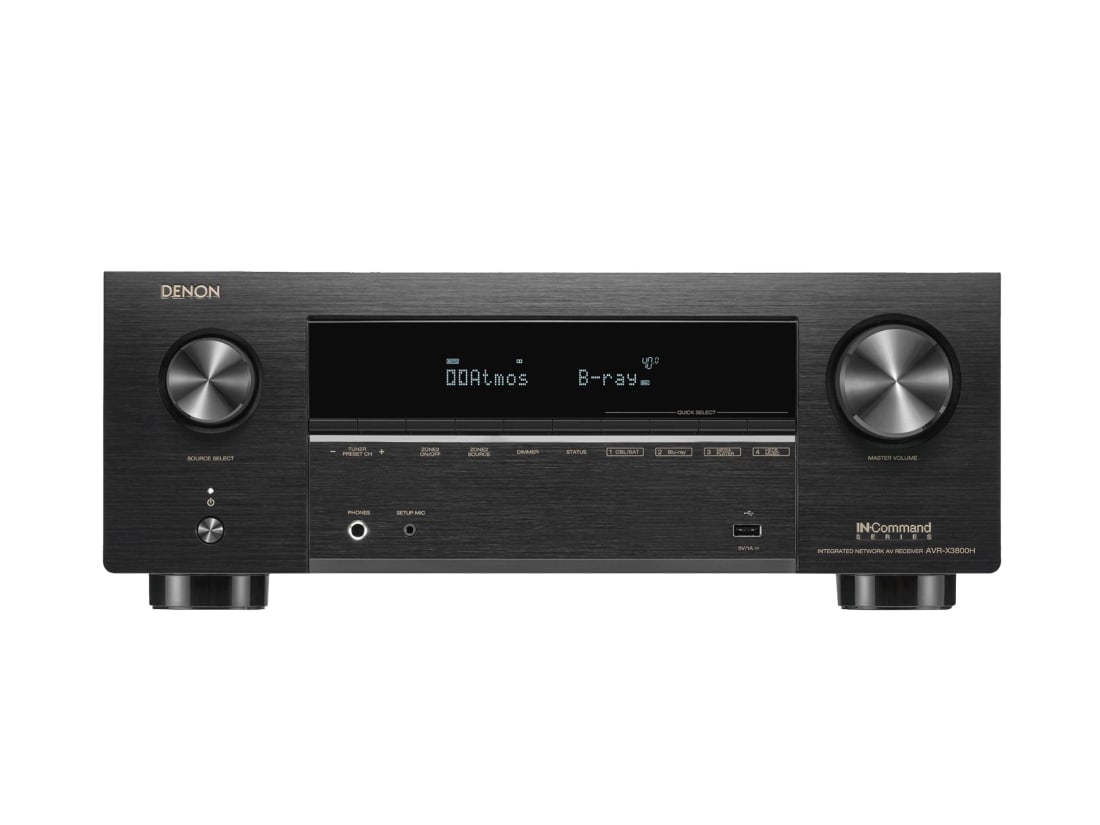
At the US$399–$599 tier, Yamaha's primary competition comes from Denon and Marantz (both under the Sound United umbrella), Sony, and Onkyo's remnants. The Denon AVR-X series has long been the default recommendation in this space. Our own Denon AVR-X3800H review (check price) gives a sense of what the brand achieves at a higher price point, and at the entry level Denon continues to offer solid value with reliable HDMI 2.1 implementation and competent room correction.
What differentiates the Yamaha RX300A and RX500A is primarily the A.R.T. Wedge and, frankly, brand consistency. Yamaha's AVENTAGE-derived engineering philosophy has produced reliable, musically capable receivers for years. Bringing that chassis philosophy downmarket, combined with a complete HDMI 2.1 and HDR feature set, gives both models a genuine identity rather than a me-too specification list.
Whether that translates into a listening advantage over the equivalent Denon or Sony product in a real room can only be judged once review samples are properly assessed in Australia. Until then, the engineering rationale is sound, and the specifications are where they need to be for 2026.
Should you wait?
If you currently own an RX-V385 or a similarly aged entry-level receiver without HDMI 2.1, and you're running a modern TV with a PS5, Xbox Series X, or an 8K display on the roadmap, yes, waiting for or purchasing one of these models makes strong practical sense. The HDMI 2.1 upgrade alone resolves a genuine bottleneck in older signal chains. Buyers on a tighter budget might also consider second-hand AV receivers, though they won't match this HDMI feature set.
If you're building a new system from scratch and you're firmly in the entry-level budget, the RX300A offers a well-specified starting point with proper object-based audio support, gaming-friendly HDMI, and the A.R.T. Wedge as a meaningful differentiator. The RX500A's streaming capability and expanded channel count make it the better long-term investment if your budget stretches.
Keep an eye on Yamaha Australia's announcements for local pricing. The A.R.T. Wedge story is a compelling one, and the open question is whether the rest of the receiver lives up to it.
Common questions
- What is the Yamaha A.R.T. Wedge and why does it matter on a budget receiver?
- The A.R.T. Wedge (Anti-Resonance Technology Wedge) is a five-point chassis support system Yamaha developed for its flagship AVENTAGE receivers. It adds a central fifth support point beneath the chassis to suppress mechanical resonance from transformers and capacitors during operation. Including it on the RX300A and RX500A is unusual at this price tier — most competitors offer no mechanical isolation at this level — and it reflects the AVENTAGE engineering philosophy being extended downmarket rather than simply being rebadged.
- Does the Yamaha RX300A support 4K/120Hz and VRR for gaming?
- Yes. The RX300A includes HDMI 2.1 with 8K/60Hz and 4K/120Hz passthrough, along with Variable Refresh Rate (VRR) and Auto Low Latency Mode (ALLM). This means PS5 and Xbox Series X owners can route their console signal through the RX300A into their display without losing VRR functionality, which is important for eliminating screen tearing in supported games.
- What is the difference between the RX300A and RX500A?
- The RX300A is a 5.2-channel model rated at 70W without onboard streaming, priced at US$399.95 and available from June 2026. The RX500A steps up to 7.2 channels, adds DTS:X alongside Dolby Atmos, and includes Wi-Fi and Ethernet streaming support, priced at US$599.95 with availability from September 2026. Both share the same HDMI 2.1 feature set, HDR format support, and A.R.T. Wedge chassis technology.
- Is Australian pricing available for the RX300A and RX500A?
- As of the announcement on 12 May 2026, no Australian pricing or local availability dates have been confirmed by Yamaha Australia. Based on the US pricing of US$399.95 and US$599.95 respectively, and typical import and GST considerations, rough estimates would place them in the A$700–$800 and A$1,000–$1,100 ranges — but these are speculative until official local pricing is released.

G'day, Jonno here. I spent the better part of twelve years as a custom installer building theatres — everything from a media room squeezed into a Queenslander to a fully blacked-out, acoustically-treated cinema with a hundred grand of gear behind the screen. The thing nobody tells you is that the room matters more than the boxes, and I'll bang on about acoustics until you're sick of me. If you're planning a theatre, talk to me before you spend a cent on speakers.
Ex CEDIA-trained installer; dedicated-theatre and Atmos specialist
More from Jonno Fraser
 Guest Wi-Fi and audio: why visitor networks break multiroomGuest Wi-Fi networks isolate devices by design, which quietly breaks multiroom audio. Here's why it happens and how to fix it properly.
 Ceiling speakers vs upfiring Atmos modules: what actually worksCeiling speakers vs upfiring Atmos modules compared for real rooms: when in-ceiling wins, when upfiring is the better call, and why.
- Why your home cinema amp runs hotter on movies than musicFilm soundtracks push amplifier channels harder and longer than stereo music ever does. Here's why that matters for topology, power supplies and what actually fails.
- Screen-wall speaker placement: building around a UST projector properlyUltra short throw projectors sit right where your centre channel wants to be. Here's how I actually solve that in real theatre builds, not in theory.
 Headphone isolation vs room noise: why your desk setup fights youOpen-back headphones and a noisy home office don't mix. Here's how to actually diagnose room noise before you blame the gear.
 Toe-in and rake: the free speaker tuning most owners never touchToe-in angle and cabinet rake cost nothing but change tonal balance and imaging more than most upgrades. Here's how I set both on site.