How Purifi's 1ET9040BA pushed Class-D to its limits
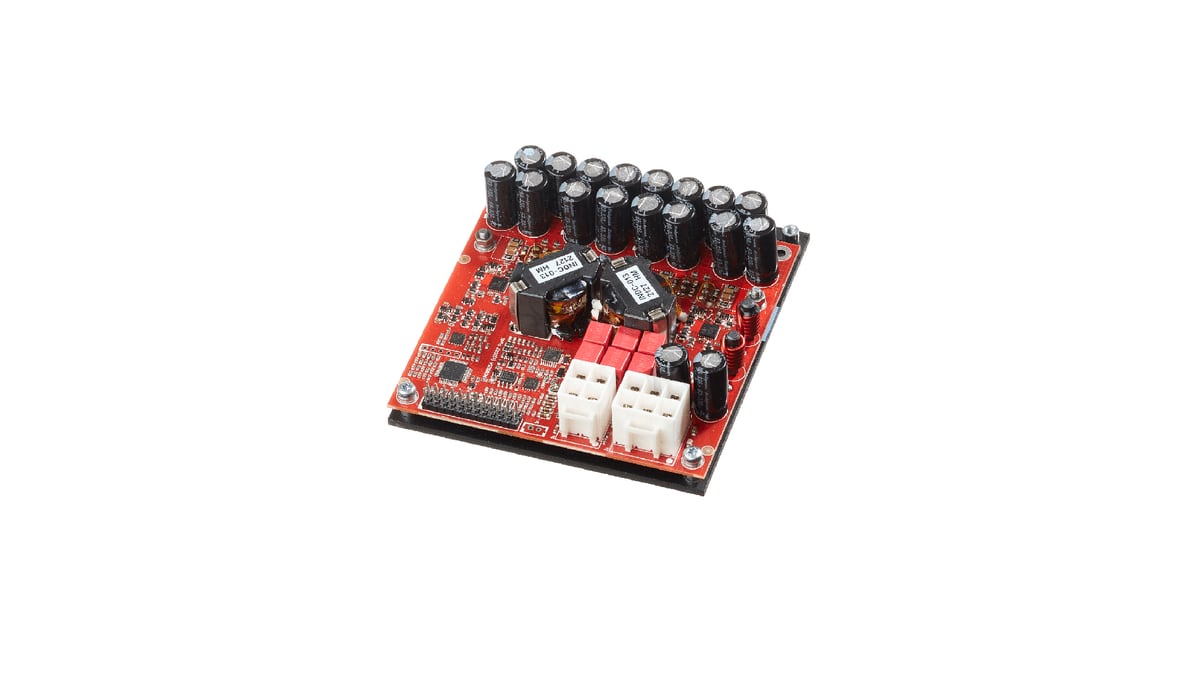
When the benchmark becomes harder to measure than to meet
There is a peculiar problem that emerges when engineering reaches a certain level of refinement: the measuring instrument becomes the weakest link. That is exactly where we find ourselves with Purifi's 1ET9040BA, the flagship 1ET9040BA Eigentakt module, a balanced bridge-tied-load Class-D amplifier stage that the Danish company quotes as delivering total harmonic distortion and intermodulation distortion below 0.00017%, consistently, across all frequencies and at all power levels. Not just at 1 kHz, not just at one watt, not just on a good day. Everywhere.
To put that number in context: 0.00017% is 0.0000017 as a linear ratio. We are talking about a distortion floor that sits at roughly −115 dB relative to the fundamental. The very best audio analysers (the Audio Precision APx555 being the gold standard) can resolve down to around −120 dB under ideal conditions, meaning the margin between what the 1ET9040BA produces and what any test instrument can reliably resolve is vanishingly thin. In practical bench conditions, with real cables, real loads and ambient electrical noise, that margin disappears entirely. The module's distortion is, for most intents and purposes, unmeasurable with equipment available to even the most well-resourced review publications.
That is a remarkable engineering achievement. It is also, as a Stereophile follow-up made clear, a situation that demands we think more carefully about what "state of the art" actually guarantees, and what it does not.
What Purifi's 1ET9040BA actually is
Before we get into the incident that prompted this piece, it is worth grounding ourselves in what Purifi has built. If you are new to the topology, our explainer on amplifier classes covers the fundamentals, and the Wikipedia entry on Class-D amplifiers is a decent neutral reference. The short version is this: Class-D amplification works by switching output transistors on and off at very high frequencies (typically several hundred kilohertz), then filtering the result back down to audio frequencies. The efficiency gains over Class-A and Class-AB are substantial, approaching 90% or higher, but the historical trade-off was elevated distortion, particularly at high frequencies where the switching artefacts could bleed through the output filter.
Purifi's Eigentakt architecture addresses this through what the company describes as a self-oscillating feedback topology with extremely high loop gain maintained well into the audio band. The key insight, and the one that separates Eigentakt from earlier generations of switching amplifiers, is that the feedback loop corrects distortion faster than it can accumulate. If you want the general mechanics of how that works, our piece on negative feedback and damping factor covers it. The result is a module whose distortion does not rise with frequency the way conventional Class-D designs do. The 1ET9040BA maintains that sub-0.00017% figure at 20 kHz just as it does at 1 kHz, which is where the architecture's superiority over earlier implementations becomes audible and measurable.
The Eigentakt range spans four modules: the entry-level 1ET400A, the 1ET6525SA, the 1ET7040SA, and the flagship 1ET9040BA. The BA suffix on the flagship denotes the balanced bridge-tied-load configuration, which doubles the output swing and provides common-mode rejection from the differential input through to the speaker terminals. It is a sophisticated piece of engineering, and it has attracted serious attention from boutique amplifier builders who recognise that starting from a module with a distortion floor this low gives them extraordinary headroom to get everything else right without the amplification stage itself becoming a limiting factor.
The Buckeye incident: a cautionary tale from Stereophile
Buckeye Amplifiers is one of the better-known North American boutique builders working with Purifi modules, and their monoblock, built around the 1ET9040BA, attracted the attention of Stereophile's Kalman Rubinson, who reviewed it in the January 2025 issue. Rubinson's listening assessment was enthusiastic: he described the amplifier as transparent, open and balanced, which is exactly the kind of characterless clarity you would hope for from a module with this distortion floor.
Then came the follow-up, published in the January–February 2026 issue. And here is where things get instructive.
It emerged that the original review samples had shipped with defective modules. The specific failure mode was a distortion characteristic that rose sharply in the top two audio octaves, roughly 5 kHz to 20 kHz, departing significantly from the expected Eigentakt performance curve. Units with properly functioning modules measured as anticipated, with that impressively flat distortion floor the architecture promises. The defective ones did not.
This is a genuinely important finding, and it deserves more than a footnote. Consider the chain of events: a reviewer with serious credentials and a well-regarded listening room assessed an amplifier built around what should be the lowest-distortion module available at any price. His listening impressions were positive. The measured anomaly, distortion rising in the top octaves, was either inaudible to him or masked by other variables in the review chain. It was bench measurement, not listening, that eventually identified the problem.
I want to be careful not to over-interpret this. Rubinson is an experienced reviewer and his listening impressions were not wrong; he was reporting accurately on what he heard. The subtlety of high-frequency distortion, especially when it occurs in a band where programme material tends to have less energy and where our hearing is less sensitive to harmonic structure, means it is entirely plausible that a defective module could pass a listening test while failing a measurement. This is not an argument that listening is unreliable. It is an argument that measurements and listening are complementary disciplines, and that for products operating at these performance levels, you need both.
Quality control at the frontier
There is a broader manufacturing reality here that is worth acknowledging. When you are building modules with distortion specifications this tight, the tolerance stack-up across components becomes acute. The passive components in the output filter, the inductors and capacitors, need to behave consistently. The feedback network needs to be stable across temperature and load. The PCB layout, which affects parasitic inductance and capacitance, needs to be executed precisely. At mainstream production volumes, these variables are managed through tight incoming inspection, statistical process control and burn-in testing. At boutique volumes, which is where most Eigentakt-based products live, the processes can be less rigorous simply because the economics do not support the same infrastructure.
None of this is a criticism specific to Buckeye or to Purifi. It is an observation about the economics of high-performance audio manufacturing at low volumes. A defective module slipping through is not evidence of carelessness; it is evidence of the difficulty of maintaining yield on parts operating at the edge of what is physically achievable. The meaningful question is whether the defect was caught before or after it reached the end customer, and in this case it was a Stereophile bench measurement, not a factory QC process, that found it. That matters for anyone buying into this performance tier.
What this means for prospective buyers in Australia
Purifi-based amplifiers are not widely distributed in Australia through traditional retail channels, but the boutique builder ecosystem that has grown up around the Eigentakt modules is accessible via direct import, and the price-to-measured-performance ratio is genuinely extraordinary. For comparison, a Buckeye unit built around the Hypex NCx500, itself a high-performing Class-D module from a different manufacturer, is available for under $1,100 USD in stereo configuration. That is a reference-class distortion floor at a price that would have seemed implausible a decade ago.
The practical implications for Australian buyers considering this path are:
- Request measurement data. Any reputable boutique builder working with Eigentakt modules should be able to provide bench measurements, specifically THD+N versus frequency and power, for the actual unit you are purchasing. If a builder cannot or will not provide these, that tells you something important about their QC process.
- Understand the warranty situation. Buying direct from a North American or European boutique builder means warranty service involves international shipping. Factor that into the total cost of ownership, and confirm the builder's policy before committing.
- Match the amplifier to a resolving system. An amplifier with a distortion floor this low will not rescue mediocre sources or speakers. The downstream components need to be at a level where the amplifier's transparency is actually useful. If your front end is limiting you, time spent on a better DAC or a more capable streamer will yield more audible return than chasing the last few decibels of amplifier distortion. Our guide to DACs and network streamers covers the options in that space, and our look at where diminishing returns kick in makes the same argument across a whole system.
- Check the gain structure. Ultra-low distortion amplifiers with high sensitivity can be challenging to match with preamplifiers, particularly if the volume control ends up operating in a narrow range at the bottom of its travel. Understanding gain structure in your system is essential, and our article on amplifier gain structure and noise floor goes further. Mismatched gain can mean you are operating your preamp's volume pot at 7 o'clock, where channel tracking is worst and noise floor is relatively elevated.
The measurability problem is real and it is not going away
Let us return to the core technical tension that makes the 1ET9040BA such an interesting case study. When a component's performance approaches or exceeds the resolution of the best available test instruments, we lose the ability to make comparative claims with confidence. If module A measures 0.00015% THD and module B measures 0.00018% THD, and both figures are close to the noise floor of the analyser, we cannot reliably say which is better or whether the difference is real. This is not a hypothetical concern; it is the situation Purifi occupies. The general idea of total harmonic distortion as a measurement is simple, but the practice at these levels is not.
The audio measurement community is aware of this. The ongoing development of lower-noise measurement front-ends, better notch filters and improved residual distortion cancellation techniques in analysers is partly driven by the need to stay ahead of components like the 1ET9040BA. But there is a practical ceiling here. Thermal noise in resistors, the shot noise in semiconductor junctions used in measurement circuits, and the fundamental limits of analogue-to-digital conversion in the analyser's own back-end all set a floor that physics, not engineering, ultimately determines.
What this means practically is that for amplifiers at this performance level, the relevant specifications shift. THD+N at 1 kHz becomes almost meaningless as a differentiator. The metrics that still carry information are things like: THD behaviour at high frequencies and high power simultaneously, noise floor, output impedance across frequency (which affects impedance interactions with speaker loads), channel separation, and, most importantly, consistency between units and over time. The Buckeye episode is a reminder that the last of these, consistency, is where the real quality story lives at this performance tier.
Class-D's trajectory and what comes next
It is worth stepping back and appreciating how far the topology has come. Early Class-D amplifiers, think early-2000s digital amplifiers from companies like Tripath, were genuinely compromised at high frequencies, with distortion profiles that made them unsuitable for high-resolution playback. The improvement across two decades of development has been extraordinary. Purifi's Eigentakt, along with competing high-performance modules from companies like Hypex and Pascal, has effectively closed the gap with the best linear amplifier designs by traditional measures, and in some cases surpassed them.
The remaining arguments for Class-A or Class-AB designs at this performance level are increasingly about subjective preference, system matching and the secondary effects of output impedance and damping factor rather than about distortion performance per se. That is a significant shift in the conversation from where it stood even five years ago. If you are weighing the topologies for your own system, our guide on choosing between valve, solid-state and Class D is a sensible next stop.
For anyone building a serious two-channel system, whether it centres on a standmount like the KEF LS50 Meta (check price) or a more ambitious floorstander, the amplification question is no longer "can Class-D be good enough?" The question is now "which implementation, from which builder, with what QC behind it?" The Purifi 1ET9040BA is the answer to the first part of that question. The Buckeye follow-up from Stereophile is an important reminder that the second part matters just as much.
Why state of the art has to survive manufacture
Purifi's 1ET9040BA is a genuine landmark in amplifier module design. A distortion specification below 0.00017% maintained across all audio frequencies and power levels is not marketing copy; it represents a fundamental advance in switching amplifier architecture that has been independently corroborated by serious bench work. The fact that this performance level is now available in boutique products at prices that would have seemed impossible a decade ago is good news for the serious listener.
But the Stereophile follow-up on the Buckeye monoblock is an equally important data point. At performance levels this extreme, the difference between a working unit and a defective one is not audible in a conventional listening session. It takes careful measurement to find. That places an obligation on builders, reviewers and buyers alike to treat bench data not as a box-ticking exercise but as essential information, the kind that tells you whether the extraordinary engineering in a Purifi module has actually been preserved through manufacture, assembly and shipping to your listening room.
State of the art, it turns out, is not just a specification on a data sheet. It is a process, and it has to work all the way to your amplifier rack.
Common questions
- What makes the Purifi 1ET9040BA different from other high-performance Class-D modules?
- The 1ET9040BA uses a balanced bridge-tied-load configuration with a self-oscillating feedback topology that maintains extremely high loop gain across the entire audio band. This means distortion does not rise at high frequencies the way it does in conventional Class-D designs. Purifi quotes THD and IMD below 0.00017% consistently across all frequencies and power levels — a specification that is at or beyond the resolution limits of the best available audio analysers.
- What went wrong with the Buckeye monoblock review samples, and how was it discovered?
- Stereophile's January 2025 review of the Buckeye 1ET9040BA monoblock used samples that had shipped with defective modules. The defect caused distortion to rise sharply in the top two audio octaves (roughly 5 kHz to 20 kHz), departing significantly from the expected Eigentakt performance. Reviewer Kalman Rubinson found the amplifier transparent and balanced in listening — the anomaly was only identified through bench measurement, confirmed in the January–February 2026 follow-up when properly functioning units measured as expected.
- Is it worth buying a Purifi Eigentakt-based amplifier if I'm in Australia?
- The measured performance-to-price ratio is genuinely compelling — a comparable Hypex NCx500-based Buckeye stereo unit is available for under $1,100 USD. However, Australian buyers should request unit-specific measurement data from any boutique builder before purchasing, understand that warranty service involves international shipping, and ensure the rest of their system — particularly sources and speakers — is resolving enough to make the amplifier's ultra-low distortion floor meaningful. Mismatched gain structure is also a practical concern worth investigating before committing.
- Does ultra-low distortion mean a Class-D amplifier will sound better than a high-quality Class-AB design?
- Not automatically. Distortion figures below 0.00017% are effectively at or below the threshold of audibility in any realistic scenario, so further reductions yield no perceptible benefit on that metric alone. Other factors — output impedance across frequency, noise floor, gain structure compatibility with your preamplifier, and how the amplifier behaves with your specific speaker's impedance curve — remain relevant differentiators between amplifier designs, regardless of topology. The Eigentakt architecture has largely closed the measurable performance gap with the best linear designs, but system matching still matters.

I'm Marcus, and I'll be honest up front: I trust a measurement before I trust my own ears, because my ears lie to me daily. I spent fifteen years designing audio electronics before I started writing about them, so when a brand tells me a number, I want to see the graph. That doesn't make me cold about this hobby — I love a system that disappears as much as anyone — it just means I'll tell you when an expensive box is selling you confidence rather than performance.
Former audio electronics engineer; objectivist; runs the test bench
More from Marcus Vale
 Why your turntable's earth wire isn't optionalTurntable earthing fixes most phono hum problems. Here's how grounding actually works, why it fails, and how to track down a noisy connection.
 Why your AVR runs cool on music but throttles on AtmosAVR thermal throttling explained: why nine-channel Atmos mixes push receivers into protection mode that two-channel music never triggers.
- Subwoofer delay settings: why your AVR's number is a guessAVR auto-calibration estimates subwoofer delay from distance, not timing. Here's how to measure and correct it properly for tighter bass.
- AVR auto-calibration: what Audyssey, YPAO and Dirac actually measureAudyssey, YPAO and Dirac Live all run a mic sweep and spit out numbers, but they're not measuring the same things or fixing the same problems. Here's what's actually happening.
- Cartridge break-in: what actually changes in the first 40 hoursDoes a new cartridge really need 40 hours to "open up"? I measured one to find out what's mechanical fact and what's audiophile folklore.
- DAC output stages: what the chip doesn't tell youThe DAC chip gets all the marketing attention, but the analogue output stage after it does most of the work shaping what you actually hear.