JBL Summit Ama review: a $20,000 standmount with pro-audio DNA
What's happened, and why it matters
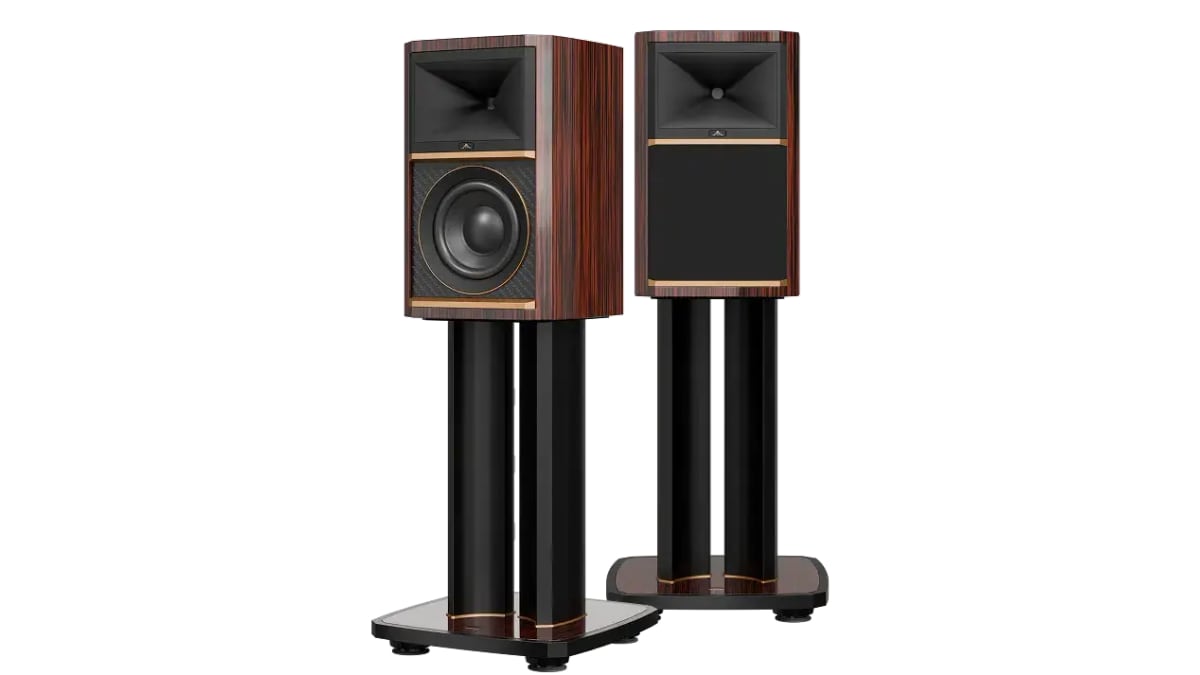
Early 2026 has been a genuinely interesting time for standmount loudspeakers. Amid the usual parade of incremental tweaks and cosmetic refreshes, JBL dropped something that demanded attention: the Summit Ama, a two-way bookshelf speaker priced at US$19,995 per pair — stands included — that draws directly on the brand's deep catalogue of professional audio engineering. By March 2026 it had collected a StereoNET Applause Award, and reviews from What Hi-Fi, StereoNET and Hi-Fi News landed in close succession. That kind of concentrated critical attention tells you the audio press recognised this as something worth arguing about.
And argument is exactly what the Ama invites. At roughly AU$30,000 depending on exchange rates at time of purchase, this is not a casual impulse buy. It sits in a bracket where you're competing with serious floorstanders, active systems and full separates rigs. Justifying a standmount at this price point requires more than attractive cabinetry — it requires a genuinely differentiated engineering story. JBL, to their credit, has one. The question I want to work through here is whether that story translates into a listening experience that makes sense for Australian buyers.
The engineering case: horn loading meets domestic audio
Let's start with what makes the Summit Ama genuinely unusual in the context of domestic high-end audio, because the driver complement is not something you encounter every day in a bookshelf speaker.
The high-frequency unit is JBL's D2815K — a 1.5-inch dual-diaphragm compression driver. The compression driver format has a long history in professional sound reinforcement: it couples a diaphragm to a horn throat to achieve high efficiency and controlled directivity, and it does so with a level of dynamic headroom that conventional dome tweeters simply cannot match. The dual-diaphragm topology, where two diaphragms work in concert, is specifically aimed at extending high-frequency linearity while managing distortion at higher SPLs. This is not a repurposed PA component bolted onto a cabinet — JBL has engineered it for domestic application — but its lineage is unmistakably pro.
That compression driver loads onto an HDI Sonoglass horn. The HDI (High Definition Imaging) horn geometry is something JBL has developed specifically for controlled directivity in listening-room environments, managing horizontal and vertical dispersion in a way that interacts predictably with room boundaries. The Sonoglass material itself is a smooth, non-resonant waveguide surface. The practical upshot is that this speaker has a deliberate, engineered radiation pattern rather than the wide, relatively uncontrolled dispersion you get from a dome tweeter. That matters considerably for how the speaker interacts with your room — more on that in a moment.
Downstairs, an 8-inch HC4 hybrid woofer handles the bass and midrange. Eight inches is a substantial driver for a speaker that qualifies as a standmount, and combined with what JBL claims is a frequency response extending to 25Hz at the low end, this is a speaker that is making serious claims about bass performance without a separate subwoofer. The 33kHz upper-frequency extension speaks to the compression driver's capability well above the audible range, which matters if you're playing back high-resolution material.
The cabinet itself features a carbon-fibre baffle trim — functional as well as aesthetic, given carbon fibre's stiffness-to-weight ratio — and the speaker ships with IsoAcoustics feet integrated into the matching steel-and-aluminium stands. That last detail is worth noting: IsoAcoustics isolation is genuinely effective at decoupling a speaker from its stand and thence from the floor, reducing bass smear and improving image focus. Bundling it as standard rather than as an afterthought is a good call, and it signals that JBL has thought carefully about the complete system rather than just the speaker in isolation.
What controlled directivity means in your listening room
I want to spend some time on the directivity question because it's central to understanding what the Ama is trying to do, and it's not always well explained in mainstream coverage.
Most conventional dome tweeters disperse high-frequency energy relatively widely — broadly omnidirectional at lower treble frequencies, narrowing as frequency rises, but without the deliberate control that a properly designed horn provides. In a typical domestic room, this means a significant proportion of what you hear is reflected energy from side walls, ceiling and rear wall. Room acoustics become deeply entangled with the speaker's perceived tonal balance and imaging. This is why acoustic treatment matters so much: you're trying to manage reflections that the speaker itself has no control over.
A well-designed constant-directivity horn changes the equation. By controlling where the high-frequency energy goes, JBL's HDI geometry can ensure that the on-axis response is more representative of what reaches your ears, and that early reflections arrive with a predictable and manageable character. Properly implemented, this tends to produce a presentation that is less susceptible to room problems in the treble — detail and imaging can be more stable across different listening positions, and the speaker can be placed closer to side walls without the same penalty you'd pay with a conventional tweeter.
The flip side is that horn-loaded speakers have historically carried a reputation for a certain character in the upper midrange and treble — a presence-region forwardness, or a particular kind of rendering of transients and textures. Whether JBL has fully domesticated the compression-driver presentation, or whether some of that pro-audio character remains, is something I'd be keen to assess at length. The early reviews suggest they've largely succeeded in making this feel like a high-end domestic speaker, but I'd want extended listening before committing to that assessment absolutely.
The 25Hz claim: real-world bass from a standmount
A claimed bass extension to 25Hz from a speaker of this physical size is an extraordinary figure. For context, 25Hz is below the lowest note on a standard piano's bass register, and it's territory that most standmounts — even excellent ones — simply don't reach at useful output levels without a subwoofer. Even the much-admired KEF LS50 Meta (check price) operates in a different universe of low-frequency extension, for all its midrange and imaging excellence.
Whether the Ama genuinely reaches 25Hz with authority at realistic listening levels, or whether that figure is measured at a point where the output is substantially attenuated, is the kind of nuance that matters enormously in practice. The 8-inch HC4 woofer is a serious unit, and in a cabinet of this apparent size and construction quality, I'd expect genuinely impressive bass performance — probably the most capable of any conventional passive standmount I've encountered. But I'd want to know the -3dB and -6dB points, and I'd want to hear it in a real room before declaring the subwoofer obsolete. If you're integrating this into a system where bass management is part of the picture — say, in a high-quality two-channel setup with a subwoofer crossed over carefully — understanding the Ama's actual low-frequency limits becomes important for calibration purposes.
Where the Ama sits in the standmount landscape
The question of where the Summit Ama fits among its peers is genuinely interesting. At this price, you're not really competing with the Bowers & Wilkins 705 S3 (check price) or even the KEF R3 Meta — those are excellent speakers but they operate at a different order of magnitude in terms of price. The Ama's natural competitors are the very top of the Sonus Faber, Wilson Audio Tune Tot and Magico A1 bracket: speakers where engineering ambition, build quality and musical performance are all expected to be operating at an extreme level.
What differentiates the Ama from virtually all of those competitors is the horn-loaded topology. This is genuinely unusual at this price point in a domestic speaker, and it represents a coherent design philosophy rather than a marketing choice. JBL is making a bet that controlled directivity and compression-driver dynamics offer something that conventional dome-and-reflex designs cannot match. For listeners who have spent time with serious horn systems — and there's a committed and knowledgeable horn speaker community in Australia, particularly among those with large listening rooms — this proposition will resonate strongly.
If you're exploring the broader landscape of what standmounts can achieve, our guide to the best standmount speakers covers the competitive set from a range of price points, and it's worth understanding how the Ama's design philosophy sits relative to the dominant conventional topologies. The standmount vs floorstander question is also worth revisiting at this price: spending AU$30,000 on a standmount requires a considered argument for why you're not buying a floorstander, and the answer usually involves room size, listening distance and the particular character of a monitor-style presentation.
The sensitivity question and amplifier matching
Compression-driver horn speakers are typically more sensitive than conventional designs — it's one of the core virtues of the format. Sensitivity figures in the mid-to-high nineties (dB/1W/1m) are common in professional horn systems. If the Ama carries similar efficiency characteristics, this has significant implications for amplifier matching. A highly sensitive speaker exposes amplifier noise floor, hiss and hum much more readily than a speaker of conventional sensitivity. It also means that low-powered amplifiers — including excellent single-ended triode designs — become viable partners in a way they would not be with a less sensitive load.
JBL hasn't published sensitivity specifications in the materials available to me at time of writing, which is a gap I'd flag. Understanding the impedance curve and sensitivity together is essential for intelligent amplifier pairing at this level. What I can say is that horn-loaded speakers have historically rewarded careful attention to gain structure throughout the signal chain — with a sensitive speaker, getting volume control position and preamplifier gain right becomes more critical than it is with a conventional load.
Practical considerations for Australian buyers
The pricing situation for Australian buyers requires the usual frank assessment. The US price of US$19,995 translates, at current exchange rates, to somewhere in the AU$30,000–$32,000 range before local distribution margin. UK pricing at £14,998 is available for reference, though it doesn't help Australian buyers directly. Local pricing through Australian JBL distributors should be confirmed before budgeting, and I'd strongly recommend getting a firm landed price in writing before committing — currency movements at this price point can represent several thousand dollars of variation.
The inclusion of the matching steel-and-aluminium stands with IsoAcoustics feet is genuinely useful from a value perspective. At this level, proprietary stands designed to work with a specific speaker cabinet represent real engineering value rather than an afterthought, and buying them as part of the package rather than separately avoids the all-too-common situation where a buyer spends a further AU$1,000–$2,000 sourcing appropriate aftermarket stands.
Room matching deserves serious thought. The Ama's controlled-directivity horn loading means it will interact with room boundaries differently from conventional speakers. This is mostly to the speaker's advantage, but it does mean that the setup process rewards patience and careful positioning. If your listening room has significant acoustic challenges — first-reflection surfaces close to the speaker positions, for example — the Ama's directivity characteristics may actually give you more flexibility than a conventional design would. Conversely, if you're expecting to drop these in a room without any acoustic consideration and get the best from them, you'll be leaving performance on the table. Good acoustic treatment, even modest and tasteful absorption at first reflection points, will compound the Ama's natural directivity advantage significantly.
Source quality will be ruthlessly exposed. A speaker at this level, with this level of resolution, will distinguish clearly between streaming quality levels, between DAC implementations and between the noise floors of different amplifiers. If you're building a system around the Ama, invest accordingly upstream. Our guide to DACs and network streamers is a useful starting point for thinking about source-level performance in the context of a high-resolution system, and it's worth noting that the 33kHz upper extension of the Ama's compression driver gives you genuine headroom to appreciate high-resolution recordings.
Verdict
The JBL Summit Ama is one of the most genuinely interesting standmount propositions to arrive in high-end domestic audio in some years. It is not interesting because it's expensive — plenty of expensive speakers are merely expensive — but because it makes a coherent, differentiated engineering argument. Horn-loaded compression drivers with controlled directivity are not a fashion choice; they represent a specific set of acoustic decisions with real-world consequences for how a speaker sounds in a room and how it interacts with the rest of a system.
JBL's professional audio heritage means this is not a company experimenting with horn loading for the first time. The D2815K compression driver and HDI Sonoglass horn come from a lineage of serious engineering, and translating that engineering into a domestic speaker that has earned Applause Awards and favourable notices from experienced reviewers across multiple publications suggests the translation has been handled with care.
At AU$30,000 or thereabouts, the Ama demands a lot from a buyer's commitment and room. It demands good amplification, good sources, a thoughtful room and a willingness to engage with its particular character rather than expecting it to behave like a conventional dome-tweeter standmount. For the right listener — someone with a serious room, a well-considered system upstream and genuine curiosity about what horn-loaded engineering can do in a domestic context — it may well be one of the most rewarding standmounts available at any price.
Audition it carefully, confirm local pricing, and give it the room and amplification it deserves. This is not a speaker you buy on spec sheets alone — but the spec sheets, and the engineering behind them, suggest there is something here well worth hearing.
Common questions
- What does the JBL Summit Ama cost in Australia?
- The Summit Ama is priced at US$19,995 per pair in the United States, which translates to approximately AU$30,000–$32,000 at current exchange rates, though local Australian pricing through JBL's distribution network should be confirmed directly. The price includes matching steel-and-aluminium stands with IsoAcoustics isolation feet.
- What makes the JBL Summit Ama different from conventional standmount speakers?
- The Ama uses a 1.5-inch dual-diaphragm compression driver loading onto a horn — the HDI Sonoglass horn — for its high-frequency reproduction, rather than the conventional dome tweeter found in virtually all other domestic standmounts at this price. This horn-loaded topology provides controlled directivity, higher dynamic headroom and a different interaction with room acoustics compared to conventional designs. The 8-inch HC4 hybrid woofer and a claimed frequency response extending to 25Hz are also exceptional for a speaker of this physical format.
- Does the JBL Summit Ama need a subwoofer?
- JBL claims a frequency response extending to 25Hz, which is an extraordinary figure for a standmount speaker and suggests the Ama is designed to operate without a subwoofer in most domestic listening scenarios. However, the precise low-frequency output level at that extension figure matters in practice — confirmed -3dB and -6dB points would give a clearer picture. In a carefully calibrated two-channel system, a high-quality subwoofer integrated with good bass management could still complement the Ama, but it is not as obviously necessary as it would be with a conventional small standmount.
- What amplification does the JBL Summit Ama need?
- Specific sensitivity figures for the Ama are not yet widely published, but horn-loaded compression driver speakers typically exhibit higher-than-average sensitivity. If the Ama follows this pattern, it will work well with a wide range of amplifiers — including lower-powered designs — but will also be more revealing of amplifier noise floors and gain structure issues. Careful attention to amplifier matching, preamplifier gain and overall signal-chain quality is recommended at this level of investment.

Hi, I'm Hannah. Speakers are my thing — specifically, the conversation between a speaker and the room it's in, which is where most systems are won or lost. I did acoustics at uni and never quite got it out of my system. I'll measure your room's bass response and then gently break the news that the $20,000 speakers aren't the problem, the untreated wall behind your sofa is. Stand-mounts on good stands are criminally underrated and I will die on that hill.
Acoustics background; loudspeaker and room-treatment specialist
More from Hannah Reid
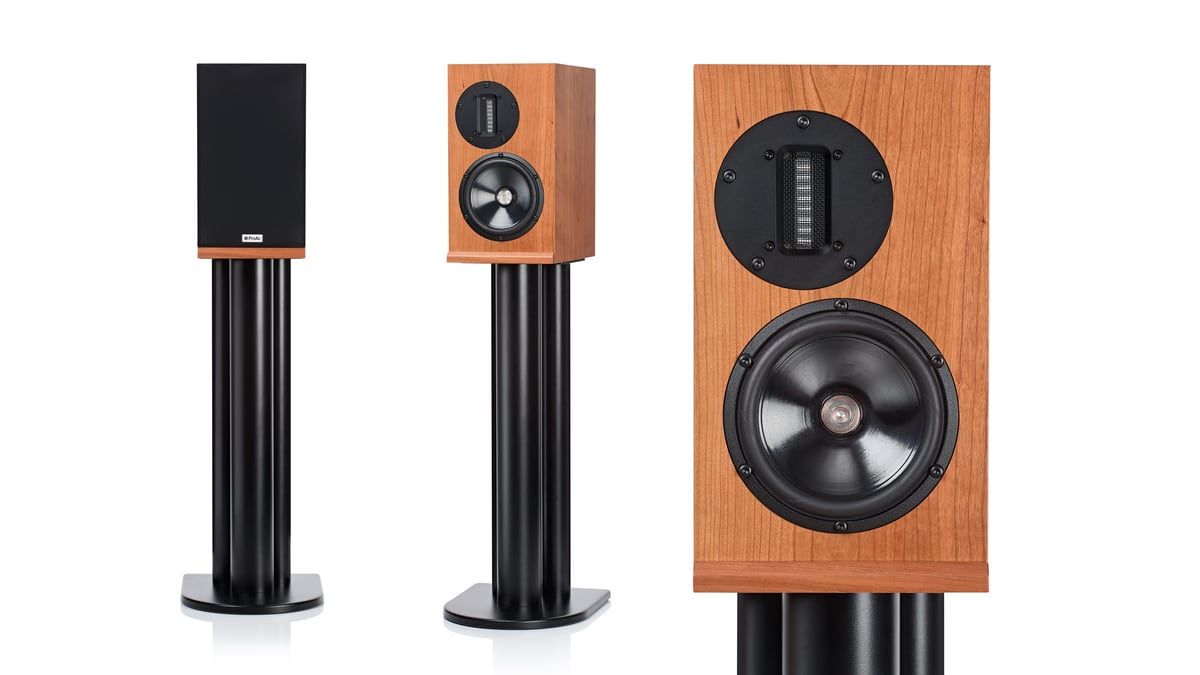 ProAc Response DB1R: the smallest ribbon-tweeter standmount the brand has ever madeProAc has revived the classic DB1 as the Response DB1R — its smallest ribbon-tweeter standmount yet — unveiled at Bristol 2026. Here's what Australian buyers need to know.
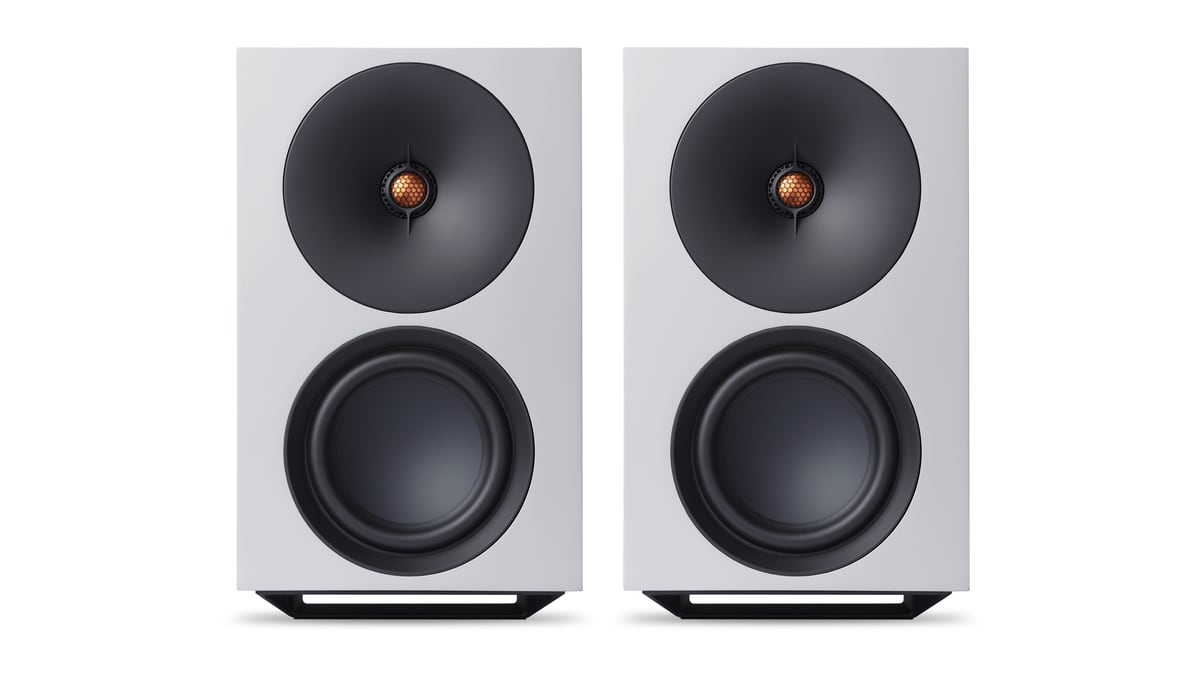 Cambridge Audio L/R Series: the brand's first active wireless speakers take direct aim at KEFCambridge Audio debuts its first active wireless speaker range at CES 2026 — three models, serious specs and a flagship that challenges KEF on its own turf.
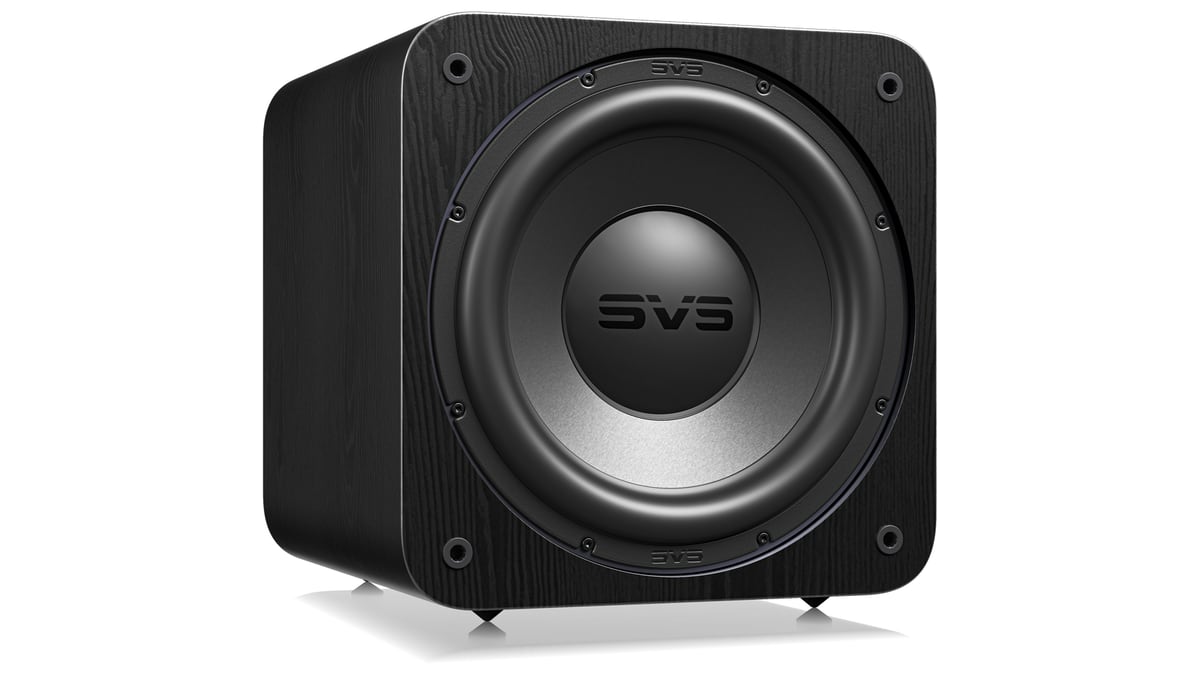 SVS launches the 3000 R|Evolution subwoofer series at CES 2026: a ground-up rethink of an Aussie favouriteSVS debuted its biggest 3000-series overhaul in over 20 years at CES 2026. Here's what the R|Evolution means for Australian buyers.
 SVS enters the soundbar game with the Dolby Atmos R|Evolution and a 600W wireless subwooferSVS debuts its first-ever soundbar at CES 2026, pairing Dolby Atmos with a 600W wireless sub — and the 3000 Micro R|Evolution is already in AU.
 REL Acoustics Planar: The Wall-Mounting Sub That Could Change the Game for Constrained SpacesREL's new Planar series breaks from the box format with two slim, wall-mountable subwoofers just 5.7 inches deep. Here's what it means for AU buyers.
 KEF expands Extreme Home Theater with two new THX-certified in-wall speakersKEF's new Ci5120QLM-THX and Ci3120QLM-THX bring Uni-Q with MAT and THX certification to the in-wall space. Here's what AU buyers need to know.