KEF expands Extreme Home Theater with two new THX-certified in-wall speakers
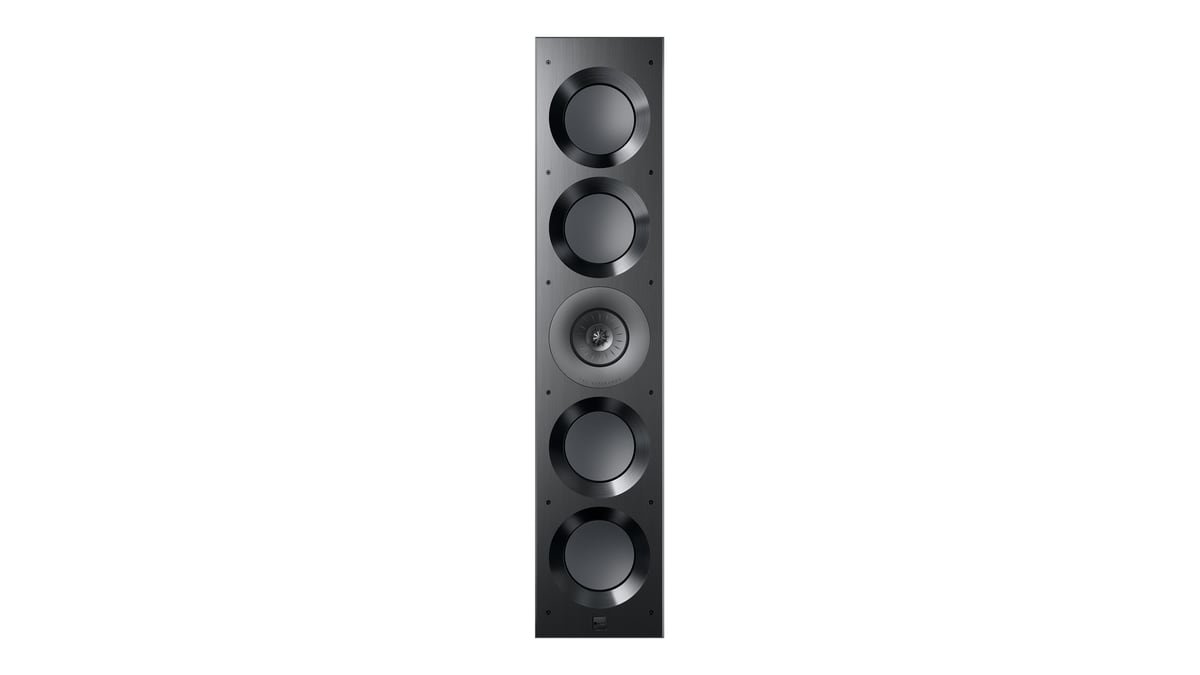
KEF brings its best technology to the wall
On 16 November 2025, KEF announced two new additions to its Extreme Home Theater architectural line: the Ci5120QLM-THX and the Ci3120QLM-THX. Both are in-wall speakers, both carry full THX certification, and both incorporate KEF's 12th-generation Uni-Q driver array alongside the company's proprietary Metamaterial Absorption Technology — the same MAT system that has been turning heads in KEF's freestanding loudspeaker range for several years now. This is genuinely significant news for anyone who has been weighing up an architectural cinema installation and wondering whether in-wall speakers can truly match the acoustic integrity of their freestanding counterparts.
The short answer, at least on paper, is that KEF is making a compelling case that they can. Let me walk you through what's actually been announced, why it matters, and what it means practically for Australian buyers planning or upgrading a dedicated home cinema or serious media room.
What's been announced: the two models
Ci5120QLM-THX — the flagship
The Ci5120QLM-THX sits at the top of this new pairing, priced at US$1,699.99 per speaker. It carries THX Ultra certification, which is the higher of the two THX performance tiers and is intended for larger rooms — typically those with viewing distances beyond 3.5 metres and room volumes that demand genuine SPL headroom without compression or distortion creep. The driver configuration is substantial: four 120 mm bass drivers working in concert with KEF's 12th-generation Uni-Q point-source array, which itself incorporates the Metamaterial Absorption Technology. Four bass drivers in an in-wall format is not something you see every day, and it signals that KEF is genuinely serious about low-frequency authority from a flush-mounted enclosure.
Ci3120QLM-THX — the mid-tier
The Ci3120QLM-THX is priced at US$1,299.99 per speaker and carries THX Select certification. Select is designed for rooms with viewing distances up to around 3.5 metres — the kind of space that represents the majority of Australian dedicated home cinema rooms or purpose-built media rooms in typical suburban homes. Rather than four bass drivers, this model uses two 120 mm bass drivers, again paired with the Uni-Q and MAT combination. It is still, by any reasonable measure, a premium product, and the THX Select badge carries with it a defined set of performance benchmarks that KEF's engineers must have met before the certification was granted.
Understanding what these certifications actually mean
THX certification gets thrown around loosely in marketing, so it's worth being precise. THX was founded by Tomlinson Holman, the audio engineer behind much of the Lucasfilm sound work, and the certification programme exists to ensure that certified products can faithfully reproduce film soundtracks at reference levels in the intended room size — without the listener having to wonder whether the equipment is the limiting factor. A THX-certified loudspeaker must pass a rigorous set of tests covering frequency response consistency, maximum SPL capability, distortion thresholds, directivity behaviour and more. Crucially, certification is specific to room size: Ultra for larger spaces, Select for smaller ones. When a manufacturer says a speaker is THX Ultra certified, they're making a verifiable, third-party-backed claim — not a marketing assertion. For more detail on what reference-level playback actually demands, see our Reference Level glossary entry.
For Australian buyers, the relevance of THX Select versus Ultra often comes down to the room. A dedicated cinema room in a standard Australian home — say, a converted double garage or a purpose-built room beneath the main living area — might sit anywhere between 25 and 60 square metres. If you're working with a room on the smaller end of that range with a screen-to-seat distance under 3.5 metres, the Ci3120QLM-THX and its Select certification is likely the more appropriate specification. If you're fitting out something larger — a purpose-built, acoustically treated room with stadium-style tiered seating — the Ci5120QLM-THX's Ultra credentials become genuinely relevant.
Metamaterial Absorption Technology: why it matters in an in-wall context
KEF introduced Metamaterial Absorption Technology in its freestanding product lines and the results were measurable and audible — particularly in the upper-midrange and lower-treble region where unwanted back-wave energy from the tweeter was being partially re-radiated, colouring the sound in subtle but consistent ways. MAT works by absorbing that rearward energy through a precisely engineered labyrinthine structure, rather than allowing it to reflect back through the driver and into the listening space. The result, in practice, is a cleaner, more composed presentation at higher frequencies — less grain, less etch, more transparency.
In a freestanding speaker, the cabinet itself offers a degree of isolation for this rearward energy. In an in-wall speaker, the situation is considerably more complex. The wall cavity becomes, in effect, part of the enclosure — and it is rarely a well-controlled acoustic environment. Stud spacing, insulation (or lack of it), the proximity of service runs and the mass of the surrounding wall material all influence what happens to sound energy that isn't projected forward into the room. MAT's ability to deal with rearward tweeter energy at the source rather than relying on the enclosure to manage it is, in this context, not just useful — it's arguably more important in an in-wall application than in a freestanding one. KEF clearly understands this, and the decision to carry MAT across into the Extreme Home Theater architectural range reflects a coherent engineering philosophy rather than a marketing exercise.
If you'd like a broader understanding of how room boundaries interact with speaker performance, our Acoustic Treatment glossary entry is a good place to start — and for a cinema-specific context, our guide to building a home cinema covers the physical and acoustic considerations in detail.
The Uni-Q point-source argument for home cinema
KEF's Uni-Q driver, now in its 12th generation, places the tweeter at the acoustic centre of the midrange/bass driver — the so-called coincident point-source arrangement. The claimed benefit is that the speaker behaves as a single point radiator across a wide frequency range, producing more consistent directivity and a more coherent wavefront. In a home cinema context, where multiple speakers must integrate seamlessly across a wide listening area — potentially including off-axis seats — directivity consistency is not an abstract concern. It directly affects whether people sitting away from the sweet spot experience the same tonal balance and spaciousness as those in the prime position.
For those familiar with KEF's freestanding range, the performance of Uni-Q with MAT in speakers like the LS50 Meta and R3 Meta provides a useful reference point — and it's encouraging that the same driver philosophy is now being applied with equal seriousness to the architectural category. If you're curious about how the technology performs in a conventional box speaker context, our KEF LS50 Meta review (check price) and KEF R3 Meta review (check price) both address this in depth.
Pricing and the Australian dollar reality
Both prices are quoted in US dollars, and this is where Australian buyers need to apply some careful arithmetic. At the time of writing, the AUD/USD exchange rate sits in territory that has historically added somewhere between 30 and 50 per cent to US list prices once you factor in currency conversion, the Australian importer's margin, GST and in some cases freight. KEF's local distributor pricing will ultimately determine what these speakers cost at an Australian retailer, and that pricing has not yet been confirmed for the local market.
What we can say with reasonable confidence is that the Ci5120QLM-THX will almost certainly land above the AU$3,000 per speaker mark, and likely considerably higher depending on the timing and the distributor's approach. The Ci3120QLM-THX will similarly sit in premium territory. This is not unusual for flagship architectural speakers — premium in-wall products from the likes of Focal, Bowers & Wilkins and Monitor Audio routinely command prices in this range or higher — but it does mean these are products for a specific buyer: someone who is committing to a serious, professionally installed home cinema system and wants acoustic performance that doesn't require apologising for in-wall form factor.
To put the investment in perspective: a full 7.1 or 9.2 cinema installation using the Ci5120QLM-THX for the primary front three channels (left, centre, right) alone would represent a substantial speaker budget before you've added surrounds, height channels, a subwoofer, an AV processor and amplification. This is not entry-level home cinema. It is, however, exactly the kind of product that serious cinema enthusiasts have been asking KEF to build — and the company has responded with what appears to be a thoroughly engineered answer.
System context: what you'll need around them
A pair of THX Ultra-certified in-wall speakers demands a worthy supporting cast. On the amplification side, THX Ultra certification implies the speakers can operate at high SPL without flinching — but they still need an amplifier capable of delivering clean, stable power into their rated impedance. Architectural speakers of this calibre are typically driven by a high-quality AV processor paired with a separate multi-channel amplifier, or a premium AV receiver with genuine grunt. Our review of the Denon AVR-X3800H (check price) gives a sense of what a serious receiver can deliver, though a fully separates-based system will give these KEF speakers the best chance to show what they're capable of.
Bass management will also be a critical consideration. Four 120 mm bass drivers in the Ci5120QLM-THX may deliver genuine midbass authority, but in a proper THX cinema context you will still want a subwoofer — or more likely multiple subwoofers — handling the low-frequency effects channel and the bass-managed output from all speakers. The question of how to integrate subwoofers with speakers of this calibre is something our Bass Management glossary entry addresses directly.
Who these speakers are actually for
I want to be direct about this, because it's easy for products like these to generate enthusiasm that doesn't translate into appropriate purchasing decisions. The Ci5120QLM-THX and Ci3120QLM-THX are not for someone who wants in-wall speakers because they're a tidy way to add audio to a living room. They are for a buyer who:
- Is designing or retrofitting a dedicated home cinema or large media room
- Has a professional installer involved in the project
- Wants THX-certified performance and is willing to pay for it
- Is committing to a complete, properly matched system — processor, amplification, subwoofer(s), acoustic treatment and calibration
- Values the acoustic and aesthetic benefits of flush-mounted speakers but refuses to accept the sonic compromises that have historically come with that form factor
If that describes you, these speakers deserve serious consideration. KEF's engineering heritage, the proven performance of MAT in their freestanding range, and the rigour of THX certification together make a strong case that the Ci5120QLM-THX and Ci3120QLM-THX are among the most technically credible in-wall cinema speakers announced in recent memory.
The broader picture: KEF's architectural ambitions
It's worth stepping back and noting what these two new models signal about KEF's direction. The company has invested heavily in Uni-Q refinement and in the development of MAT across its freestanding ranges — from the LS50 Meta at one end of the price spectrum to the Blade and Muon at the other. The extension of both technologies into the Extreme Home Theater architectural line is not incidental. It suggests that KEF views the high-end cinema installer market as strategically important, and that it intends to compete at the top of that market with the same seriousness it brings to its freestanding products.
For Australian audio and cinema enthusiasts, this is encouraging. The architectural speaker market has sometimes felt like it lacked the same engineering rigour that goes into the best freestanding products. When a manufacturer of KEF's calibre commits its best transducer technology to an in-wall form factor and then submits the result to THX's certification process, it raises the bar for the whole category — and gives buyers a meaningful, independently verified benchmark against which to evaluate competing products.
What to do now
If you're in the planning stages of a home cinema build or renovation, add both of these models to your shortlist and ask your KEF-authorised dealer about local pricing and availability as soon as it's confirmed. Given the announcement date of November 2025, local stock should be a realistic proposition in 2026, though lead times for architectural speakers can vary depending on the installer and distributor pipeline.
In the meantime, do the homework on your room. Understand your viewing distance and room volume — those two figures will tell you whether THX Ultra or THX Select is the appropriate specification. Engage an acoustic consultant or experienced cinema installer early; the performance of any in-wall speaker is substantially influenced by the quality of the installation itself, including the wall construction, the cavity treatment behind the baffle and the calibration of the complete system. These are not speakers you fire and forget. They are speakers you invest in properly — and if you do, they should repay that investment with cinema performance that doesn't ask you to accept any compromise for the sake of a clean-looking room.
Common questions
- What is the difference between THX Ultra and THX Select certification?
- THX Ultra is designed for larger home cinema rooms, typically those with viewing distances beyond approximately 3.5 metres and higher room volumes. THX Select is calibrated for smaller rooms with viewing distances up to around 3.5 metres. Both certifications require speakers to meet rigorous third-party performance standards covering SPL capability, frequency response, distortion and directivity — the distinction is about matching the speaker's performance envelope to the demands of the intended room size.
- What is Metamaterial Absorption Technology and why does KEF use it in in-wall speakers?
- Metamaterial Absorption Technology (MAT) is KEF's proprietary system for absorbing the rearward energy produced by the tweeter, which would otherwise reflect back through the driver and add unwanted colouration to the high-frequency output. In freestanding speakers, the cabinet provides some isolation for this energy; in in-wall speakers, the wall cavity is far less controlled acoustically, making MAT's ability to deal with rearward tweeter energy at the source particularly valuable.
- Are Australian prices confirmed for the Ci5120QLM-THX and Ci3120QLM-THX?
- At the time of publication, only US pricing has been announced: US$1,699.99 per speaker for the Ci5120QLM-THX and US$1,299.99 per speaker for the Ci3120QLM-THX. Australian pricing will be set by KEF's local distributor and will reflect currency conversion, importer margin and GST. Prospective buyers should contact their KEF-authorised dealer for local pricing once it is confirmed.
- Do I still need a subwoofer if I use the Ci5120QLM-THX with its four bass drivers?
- Yes. Even with four 120 mm bass drivers, the Ci5120QLM-THX is a THX-certified cinema speaker designed to operate within a properly bass-managed system. A dedicated subwoofer — or multiple subwoofers — remains essential for handling the low-frequency effects (LFE) channel and the bass-managed output from all speakers in a THX reference-level cinema installation.

Hi, I'm Hannah. Speakers are my thing — specifically, the conversation between a speaker and the room it's in, which is where most systems are won or lost. I did acoustics at uni and never quite got it out of my system. I'll measure your room's bass response and then gently break the news that the $20,000 speakers aren't the problem, the untreated wall behind your sofa is. Stand-mounts on good stands are criminally underrated and I will die on that hill.
Acoustics background; loudspeaker and room-treatment specialist
More from Hannah Reid
 Turntable isolation: why footfall and feedback matter more than the plinthSuspended floors, speaker vibration and footfall do more damage to vinyl playback than plinth material. Here's how to actually isolate a turntable.
 Why your streamer's output stage still shapes the sound at the speakerBits are bits, but the analogue stage after the DAC chip in your streamer still colours what your speakers do. Here's what actually matters.
- Subwoofer size versus number: why two small subs beat one big oneA 10-inch sub in two spots usually beats a 15-inch sub in one. Here's the room-mode maths behind why, and when a single big box still wins.
 Toe-in angle: the free speaker upgrade nobody bothers measuringToe-in angle changes your speakers' tonal balance and imaging more than most upgrades. Here's how to actually find the right angle for your room.
- Speaker stands and boundary distance: the invisible spec on your spec sheetStand height, mass and distance from walls change a standmount's measured bass and imaging more than most upgrades. Here's how to get it right.
- Where you put the DAC in the signal chain (and why it changes the sound)DAC before or after the preamp, streamer or separate box: where the conversion happens in your chain affects noise, volume control and cable runs more than the chip inside it.