SVS 3000 R|Evolution subwoofers: AU pricing and specs
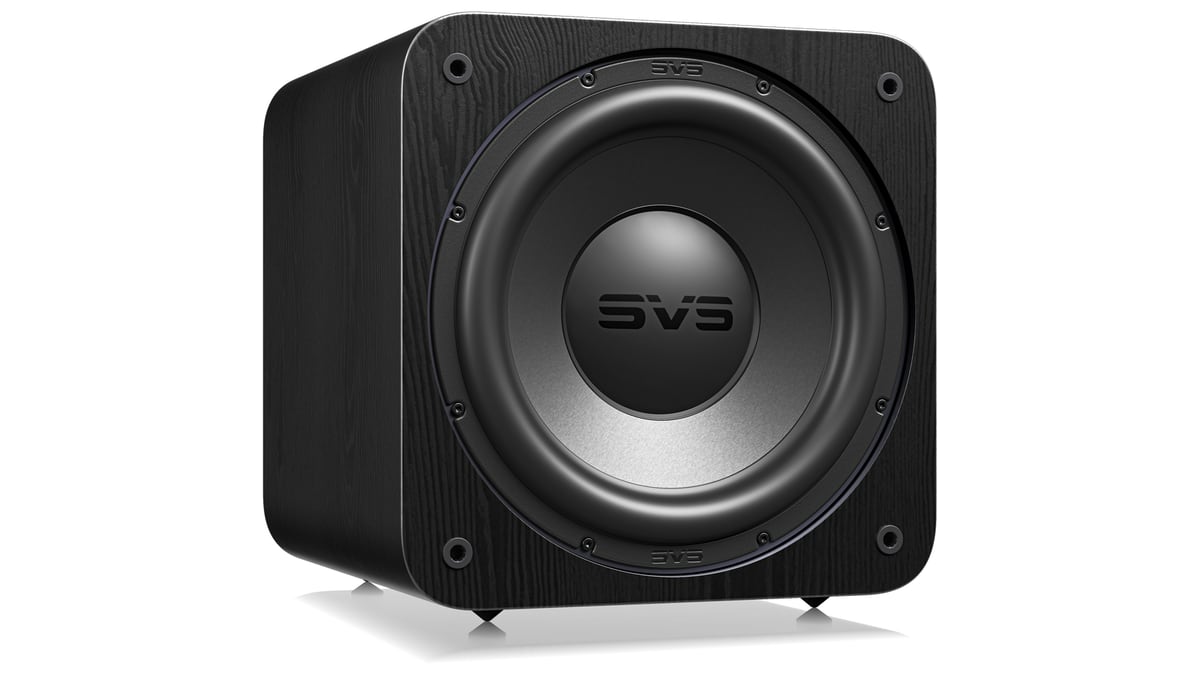
A landmark moment for one of the most popular subwoofer lines
When SVS turned up at CES 2026 in January with the redesigned SVS 3000 R|Evolution range, it wasn't the kind of incremental refresh that tends to dominate trade show floors. This was, by the company's own reckoning, the most significant overhaul the 3000 line had seen in more than two decades, a genuine ground-up engineering exercise rather than a spec-sheet polish. For a subwoofer series that has long been a reference point for enthusiasts seeking serious low-frequency performance at a price that doesn't require re-mortgaging the listening room, that's a statement worth taking seriously. You can see the brand's wider range on the SVS website.
The new range is called the R|Evolution series, and it arrives in two configurations: the SB-3000 R|Evolution, a sealed design with a 13-inch driver, and the PB-3000 R|Evolution, a ported design also using a 13-inch driver. Both are built around a new 1,200W RMS / 4,000W+ peak Class D MOSFET amplifier paired with advanced DSP. The upstream pricing sits at US$1,299.99 for the sealed model and US$1,799.99 for the ported variant. For Australian buyers, Interdyn, SVS's local distributor, has confirmed pricing of AU$2,999 for the SB-3000 R|Evolution (Black Ash finish) and AU$3,999 for the PB-3000 R|Evolution.
Those prices place both models squarely in what I'd call the serious enthusiast bracket: not entry-level, but well clear of the stratospheric. Let's unpack what SVS has actually done here, why it matters acoustically, and how it stacks up for the Australian market specifically.
Why the SVS 3000 R|Evolution matters: a bit of context
To appreciate the significance of the launch, you need to understand what the original 3000 series represented. SVS built its reputation on a fairly simple but compelling proposition: deliver measurably excellent bass performance at a price that undercut most of the prestige European competition. The SB-3000 and PB-3000 that preceded this new range had been perennial recommendations in home cinema and two-channel circles alike, consistently praised for their output, extension, and the quality of their DSP and app control.
The original SVS SB-3000 (check price) earned that praise by balancing taut, controlled sealed-box bass with real-world usability, particularly the smartphone app integration, which made fine-tuning bass management in the listening room far less of an ordeal than it used to be. In my view, though, the amplifier architecture was showing its age relative to what class D technology was becoming capable of delivering, and the DSP, while competent, had room to grow in sophistication.
SVS has clearly been listening, to critics, to measurements, and presumably to a great deal of its own internal acoustic testing. The R|Evolution series is their answer to the question: what does the 3000 look like if we start from scratch with modern engineering tools?
The new amplifier: 1,200W RMS and what that actually means
The headline specification that will grab attention is the amplifier: 1,200W RMS with a peak capability exceeding 4,000W, realised through a Class D MOSFET topology. Before anyone dismisses peak power figures as marketing theatre, which is a fair instinct, it's worth understanding why they matter for subwoofer design in particular. If you want the background on the topology itself, there's a useful primer on Class-D amplifier design.
Subwoofers face a genuinely brutal dynamic challenge. Musical bass lines and cinema LFE content alike demand that an amplifier deliver enormous instantaneous current for transient events, such as the chest-impact of a film explosion or the attack of a kick drum, while simultaneously maintaining composure during sustained low-frequency passages. Peak headroom is not a fiction; it's the margin between a subwoofer that compresses and clips during demanding content and one that stays clean under pressure.
The move to Class D MOSFET is also acoustically meaningful. Modern high-quality Class D designs run cool, which reduces thermal compression in the amplifier (an underappreciated source of dynamic variation in lesser designs) and allows the amplifier to be physically smaller, which in turn gives engineers more internal cabinet volume to work with. More volume in a sealed or ported enclosure means you can tune the cabinet for better extension or lower port tuning without making the box impractically large.
The advanced DSP pairing is the other key element. DSP in a modern subwoofer is not simply about EQ curves and a few preset room correction filters. Done well, it allows the amplifier to apply precise excursion limiting that protects the driver during high-output passages without the crude hard limiting that introduces its own audible artefacts. It also enables the manufacturer to linearise the driver's frequency response and phase behaviour in ways that were simply not possible with analogue correction circuits. The combination of a powerful, thermally efficient amplifier and sophisticated DSP is where the real acoustic story lives, even if the wattage figure is what makes the press release.
Frequency response: what the numbers tell us
SVS has published frequency response specifications for both models at the ±3 dB window, which is the honest way to state extension. It's more conservative than the ±10 dB figures some manufacturers use, and much more meaningful for real-world system integration.
The SB-3000 R|Evolution is rated 17–230 Hz (±3 dB). The PB-3000 R|Evolution extends further at the bottom, rated 15–270 Hz (±3 dB). The upper extension figures are worth a look: 230 Hz and 270 Hz respectively. This is considerably higher than what many subwoofers specify, and it reflects genuine flexibility in crossover integration, which matters if you're running smaller standmount speakers that need subwoofer support well up into the midbass region.
The low-end difference between the two models, 17 Hz sealed versus 15 Hz ported, deserves a moment of consideration. Two hertz sounds trivial on paper, but at the frequency extremes of human hearing perception (and more accurately, tactile sensation), that difference can be felt rather than merely measured. Cinema content regularly contains genuine signal energy below 20 Hz, particularly in sequences designed to exploit LFE channels, and the ported model's ability to reach 15 Hz at useful output levels is a meaningful advantage for dedicated home cinema rooms.
For two-channel music listening, the picture is more nuanced. The sealed SB-3000 R|Evolution will typically offer tighter, more phase-coherent bass integration with music, because sealed alignments have an inherently gentler roll-off slope that tends to blend more naturally with main speakers, particularly at moderate listening levels. If your primary use case is high-resolution stereo listening with a pair of compact speakers, the sealed model deserves serious consideration regardless of the ported variant's deeper extension on paper. And if you're running something like the KEF LS50 Meta (check price), which rolls off considerably below 80 Hz, the clean integration a sealed sub offers can be genuinely transformative. Our explainer on sealed versus ported subwoofer design covers the trade-offs in more depth.
The Australian pricing reality
Let's be frank about what AU$2,999 and AU$3,999 mean in the context of the Australian market. The currency conversion from US pricing is not generous. The SB-3000 R|Evolution converts at roughly AU$2,065 before freight, duty, and GST, so the AU$2,999 retail reflects the genuine cost of bringing premium American audio hardware to this market rather than any particular margin gouging. Interdyn has a long track record with SVS in Australia and the pricing, while stiff, is consistent with what the category demands.
At AU$2,999, the SB-3000 R|Evolution is competing with the lower rungs of REL's range, with SVS's own 4000-series sealed sub from the previous generation (depending on availability), and with one or two offerings from Rythmik and Paradigm. None of those alternatives offer the same combination of output, extension, and DSP sophistication at the same price point, which is exactly the position SVS has historically occupied. The R|Evolution series appears designed to defend and extend that position rather than cede any ground.
For home cinema enthusiasts building out a system, our guide to the core components of a home cinema is a useful starting framework. The PB-3000 R|Evolution at AU$3,999 sits comfortably as a centrepiece subwoofer in a mid-to-upper-tier setup. Pair it with a capable AVR like the Denon AVR-X3800H (check price), apply proper room correction, and spend some time on acoustic treatment in the room, and you're looking at a system that punches well above what the individual component prices might suggest.
Sealed or ported: which R|Evolution is right for you?
This question comes up with any SVS dual-model launch, and the answer is genuinely use-case dependent rather than a simple hierarchy with a "better" model at the top. In broad terms, a sealed enclosure trades some low-end extension for tighter transient behaviour and a smaller cabinet, while a ported enclosure uses a tuned port to reinforce output at the bottom of the range, usually at the cost of a larger box.
Choose the SB-3000 R|Evolution (sealed) if:
- Your primary content is music, particularly at moderate to reference listening levels in a typical lounge or dedicated listening room
- You value tight, articulate bass over maximum extension; jazz double bass, acoustic instruments, and electronica with precise sub-bass lines all reward a sealed alignment's transient speed
- Your room is smaller than approximately 30 square metres, where a ported sub's output advantage becomes less critical and room gain does more of the extension work for you
- Cabinet footprint is a consideration, since sealed enclosures are inherently more compact for a given driver size
- You intend to run the sub in a mixed music and cinema role, where the sealed model's upper-frequency extension to 230 Hz provides flexibility
Choose the PB-3000 R|Evolution (ported) if:
- Home cinema is your primary use case and you want to feel LFE content as much as hear it
- Your room is large, above 35–40 square metres, where you need the additional output headroom a ported design provides at high listening levels
- You're a serious bass music listener: EDM, hip-hop, pipe organ, large orchestral recordings with genuine infrasonic content
- You have the room to accommodate the larger cabinet, and ideally a corner or wall placement to exploit boundary reinforcement
- The additional AU$1,000 is within your budget and you want the best possible foundation under a high-performance cinema system
Integration, DSP, and getting the best out of either model
One point I want to make firmly to any reader considering this purchase: the quality of a subwoofer installation is determined at least as much by setup and integration as by the hardware itself. A AU$4,000 subwoofer placed in a poor room position, crossed over incorrectly, or running without any form of room correction will underperform a thoughtfully installed AU$1,500 unit. Start with our notes on subwoofer placement in a real room, then work through matching level, phase and delay to your main speakers.
SVS has consistently led the market in making subwoofer setup accessible through their smartphone app, and I'd expect the R|Evolution series to continue and expand on that tradition with the new DSP platform. The ability to adjust crossover frequency, phase, polarity, and parametric EQ from your listening position, rather than crawling behind the cabinet with a screwdriver, is not a gimmick. It is the single most practical tool for getting a subwoofer to disappear into a room properly, which is the paradoxical goal: you should feel the bass everywhere and be unable to localise its source.
Pair the SVS app control with your AVR's built-in room correction (Audyssey, DIRAC, or similar) and you have a genuinely powerful toolkit. Don't neglect analogue gain structure either. Understanding how the subwoofer's internal level control interacts with your AVR's trim settings is essential to getting the DSP operating in its optimal range. Our gain structure explainer is worth a read if this is unfamiliar territory. And if a full AVR system isn't on your list, SVS's Dolby Atmos soundbar and wireless subwoofer shows the brand's thinking at the other end of the scale.
Is the upgrade worth it for Australian buyers?
SVS doesn't often use the word "revolution" loosely, and the company's marketing has historically been grounded in specifications and measurements rather than atmospheric language. The R|Evolution branding for a range they're describing as the biggest 3000-series update in over 20 years carries genuine weight, and the engineering choices visible in the published specifications, namely the high-headroom Class D MOSFET amplifier, the extended frequency response figures and the sophisticated DSP, back up the claim that this is a substantive advancement rather than a cosmetic refresh.
For Australian buyers, the AU$2,999 and AU$3,999 price points represent real money, but they also represent a clear step forward in what you're getting relative to the outgoing models. If you've been watching the 3000 series and waiting for a reason to buy in, this is probably that reason. And if you already run an original SB-3000 or PB-3000 and wonder whether the upgrade is meaningful enough to justify, my instinct, based on the amplifier and DSP changes alone, is that for dedicated home cinema use it likely is. For music-primary applications in a modest room, the original models still hold their own, and the upgrade is more of a considered luxury than a necessity.
A direct comparison with the outgoing SB-3000 is what I'd most like to see once Australian review samples become available. Until then, the published numbers make a strong case, and the new range is well worth a spot on your shortlist.
Common questions
- What is the Australian price of the SVS 3000 R|Evolution subwoofers?
- The SB-3000 R|Evolution (sealed) is priced at AU$2,999 in Black Ash finish, and the PB-3000 R|Evolution (ported) is priced at AU$3,999. Both are available in Australia through Interdyn, SVS's local distributor.
- What is the difference between the SB-3000 R|Evolution and the PB-3000 R|Evolution?
- The SB-3000 R|Evolution is a sealed-box design rated 17–230 Hz (±3 dB), which tends to offer tighter, more articulate bass well-suited to music listening and smaller rooms. The PB-3000 R|Evolution is a ported design rated 15–270 Hz (±3 dB), offering deeper low-frequency extension and greater output, making it the better choice for large rooms and dedicated home cinema use. Both share the same new 1,200W RMS / 4,000W+ peak Class D MOSFET amplifier and advanced DSP platform.
- When were the SVS 3000 R|Evolution subwoofers announced?
- SVS debuted the 3000 R|Evolution series at CES 2026 in January 2026, describing it as the biggest update to the 3000 line in over 20 years.
- What amplifier technology does the SVS 3000 R|Evolution use?
- Both models in the R|Evolution series use a new 1,200W RMS / 4,000W+ peak Class D MOSFET amplifier paired with advanced DSP. Class D technology offers high efficiency and low thermal output, which helps reduce dynamic compression and allows more internal cabinet volume for acoustic tuning.

Hi, I'm Hannah. Speakers are my thing — specifically, the conversation between a speaker and the room it's in, which is where most systems are won or lost. I did acoustics at uni and never quite got it out of my system. I'll measure your room's bass response and then gently break the news that the $20,000 speakers aren't the problem, the untreated wall behind your sofa is. Stand-mounts on good stands are criminally underrated and I will die on that hill.
Acoustics background; loudspeaker and room-treatment specialist
More from Hannah Reid
 Headphone stands and hooks: the desk accessory that changes your soundHeadphone stands aren't just tidy storage. How you park your cans between sessions affects driver life, cable strain and even headband fit.
 First reflections: finding them, and what to actually do about themThe mirror trick still finds first reflection points better than any app. Here's how to locate them and what treatment actually earns its keep.
- Headphone soundstage: why some pairs sound "wide" and others don'tSoundstage in headphones isn't magic or marketing. It comes from crossfeed, driver geometry and pad depth — here's what's actually happening and what you can change.
- Turntable wall shelves versus stands: what actually kills footfall bassFootfall bass in vinyl playback usually isn't the turntable's fault. It's the floor. Here's how to work out whether a wall shelf or a proper stand fixes it.
 Why your amplifier struggles below 4 ohms (and when to actually worry)Impedance dips scare buyers more than they should. Here's how to read a speaker's impedance curve and match it to an amp that won't run out of puff.
- Subwoofer placement: the crawl test still beats any appRoom-correction apps are handy, but the old carpet-crawl method still finds the seat-by-seat bass problems software glosses over.