JVC's 8K e-shiftX D-ILA laser flagships stay the high-end benchmark into 2026
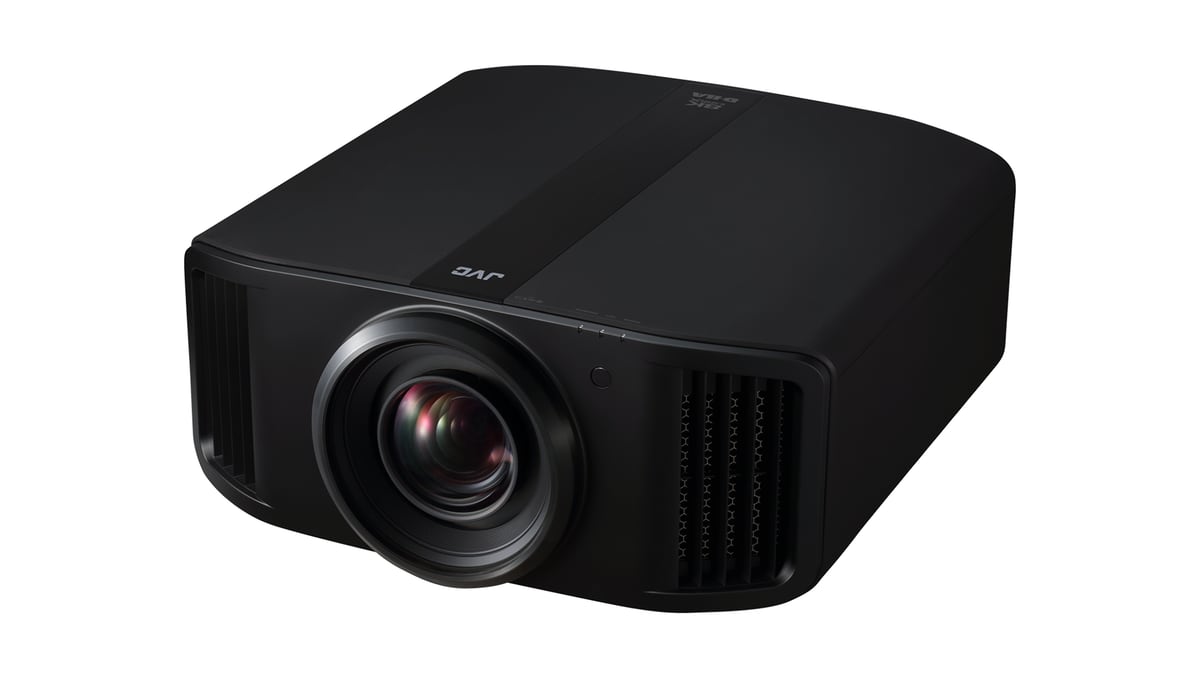
The benchmark holds
There is a particular kind of confidence that comes from not needing to shout. JVC has, for the better part of two decades, made projectors that the serious home cinema community quietly regards as the ones to beat — not because of the loudest press release or the most aggressive trade-show floor presence, but because the images they produce have a quality that rewards sustained, critical viewing in a way that very few rivals match. As we move through the first half of 2026, that position remains intact. The BLU-Escent laser D-ILA generation, spanning four models and two price tiers that cover the serious enthusiast all the way to the genuine statement installation, continues to anchor the premium end of the projector market with a composure that is, frankly, rare.
What has happened over the past six months is less a dramatic product launch and more a consolidation of position. The NZ series — sold in Australia under both the NZ consumer designation and the RS professional-grade designation depending on the dealer and channel — has been in the hands of integrators and serious enthusiasts long enough now for a genuine picture to emerge of where these projectors sit relative to everything else available at their price points. The conclusion is not complicated: for native D-ILA projection with a laser light engine, nothing else currently on the market gives you the combination of black-level performance, pixel-level control, and scalable resolution that JVC's lineup provides. Understanding why requires a closer look at the technology, the lineup structure, and what the Australian buyer actually needs to know before committing to one of these installations.
D-ILA and the laser advantage: a quick primer
D-ILA — Direct drive Image Light Amplifier — is JVC's proprietary reflective liquid crystal technology. Unlike transmissive LCD panels, which pass light through the panel substrate, D-ILA panels reflect light from a mirrored surface. The practical consequence of this architecture is that the light path is inherently more efficient, and critically, the inter-pixel gaps that plague transmissive designs and create the visible screen-door effect at large image sizes are dramatically reduced. D-ILA panels have an extraordinarily high fill factor — the ratio of active pixel area to total panel area — and the result is an image that reads as genuinely film-like in its continuity and texture rather than an array of discrete illuminated squares.
Pair that panel technology with a laser light engine and the advantages compound. Laser phosphor illumination — which is what BLU-Escent refers to — delivers a colour gamut that significantly exceeds what traditional UHP lamp sources could achieve, with coverage of the DCI-P3 colour space that matters enormously when you are watching HDR-graded 4K content. More practically for the owner, laser light engines maintain their output far more consistently over time than lamps do, and the absence of a consumable lamp means there is no replacement cost creeping up on you after a couple of thousand hours. For a projector that is going to live in a dedicated cinema room and see serious daily use, this is not a trivial consideration.
The other piece of technology that defines the upper end of the JVC range is e-shiftX. This is JVC's pixel-shift processing system, and it is worth being precise about what it does and does not do. The D-ILA panels in these projectors are native 4096 x 2160 — genuine 4K resolution at the chip level. e-shiftX takes that native 4K signal and uses high-speed panel shifting, combined with sophisticated processing, to project what amounts to an 8K-equivalent image: 8192 x 4320. The panel physically shifts position between frames at a speed that exceeds the threshold of visual perception under normal viewing conditions, and the result is a projected image with substantially increased detail and reduced aliasing compared to native 4K output. It is not the same as a projector with native 8K panels — those do not yet exist in any commercially available product — but in practice, on a large screen, the difference between e-shiftX and native 4K output is visible and meaningful, particularly with high-quality 4K source material that has been carefully mastered.
The lineup in detail: four models, one coherent vision
JVC's current BLU-Escent laser range spans four models, and the lineup is structured with a clarity that makes navigation relatively straightforward once you understand what each tier is actually offering.
NZ900 / RS4200 — the statement flagship
At the top sits the NZ900 (consumer) and RS4200 (professional/dealer channel), priced at US$25,999. This is JVC's current statement product, and it combines native 4K D-ILA panels with the full e-shiftX 8K processing suite. The NZ900 represents the complete expression of what JVC's current technology can deliver: maximum laser output, the widest colour gamut, the deepest blacks, and the full 8K pixel-shift capability. For a dedicated cinema room with a screen in the 2.4 to 3.5 metre wide range — the kind of installation where you are genuinely trying to replicate a theatrical experience rather than simply fill a wall — this is the projector that makes the most sense at the top of the market. The Australian landed price, once you factor in distributor margins and GST, will sit materially above the US figure, and prospective buyers should budget accordingly and discuss pricing directly with their preferred dealer or integrator.
NZ800 / RS3200 — the serious enthusiast's choice
The NZ800 and its RS3200 professional counterpart come in at US$15,999 and also feature 8K e-shiftX processing. This is the model that, in my estimation, represents the most compelling value proposition in the lineup for the Australian market. You get the full 8K pixel-shift capability — which is genuinely the headline feature differentiating JVC from most of its competitors in this price bracket — in a package that is meaningfully less expensive than the flagship while retaining the core D-ILA panel quality and laser light engine. For the serious enthusiast building a dedicated room, this is likely the conversation to be having with your integrator.
NZ700 / RS2200 and NZ500 / RS1200 — the accessible tier
The NZ700 (RS2200) at US$8,999 and the NZ500 (RS1200) at US$5,999 represent a significant development in the JVC story that deserves more attention than it typically receives. These two models are approximately 35 per cent smaller than their predecessor, the NZ7, while retaining native 4096 x 2160 D-ILA panels. JVC is positioning these as the smallest native 4K projectors in this configuration currently available — a meaningful claim that has real practical implications for installation.
A smaller chassis means more flexible installation geometry. Throw ratios, ceiling height constraints, and rack or shelf placement all become easier to manage when the projector is physically more compact, and for the growing number of Australian homeowners who are converting an existing room rather than building a purpose-designed cinema, that flexibility matters enormously. The NZ500 and NZ700 do not offer e-shiftX — they output native 4K — but their panel quality and laser light engine remain in the D-ILA family, and the image they produce is exceptional by any reasonable standard. At the NZ500's price point in particular, you are entering territory where the decision between a JVC and a competing native 4K laser projector becomes genuinely interesting, and in my experience the D-ILA advantage in black-level performance tends to be decisive for viewers who care about cinematic shadow detail.
What makes black levels matter so much
I want to dwell on this point because it is one that can get lost in specification sheets focused on peak brightness numbers. In a properly darkened cinema room, the depth and quality of blacks is at least as important to perceived image quality as peak white luminance. The reason is straightforward: contrast is the relationship between the brightest and darkest elements of the image, and in content that is well-mastered for HDR — which describes the majority of premium 4K releases — the dynamic range of the signal spans an enormous range. A projector that can render deep blacks while simultaneously resolving fine shadow detail creates an image that feels three-dimensional and film-like. A projector that cannot — that lifts its blacks to manage other aspects of the image — produces something that, however bright and colourful, never quite escapes looking like a very good television rather than a cinematic experience.
D-ILA's reflective architecture gives it a structural advantage here that is difficult for competing technologies to fully replicate. This is the reason that JVC projectors have historically commanded the loyalty of the most demanding home cinema enthusiasts, and it is the reason the BLU-Escent laser generation continues to hold its position even as competitors have made substantial strides in other areas.
The Australian context: installation, pricing, and the room question
Buying a JVC laser projector in Australia requires a considered approach. These are not products you collect from a shelf at a consumer electronics chain; they are typically purchased through specialist dealers and custom installation firms, and the relationship with your integrator is as important as the product itself. Calibration matters enormously with D-ILA projectors — the out-of-box performance is good, but a properly calibrated JVC in a well-designed room is a genuinely different experience from the same projector running on default settings in an untreated space.
This brings me to the room itself. If you are considering a projector at any of these price points, the quality of the room should be receiving proportionate attention. Building a dedicated home cinema involves decisions about screen size, screen gain, seating geometry, and light control that have as much impact on the final result as the projector specification. Acoustic treatment — the management of sound reflections and bass modes in the room — is equally critical; a projector with this level of image performance deserves an audio system and acoustic environment that can match it. Understanding acoustic treatment principles before you finalise your room design will save considerable money and frustration later.
On the question of pricing: the US dollar figures provided here are JVC's US market pricing. Australian pricing will differ, and given the current exchange rate environment and the cost of warranty, support, and installation infrastructure in this country, the premium over US prices is real and justified. Work with an authorised Australian dealer and get a complete installed price that includes professional calibration — treating calibration as an optional extra is a false economy at this level.
How JVC sits relative to the competition
The premium laser projector market in 2026 is genuinely competitive in a way it was not five years ago. Sony's native 4K SXRD laser range — including models we have reviewed at this publication, such as the Sony VPL-XW5000ES (check price) — has raised the bar for Japanese projector engineering in general, and the competition between JVC and Sony for the serious home cinema dollar is now a genuine two-horse race at the top of the market. Sony's strengths tend to lie in peak brightness and out-of-box colour accuracy; JVC's strengths remain black-level performance and the e-shiftX resolution advantage at the upper model tiers. Neither manufacturer has a claim to universal superiority — the right choice depends on room characteristics, screen specification, and the type of content you watch most.
What JVC has that Sony currently does not is the e-shiftX 8K processing in the NZ800 and NZ900. For buyers who are building installations that will remain current for five to eight years and want to be positioned for the gradual emergence of native 8K content and 8K-upscaled streaming, that processing capability is a meaningful differentiator. It is also worth noting that the pixel-shift advantage is most visible on large screens — 2.5 metres wide and above — and at screen sizes below that, native 4K is unlikely to be the resolution bottleneck in the imaging chain.
The Dolby Atmos pairing question
A projector of this calibre deserves an audio system that meets it on equal terms. Dolby Atmos object-based audio is now the standard for premium home cinema installations, and if you are spending at the NZ800 or NZ900 level on projection, the audio budget should be commensurate. This typically means a capable AV processor or receiver, a multi-channel amplifier solution, and a speaker system with overhead or height channels. The Denon AVR-X3800H (check price) represents an accessible entry point into Atmos-capable processing, though at the statement level you will generally be looking at separates — a dedicated processor and dedicated amplification — rather than an integrated AV receiver.
Final assessment: why the BLU-Escent generation remains the reference
The JVC BLU-Escent laser D-ILA range is not the newest technology in every dimension — native 8K panels remain a future development, and there are competitors who will offer higher peak brightness figures at certain price points. What JVC has is a coherent, mature technology platform that has been refined over many years and that delivers, in the hands of a competent integrator and in a properly designed room, the closest thing to a genuine theatrical experience that residential projection currently offers.
The NZ500 and NZ700 have made that experience more physically accessible by shrinking the chassis without compromising the panel quality. The NZ800 has made the 8K e-shiftX experience available at a price that, while still firmly in the premium tier, is materially more approachable than the flagship. And the NZ900 remains the statement piece that defines what the technology can currently achieve.
For the Australian buyer, the message is straightforward: if you are building a serious dedicated cinema room and the budget extends to this tier, the JVC BLU-Escent range deserves to be at the top of your demonstration list. See it in a properly set-up environment, with calibrated colour and good source material, and then make your decision. I am confident about what that decision will be.
Common questions
- What is the difference between JVC's e-shiftX and a true native 8K projector?
- e-shiftX is JVC's pixel-shift processing system that takes the native 4096x2160 D-ILA panel output and physically shifts the panel position between frames at speeds below the threshold of visual perception, producing an effective 8192x4320 image. It is not the same as a projector with native 8K imaging panels — those do not currently exist in any commercially available product — but on a large screen with quality 4K source material, the increased detail and reduced aliasing are genuinely visible and meaningful.
- Which JVC BLU-Escent model makes most sense for an Australian home cinema build?
- It depends on budget and room size. The NZ500 (RS1200) at US$5,999 is the most accessible entry point and is notably compact, making it well-suited to room conversions with installation constraints. The NZ800 (RS3200) at US$15,999 offers the full 8K e-shiftX capability at a more approachable price than the flagship and represents strong value at the top of the enthusiast tier. The NZ900 (RS4200) is the statement choice for the largest screens and most demanding installations. All Australian pricing should be confirmed with an authorised local dealer.
- Why are black levels so important in a high-end projector, and how does D-ILA perform?
- In a darkened cinema room, the depth and quality of blacks is at least as important as peak brightness because contrast — the ratio of brightest to darkest — is central to the perception of HDR and cinematic image quality. D-ILA's reflective architecture gives it a structural advantage in black-level performance compared to transmissive LCD technologies, and this has historically been the defining reason serious home cinema enthusiasts choose JVC over competing projector platforms.
- Do the smaller NZ500 and NZ700 models use the same D-ILA panels as the larger models?
- Yes. The NZ500 and NZ700 are native 4096x2160 D-ILA projectors — genuine 4K at the panel level — and they retain the D-ILA reflective technology that defines JVC's image quality advantage. Their approximately 35 per cent smaller chassis compared to the prior NZ7 generation is a significant practical benefit for installations with space constraints, without compromising the fundamental panel quality that makes D-ILA projectors distinctive.

I'm Sofia, and I get to play with the silly stuff — the statement amplifiers, the reference loudspeakers, the cost-no-object systems that most of us will only ever hear at a show. Someone has to, and I take it seriously: at this level the price stops mapping to performance and starts mapping to engineering, craft and ego, and part of my job is telling you which is which. I love the extreme end of this hobby, but I'm not dazzled by a big number on a price tag.
Covers flagship and cost-no-object reference systems
More from Sofia Laurent
 Negative feedback in amplifier design: the argument that never endsNegative feedback cuts amplifier distortion but divides designers. Here's what it does, why some statement amps avoid it, and what it means for you.
 The synergy tax: why mismatched gear costs more than cheap gearThe synergy tax explained: why pairing mismatched hi-fi components quietly costs more than buying modest, well-matched gear.
 Rear-port floorstanders near a glass wall: a risky pairingRear-ported floorstanders against glass walls cause boundary reinforcement and reflections. Here's how to place, measure and tune them properly.
- Infrasonic bass below 20Hz: chasing the octave you feel, not hearBelow 20Hz is infrasonic bass: felt more than heard. Here's what it takes to reproduce it properly, and whether a statement system should bother.
- Why statement systems still get beaten by the zone two speakerA $150,000 reference system is only as good as the worst-sounding zone it's networked to. Here's why multiroom integration is the statement system's real weak point.
- Why a statement floorstander can be the wrong speaker in the roomSix-figure floorstanders fail in rooms that were never built for them. Here's how to tell if your space can actually support one before you buy.