Lossless over Bluetooth stops being a flagship luxury
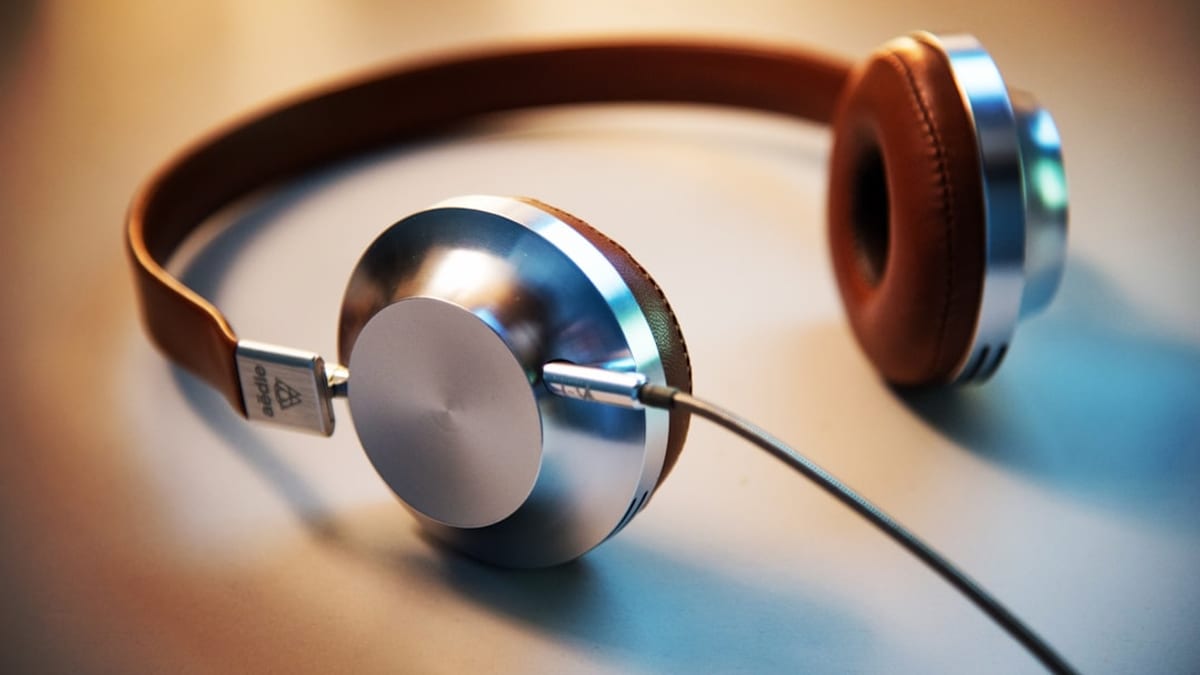
The wall just came down for lossless over Bluetooth
For the better part of three years, aptX Lossless sat behind a velvet rope. You could see it in the spec sheets of flagship Sony and Sennheiser cans, read about it in breathless press releases, and watch it get used as a marketing cudgel to justify four-figure asking prices. The message was consistent: if you wanted bit-exact CD-quality audio, meaning lossless over Bluetooth with no compromises, no lossy artefacts and no quiet apologies about "near-lossless" performance, you paid for the privilege.
That message just stopped being true.
In the space of a few weeks across May and June 2026, two products landed that rewrote the value equation almost overnight. Xiaomi launched the Buds 6 globally on 28 May 2026 at EUR 149.99, and EarFun followed with the Wave Pro X in June 2026 at USD 129.99, announced back at CES 2026 but now actually shipping. Both carry aptX Lossless. Both sit comfortably under the EUR 150 threshold that, until recently, had seemed like some kind of unwritten floor for this technology. That is a significant moment, and it deserves a proper explanation of what it actually means, what the technology genuinely requires to work, and whether Australian buyers should care.
Spoiler: they should.
What aptX Lossless actually is, and isn't
Let's get the fundamentals sorted before we go further, because there is a lot of sloppy language floating around this topic. aptX Lossless is, by Qualcomm's specification and verified independently, the first Bluetooth codec to deliver bit-exact CD-quality audio. That means 16-bit, 44.1 kHz audio arrives at your eardrums carrying every single bit that left the source. Nothing is discarded. Nothing is approximated. The maths checks out on both ends and the result is identical to what you'd get from a lossless file played over a wired connection, at CD resolution. If the term is new to you, our explainer on what bit-perfect actually means covers the idea in more detail.
This is meaningfully different from codecs like LDAC, which operates at up to 990 kbps and does an impressive job of preserving a great deal of audio information, but is still a lossy codec; it makes decisions about what to keep and what to discard. It's different from AAC and SBC, which are more aggressively lossy still. And it's different from the "HD" or "high-res" marketing claims attached to plenty of wireless products that are, under scrutiny, still compressing your audio. The background on the aptX family of codecs is a useful reference if you want the lineage.
aptX Lossless achieves bit-exactness by scaling its bitrate dynamically, pushing up to 1 Mbps when RF conditions allow. When the wireless environment gets noisy or congested, it can gracefully step down to a high-quality lossy mode rather than dropping the connection, which is sensible engineering. But when conditions are good, what you get is mathematically lossless. That is not marketing language. That is a verifiable technical claim. Understanding the underlying mechanics is easier if you're already across the basics of bit depth and sample rate. The short version is that CD quality (16-bit/44.1 kHz) captures more than enough resolution for human hearing, so arriving at the ears with zero degradation from that standard is genuinely meaningful.
The Snapdragon Sound requirement: this is the catch
Here is the part that a lot of the breathless coverage glosses over, and it is the most important thing an Australian buyer needs to understand before getting excited: aptX Lossless does not work in isolation. It is gated behind Qualcomm's end-to-end Snapdragon Sound certification, and that word, end-to-end, is doing significant heavy lifting.
To get bit-exact audio over Bluetooth with aptX Lossless, you need compatible hardware on both ends of the connection. Your headphones or earbuds need to support it, yes. But so does your source device. Your phone, tablet or DAC/dongle needs to be running a Qualcomm Snapdragon platform that is Snapdragon Sound certified and supports aptX Lossless on the transmit side. If your source doesn't support it, the connection negotiates down to whatever the highest mutually supported codec is, which might be aptX HD, or LDAC if both sides support it, or potentially just AAC. That negotiation step is the same one that shapes how Bluetooth codecs change what you hear on any pair of headphones.
This is not a dealbreaker, but it is a real-world consideration. In Australia, the Android market is dominated by Samsung, Google and the mid-range Chinese brands (Xiaomi, OPPO, realme), and their flagship and upper-mid tiers increasingly use Snapdragon processors. If you're running a recent Samsung Galaxy S-series, a Google Pixel 8 or 9 series, or a Xiaomi flagship, there is a reasonable chance your phone's transmit side is compatible. But you cannot assume it. You need to check your specific device against Qualcomm's Snapdragon Sound device list, which Qualcomm maintains on their website.
iPhone users are out entirely. Apple does not license aptX in any form. The iPhone uses AAC as its highest-quality Bluetooth codec, full stop. If you're in the Apple ecosystem and hoping to use aptX Lossless, the short answer is: not yet, and possibly not ever through standard means. The EarFun Wave Pro X's support for LDAC is more useful to an iPhone user than its aptX Lossless capability, which is a slightly odd situation but is the current reality.
Xiaomi Buds 6: EUR 149.99 and the full Snapdragon Sound package
The Xiaomi Buds 6 launched globally on 28 May 2026 at EUR 149.99. That price in Australian dollars, depending on the exchange rate at time of reading, is going to land somewhere in the low-to-mid $200s, which remains genuinely competitive for what's on offer.
The Buds 6 carry aptX Lossless via Snapdragon Sound, and Xiaomi has also included LC3 mode support. LC3 (Low Complexity Communication Codec) is the codec underpinning Bluetooth LE Audio and Auracast broadcast audio. It's the infrastructure codec of the next generation of Bluetooth, prioritising low latency and efficiency alongside quality. Having both aptX Lossless for the highest quality point-to-point streaming and LC3 for LE Audio compatibility in the same pair of buds at this price is a genuinely substantial specification.
Xiaomi's approach here is consistent with how the brand has operated in premium audio for the past few years: identify a technology inflection point, move fast to commoditise it, and use manufacturing scale to undercut the established players while the spec sheet is still impressive. It worked with fast charging. It worked with camera hardware. It appears to be working with wireless audio codecs.
EarFun Wave Pro X: USD 129.99, over-ear, and 60 hours
The EarFun Wave Pro X is the more immediately interesting product from a value-per-specification standpoint. I'd argue EarFun has matured from a brand making acceptable budget buds into one that is now genuinely competing on technical merit.
Unveiled at CES 2026 and shipping from June 2026 at USD 129.99, the Wave Pro X is an over-ear headphone, not an earbud, which changes the conversation somewhat. Over-ears have more physical space to work with, which typically means more comfortable long-session listening and more room for driver engineering. EarFun has used that space to fit a dual-driver array: a 40 mm DLC (Diamond-Like Carbon) driver paired with a 10 mm LCP (Liquid Crystal Polymer) driver. DLC-coated diaphragms are associated with high rigidity and low distortion at higher frequencies; LCP is often used in drivers targeting extended low-frequency response and controlled pistonic behaviour. Combining them in an over-ear at this price point suggests EarFun is genuinely attempting a tuning story, not just a spec-sheet story.
Battery life is quoted at up to 60 hours. That is a class-leading figure, seriously competitive even against over-ears at two or three times the price. For Australian commuters dealing with long-haul travel between cities, or remote workers who wear headphones through extended work sessions, 60 hours is the kind of number that genuinely changes usage patterns. You stop thinking about charging schedules.
The codec suite is comprehensive: aptX Lossless, LDAC, and Auracast. Auracast support is particularly forward-looking. It's the Bluetooth SIG's broadcast audio standard that allows a single transmitter to serve multiple receivers simultaneously, with the kind of infrastructure deployment (airports, cinemas, public transport) that is slowly beginning to roll out globally. Having Auracast support now means the Wave Pro X should remain relevant as that ecosystem develops, rather than being a product that needs replacing when Auracast becomes more prevalent.
The combination of LDAC and aptX Lossless also means the Wave Pro X is meaningfully useful across both Android ecosystems: Qualcomm-based devices for aptX Lossless, and Sony-chipset or Mediatek Android devices (and even some DAC dongles) for LDAC. That is broader real-world compatibility than a headphone that is aptX Lossless-only.
What this means for how we think about wireless audio quality
There has been a persistent and not entirely unreasonable argument in audiophile circles that wireless is inherently a compromise: that Bluetooth's bandwidth constraints, codec losses, and RF environment variability mean that serious listening should happen over wire. That argument has been weakening for years as LDAC improved and implementation quality rose across the market. aptX Lossless at CD quality, now available at sub-EUR 150 price points, weakens it further still.
I want to be careful here. The argument doesn't disappear entirely. The end-to-end Snapdragon Sound requirement means the lossless pathway is narrower than the marketing suggests. RF conditions genuinely affect performance. And there are meaningful differences between how a well-implemented wired headphone, say something like the Sennheiser HD 660S2 (check price), which is a serious open-back transducer designed for critical listening, handles audio versus even the best wireless over-ear. Wired headphones benefit from a direct, stable signal path and the full output capability of whatever amplification you're feeding them. Understanding driver characteristics like impedance and sensitivity matters when you're choosing a wired headphone to pair with a source. Those considerations largely disappear in a self-contained wireless system, for better and worse.
But for the use cases that wireless headphones actually serve (commuting, exercise, travel, working from home, casual listening around the house), the argument that you're making an unacceptable sonic sacrifice by going wireless becomes very difficult to sustain when your codec is delivering bit-exact CD quality. The sacrifice, where it exists, is now in the driver tuning, the DSP implementation, and the physical acoustic engineering of the headphone itself. Those are real variables. They're just the same variables you'd be evaluating in a wired headphone at the same price.
Practical takeaways for Australian buyers
So, you're sitting in Sydney or Melbourne or Perth, you're interested, and you want to know what to actually do with this information. Here's how I'd think about it:
- Check your source device first. Before you spend a dollar on aptX Lossless headphones, confirm that your phone or source device supports Snapdragon Sound and aptX Lossless on the transmit side. If it doesn't, you're buying a headphone with a codec you can't use at full capability, which may still be a fine headphone, but know what you're getting.
- iPhone users: look at LDAC instead. The EarFun Wave Pro X's LDAC support makes it more interesting for Apple ecosystem users than its aptX Lossless spec. LDAC at 990 kbps is still excellent wireless audio, even if it isn't bit-exact lossless. Our rundown of AirPlay, Chromecast and Bluetooth compared is worth a read if you're weighing wireless routes from an iPhone.
- EarFun Wave Pro X is the stronger value case on paper. At USD 129.99 with aptX Lossless, LDAC, Auracast, a dual-driver array and 60 hours battery, the Wave Pro X has a specification profile that should cost significantly more. Australian pricing and availability hasn't been officially confirmed at time of writing, so watch for local retail listings.
- Xiaomi Buds 6 suits those who prefer the IEM form factor. At EUR 149.99 with aptX Lossless and LC3/LE Audio support in an earbud, it's a compelling option for commuters who find over-ears too bulky.
- Don't write off your existing DAC setup. If you have a good digital-to-analogue converter at home and are building a serious listening setup, wired headphones still have an edge in the highest-quality listening scenarios. Wireless is now genuinely excellent for everything else, but knowing the difference in use case matters. For reference on what a quality DAC-driven source chain looks like at various price points, our guide to DACs and network streamers gives good context on how seriously people take this stuff.
The bigger picture
The democratisation of high-end audio specifications is a pattern that repeats across this industry, and it tends to accelerate once a technology reaches a certain threshold of adoption. aptX Lossless clearing the EUR 150 barrier is that threshold moment. From here, expect the spec to become a baseline expectation in any serious wireless headphone at mid-range and above within the next 12-18 months, much as LDAC went from Sony exclusive to broadly available in a few years.
That puts pressure on the brands charging premium prices for aptX Lossless as a differentiator. It also, frankly, puts pressure on the argument that expensive wireless headphones are worth their premium purely on codec grounds. The conversation has to shift to driver quality, acoustic tuning, ANC implementation, build materials and software, as it should have been all along.
For the value-conscious Australian buyer, this mid-2026 refresh is genuinely good news. The technology floor just rose, and it rose at a price that doesn't require you to take out a personal loan. That's worth paying attention to.
Common questions
- Does aptX Lossless work with an iPhone?
- No. Apple does not license aptX in any form, and the iPhone uses AAC as its highest-quality Bluetooth codec. aptX Lossless requires Qualcomm's Snapdragon Sound certification on both the source device and the headphone, which excludes all iPhones. iPhone users pairing with something like the EarFun Wave Pro X would use LDAC or AAC instead — still capable wireless audio, but not bit-exact lossless.
- What does 'bit-exact CD quality' actually mean?
- It means the audio data that arrives at your headphones is mathematically identical — bit for bit — to the original 16-bit, 44.1 kHz source file. Nothing has been discarded or approximated during transmission. CD quality (16-bit/44.1 kHz) is already a higher resolution than human hearing strictly requires, so preserving it exactly over a wireless connection represents a genuine quality ceiling for practical listening purposes.
- What do I need on my Android phone for aptX Lossless to actually work?
- Your phone needs to be running a Qualcomm Snapdragon processor that is Snapdragon Sound certified and supports aptX Lossless on the transmit side. Many recent flagship and upper-mid-range Android phones from Samsung, Google, Xiaomi and others qualify, but you should check your specific model against Qualcomm's official Snapdragon Sound device compatibility list rather than assuming it's supported.
- Is the EarFun Wave Pro X available in Australia, and what will it cost?
- The Wave Pro X was unveiled at CES 2026 and began shipping internationally in June 2026 at USD 129.99. As of the time of writing, official Australian pricing and local retail availability has not been confirmed. It will likely be available through online retailers that ship to Australia, and through EarFun's own website, though import pricing and GST will affect the final cost. Watch Australian audio retail listings for local pricing.

I'm Dave, and I'm the cheapskate of the team — and proud of it. My whole thing is finding the gear that punches three times above its price, the so-called "giant-killers," because most people don't have forty grand for a system and shouldn't feel bad about it. I've heard the megabucks stuff, and a lot of it is gloriously good; I've also heard $800 setups that get you 85% of the way there. I'll always tell you where the law of diminishing returns kicks in.
Lifelong bargain-hunter; budget-to-midfi specialist
More from Dave Okafor
 Matching speaker and amp cost: ignore the price-parity mythForget the old rule of matching speaker and amp cost dollar-for-dollar. Here's what actually decides a good pairing, and why it isn't price.
 Turntable mats and platters: what actually changes the soundFelt, rubber, cork or acrylic — turntable mats and platter materials change the sound more than most upgrades. Here's what actually works.
- Buying a demo unit: the giant-killer move retailers hateEx-demo hi-fi gear can save 20-40% with near-zero risk. Here's how to actually negotiate it, what to check, and when to walk away.
- Flutter echo: the room fault that sounds like nothing's wrongFlutter echo blurs detail in parallel-wall rooms without obvious boom. Here's how to find it cheaply and kill it without over-treating.
 Amp power ratings into 8 vs 4 ohms: the spec sheet trapWhy an amp's 4-ohm wattage figure can mislead buyers, and how to actually match power output to real speaker loads on a budget.
 5.1.2 vs 7.1.4: the Atmos layout decision for real roomsChoosing between 5.1.2 and 7.1.4 Atmos layouts comes down to room shape and seating, not speaker count. Here's the giant-killer logic.