Meze ASTRU: $899 Titanium Single-Driver Flagship IEM
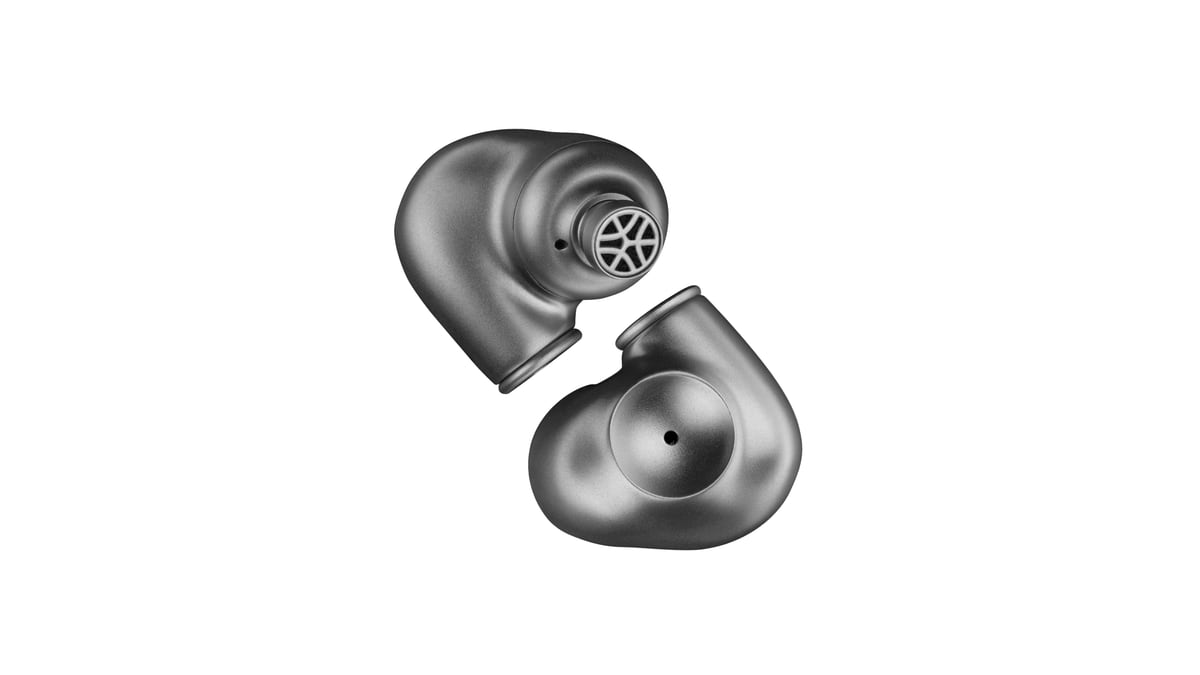
One driver to rule them all
The in-ear monitor market in 2026 is, to put it diplomatically, an arms race. Quad-driver hybrids, six-balanced-armature stacks, tribrid electrostatic arrangements: if your IEM doesn't read like a parts manifest from a miniaturised speaker factory, it risks being dismissed as entry-level before anyone has even put it in their ears. Into this environment comes the Meze ASTRU, and it arrives with what can only be described as deliberate restraint: a single 10mm dynamic driver, housed in a shell machined from a solid block of pure titanium, priced at $899 AUD. It debuted at CanJam NYC in March 2026 and went on general sale from March 20.
I'll say upfront that I find Meze's positioning here genuinely interesting, and not just as a marketing story. The Romanian company built its reputation on the 99 Classics over-ear headphone, a product that also leaned into materials and craftsmanship rather than spec-sheet complexity, and the ASTRU feels like a philosophical continuation of that approach applied to the IEM form factor. Whether the philosophy translates into a listening experience that justifies the price is what we're here to work out.
A shell machined from solid titanium
The first thing you'll notice, before the ASTRU is anywhere near your ears, is the housing. Each shell is CNC-machined from a single block of pure titanium. Not titanium-coated, not titanium-infused resin: solid, unalloyed titanium, worked down to its final form by computer-controlled cutting tools. The result is a shell that weighs 13.4 grams per side, which is on the heavier end for an IEM but still entirely manageable for extended listening sessions. Pick one up and there is an immediate density to it, a solidity that communicates quality without theatrics.
Titanium is a genuinely interesting choice of material for an IEM enclosure, and not simply for aesthetic reasons. It has an exceptionally high strength-to-weight ratio, excellent corrosion resistance (relevant for anything that spends time near your ear canal and the associated moisture), and acoustic properties that differ meaningfully from the aluminium, resin, or 3D-printed polymers that populate most of the IEM market at this price. Titanium tends toward a faster, more self-damped resonant character than aluminium, with less of the ringing artefacts that can colour sound in metal-bodied IEMs if the acoustic design doesn't account for them carefully. Whether Meze has fully exploited those properties is something I'll address when we get to sound, but the material choice is not arbitrary.
The 10mm driver with vacuum-deposited gold
The driver technology is where the ASTRU's engineering story gets most compelling. The single 10mm dynamic driver uses a diaphragm constructed from a multilayer composite material onto which more than 80 ultra-thin gold layers have been applied via vacuum magnetron sputtering. If that phrase sounds exotic, it's because it is. Sputter deposition is a physical vapour deposition process used in semiconductor manufacturing and precision optics to deposit extremely thin, uniform coatings of material onto a substrate. Applying it to an audio diaphragm is not cheap or straightforward, and the result is a diaphragm with a combination of mass, rigidity, and internal damping that would be essentially impossible to achieve through conventional diaphragm manufacturing.
The gold layering here isn't decorative. Gold has a very high density and can be deposited in layers thin enough that each one adds a controlled, incremental contribution to the diaphragm's mechanical behaviour. With 80-plus layers, you have something that behaves quite differently from a conventional polymer, beryllium, or even carbon-composite diaphragm. The intent, in broad terms, is to achieve high stiffness (for transient accuracy and extended high-frequency response) while maintaining the self-damping properties that keep dynamic drivers from sounding brittle or fatiguing, which is the characteristic complaint against many metal-diaphragm designs.
Cable, impedance and what drives it
Understanding how impedance and sensitivity interact with your source is worth a moment here, because the ASTRU's specifications tell a specific story about partnering equipment. At 32 ohms and 111 dB/mW, this is a relatively easy load. It will play loudly from a smartphone, and it won't demand a dedicated headphone amplifier to function. However, it will also reveal the noise floor and output impedance characteristics of whatever you drive it with rather plainly. A low-output-impedance source is strongly recommended; the ASTRU is the kind of IEM that will reward a quality portable DAC/amp pairing.
Meze ships the ASTRU with a 4.4mm balanced cable as standard, which is the right call for a product at this price point and signals that the company expects buyers to be using capable portable sources rather than plugging directly into a laptop headphone jack. If you're unsure what changes at the plug, our explainer on balanced vs single-ended headphone outputs covers it. A 3.5mm adapter is included for when you need it, but the primary cable is what you'll want to use. The frequency response spec of 5Hz–35kHz is ambitious and, frankly, probably beyond what most ears can consciously perceive at the extremes, but it tells you something about the driver's capabilities and the acoustic tuning ambitions Meze has brought to the design.
Fit and comfort
The ASTRU fits in a conventional over-ear IEM style. The titanium housing, despite its density, should sit comfortably once you've found the right ear tip combination. Tip selection matters enormously here, as it does with any IEM, and the seal you achieve will have a substantial effect on the bass response and overall tonal balance. Our piece on IEM ear tips as the free upgrade explains why, and I'd encourage anyone buying the ASTRU to try several options rather than defaulting to the included tips if they don't feel quite right. Nozzle size and ear anatomy play a part too, and IEM fit, nozzle size and ear anatomy is worth reading before you spend.
At 13.4 grams per earpiece, the ASTRU isn't a featherweight, but weight alone shouldn't be a barrier to multi-hour sessions. The machined housing edges are smooth and the contours are considered. This doesn't have the organic, almost sculptural fit geometry of some custom-shaped IEMs, but it's well-executed for a universal-fit design.
Meze ASTRU tuning: bass, mids and treble
Meze has gone for what I'd describe as a balanced-to-slightly-warm tuning with genuine extension at both frequency extremes. The bass is present and textured without being elevated in the way that flatters streaming-compressed pop at the expense of everything else. It's the kind of bass that rewards well-recorded music. Double bass on jazz recordings has weight and bow articulation, kick drums have impact without bloat, and the low-frequency foundation of orchestral works feels stable and honest.
The midrange is where single dynamic drivers have traditionally held an advantage over multi-driver designs, and the ASTRU demonstrates why. There is a coherence and naturalness to voices and acoustic instruments that multi-BA designs can sometimes struggle to match, particularly in the crossover regions where different driver types hand off to each other. The ASTRU has no crossover to worry about. A violin sustains from its attack through its body resonance and into its decay as a single, continuous event, not a composite of two or three drivers attempting to stitch that event together convincingly. For listeners who prioritise timbral accuracy and organic presentation over raw technical resolution, this matters considerably.
The treble is extended and detailed without the edginess that plagues some metal-diaphragm designs. The gold-layered composite diaphragm appears to be doing exactly what Meze intended, delivering high-frequency air and sparkle while maintaining enough damping to avoid the fatiguing upper-midrange peaks that make some technically impressive IEMs unpleasant for extended listening. Cymbal decay trails naturally, sibilance on vocals is controlled without being softened into obscurity, and the overall high-frequency character is one I'd describe as refined rather than exciting.
Soundstage, imaging and technical performance
For a closed-form IEM, which the ASTRU is, physically, the soundstage and imaging performance is genuinely impressive. There's a sense of space and layering that goes beyond what you might expect from an in-ear format. Imaging is precise without being artificially hyper-focused, and the sense of depth on well-recorded material is among the better results you'll find at this price in IEM form. The titanium housing's acoustic properties likely contribute here: the absence of resonant colouration from the shell means that spatial cues in recordings are reproduced with less contamination from the enclosure itself.
Compared to a quality open-back over-ear headphone (and if you're curious about that comparison, our Sennheiser HD 660S2 review (check price) gives you a sense of what a well-regarded open-back dynamic driver design does differently), the ASTRU naturally can't match the sheer spaciousness that comes from acoustic coupling to the room. But within the constraints of an IEM, it performs at a high level.
The single-driver question
It would be remiss not to address the elephant in the room. At $899, a buyer could instead choose any number of multi-driver hybrid IEMs with balanced armatures handling the mids and highs, dynamic drivers for bass, and potentially even electrostatic drivers for the top octave. On a raw specification comparison, those designs will often list impressive numbers: more driver units, wider claimed frequency response, elaborate crossover networks. The question is whether those numbers translate to a better listening experience.
My answer is that it depends entirely on what you value. Multi-driver tribrid designs can achieve extraordinary levels of technical resolution and detail retrieval. They can also sound fragmented, over-etched, and tonally strange, particularly if the crossover design isn't exemplary; our explainer on multi-driver IEM crossovers shows why. A well-executed single dynamic driver, especially one with the diaphragm technology Meze has deployed here, offers a different set of trade-offs: perhaps marginally less absolute resolution at the frequency extremes compared to a perfectly executed tribrid, but considerably more tonal coherence and a naturalness of presentation that many listeners ultimately prefer for long-term, fatigue-free listening.
The ASTRU, in my assessment, is a very well-executed single dynamic driver design. It isn't trying to win a spec sheet competition. It is trying to sound like music.
Pairing considerations for Australian buyers
The ASTRU's 32-ohm, 111 dB/mW specification means it will work from a broad range of sources. However, to hear what the design is genuinely capable of, you'll want a clean, low-noise portable DAC/amplifier. The Chord Electronics Mojo 2 (check price) is a natural partner at a higher investment level and represents the kind of source quality that justifies spending $899 on an IEM. The Mojo 2's low output impedance and excellent noise floor will let the ASTRU breathe. Budget-conscious buyers might consider a quality dongle DAC from a reputable manufacturer; the ASTRU is sensitive enough that noise floor and output impedance will matter more than outright power delivery.
For home desktop listening, a quality DAC feeding a dedicated headphone amplifier with low output impedance is the sensible approach. You don't need significant power, since 111 dB/mW means these will play at ear-damaging levels from modest outputs, but you want clean signal delivery and a source that doesn't impose its own character on what is fundamentally a revealing transducer.
Locally, the ASTRU is available at $899 through Meze's authorised Australian distributors. At that price, it sits in a competitive bracket, but the build quality, driver technology, and sonic character mark it as genuinely differentiated rather than just another entry in a crowded field.
Verdict
The Meze ASTRU is a confident, carefully reasoned statement about what a flagship IEM can be in 2026. It takes the road less travelled (one driver, premium materials, meticulous manufacturing) and arrives at a destination that will resonate strongly with listeners who find the multi-driver tribrid trend more impressive on paper than in practice. The CNC-machined titanium shell is exceptional, the gold-layer composite diaphragm technology is genuinely novel and audibly effective, and the resulting sound signature is coherent, natural, and ultimately very easy to listen to for extended periods.
It won't satisfy listeners who want the last word in micro-detail retrieval or who measure audio quality primarily in driver count. For everyone else, and I suspect that's a larger portion of the serious listening community than the IEM market might suggest, the ASTRU is among the most compelling arguments for simplicity done brilliantly at this price point.
Price: $899 AUD
Availability: From March 20, 2026, through authorised Australian dealers
Common questions
- Why does the Meze ASTRU use only one driver when competitors at the same price use multiple drivers?
- Meze's design philosophy with the ASTRU prioritises tonal coherence and naturalness over driver count. A single 10mm dynamic driver has no crossover network, meaning sound from bass through treble is produced by one continuously moving element. This can result in a more organic, seamless presentation — particularly in the midrange — compared to multi-driver designs where different driver types must hand off to each other at crossover points. The trade-off is that multi-driver designs can sometimes achieve greater absolute resolution at frequency extremes; Meze has compensated with advanced diaphragm technology (80+ vacuum-sputtered gold layers) to extract maximum performance from the single-driver approach.
- Does the Meze ASTRU need a special amplifier or DAC to drive it properly?
- At 32 ohms impedance and 111 dB/mW sensitivity, the ASTRU will play loudly from a smartphone and does not require a powerful amplifier. However, because it is a revealing transducer, source quality matters. A low-output-impedance source is recommended to maintain tonal accuracy, and a clean noise floor is important given the IEM's high sensitivity. A quality portable DAC/amplifier — such as the Chord Electronics Mojo 2 or a reputable dongle DAC — will allow the ASTRU to perform at its best. The standard cable is 4.4mm balanced, indicating Meze expects buyers to use capable portable sources.
- What does 'vacuum magnetron sputtering' mean for the ASTRU's diaphragm, and why does it matter?
- Vacuum magnetron sputtering is a precision thin-film deposition process borrowed from semiconductor and optics manufacturing. It deposits extremely thin, uniform layers of material — in the ASTRU's case, gold — onto a substrate under vacuum conditions. Meze applies more than 80 of these ultra-thin gold layers to the diaphragm composite. Each layer adds a controlled contribution to the diaphragm's mass, stiffness, and internal damping characteristics. The result is a diaphragm that is significantly stiffer and better self-damped than conventional polymer or metal diaphragms, aiming to deliver both high-frequency extension and the damping that prevents the brittle, fatiguing character sometimes associated with metal-diaphragm drivers.
- Is $899 good value for the Meze ASTRU in the Australian market?
- At $899, the ASTRU sits in a genuinely competitive IEM bracket in Australia, where multi-driver hybrids and tribrid designs from numerous Asian and European manufacturers compete aggressively. Whether it represents good value depends on your priorities. The solid titanium CNC-machined shell, the advanced vacuum-sputtered diaphragm technology, and the coherent single-driver sound presentation collectively justify the price for listeners who value build quality and tonal naturalness. Buyers seeking maximum technical resolution or the novelty of complex driver arrays may find multi-driver alternatives more appealing. For listeners who prioritise long-term listening fatigue, material quality, and timbral accuracy, the ASTRU is well-positioned.

I'm Eleanor — most people call me Nell. I came to this from the studio side, so I spend more time with headphones on my head than speakers in a room, and I've learned to hear the difference between detail and brightness pretending to be detail. I'm obsessive about fit and comfort, because the best-sounding headphone in the world is useless if it's clamping your skull after twenty minutes. I review everything from $200 daily-drivers to silly flagship planars.
Mastering-adjacent background; IEM and open-back specialist
More from Eleanor Shaw
 Why your headphone chair and desk still need bass trappingClosed headphones don't escape room modes. Here's why bass trapping near your desk changes what you feel through the chair and the leakage you hear.
 Why your headphone desk needs a sub (and how to set it up)A subwoofer under the desk can fix what headphones can't do: chest-felt bass. Here's how to add one without wrecking your headphone sound.
- Dongle DACs vs desktop DACs: when the small one is actually enoughDongle DACs have closed the gap on desktop units for most headphones. Here's where the small ones genuinely hold up, and where they don't.
- Bluetooth codecs and multiroom: why your headphones sound different on Wi-FiWhy the same headphones sound different depending on whether they're fed over Bluetooth, AirPlay or a multiroom app — and how to get the best signal path at your desk.
 Cartridge tracking force: why "close enough" costs you detailTracking force outside the maker's range doesn't just risk your records — it quietly wrecks the detail and channel balance you paid for. Here's how to get it right.
- Streaming to headphones: getting multiroom apps to actually feed your DACMultiroom apps are built for speakers in rooms, not headphones at a desk. Here's how to get Spotify Connect, AirPlay and Roon actually feeding your DAC properly.