Roon vs Linn Kazoo vs Lumin: which control layer is worth building around?
Three systems. One job. Get the music from the server or the cloud into the right room, sound as good as the hardware allows, and stay out of the way while you listen. That is the brief. And yet the control layer — the software ecosystem sitting between your library and your DAC — is where high-end streaming systems most reliably fall apart, not in the hardware.
I've spent time with all three of the serious contenders at the top of the market: Roon, Linn's Kazoo/Konfig ecosystem, and Lumin's own app platform. Each has a philosophy. Each has a real weakness. And the choice shapes not just how you listen day-to-day but which hardware you can and can't use, how much you'll pay annually, and how much of your digital chain you actually control.
Why the control layer matters more than most people expect
At the entry level, none of this matters much. Pick whatever app the streamer ships with and be done with it. But once you're running separates — a dedicated server or NAS, a reference-grade network streamer or DAC, possibly multiple zones — the control layer becomes the connective tissue of the whole system. A bad one introduces latency between browsing and playback, fragments your library across local files and streaming services, fails to pass metadata cleanly, or simply crashes mid-session during a dinner party. I've watched all of these happen in real listening rooms.
The deeper issue is that control-layer software also determines how your audio data is handled upstream of the DAC. Roon does DSP and upmixing inside its own engine. Lumin's app is deliberately thin, trusting the hardware. Linn's ecosystem famously applies its own space-optimisation DSP at the network player level. These are not cosmetic differences.
If you're building around a serious network streamer — something from our best DACs and network streamers shortlist — this decision is worth taking slowly.
Roon: the reference-grade library experience
Roon is the one most audiophiles encounter first, and for good reason. The metadata engine is genuinely exceptional. It pulls artist biographies, credits, composition information, and links across your library in a way that makes browsing feel editorial rather than mechanical. If you have twenty thousand local files accumulated over decades, Roon will organise them better than any other tool on the market. Full stop.
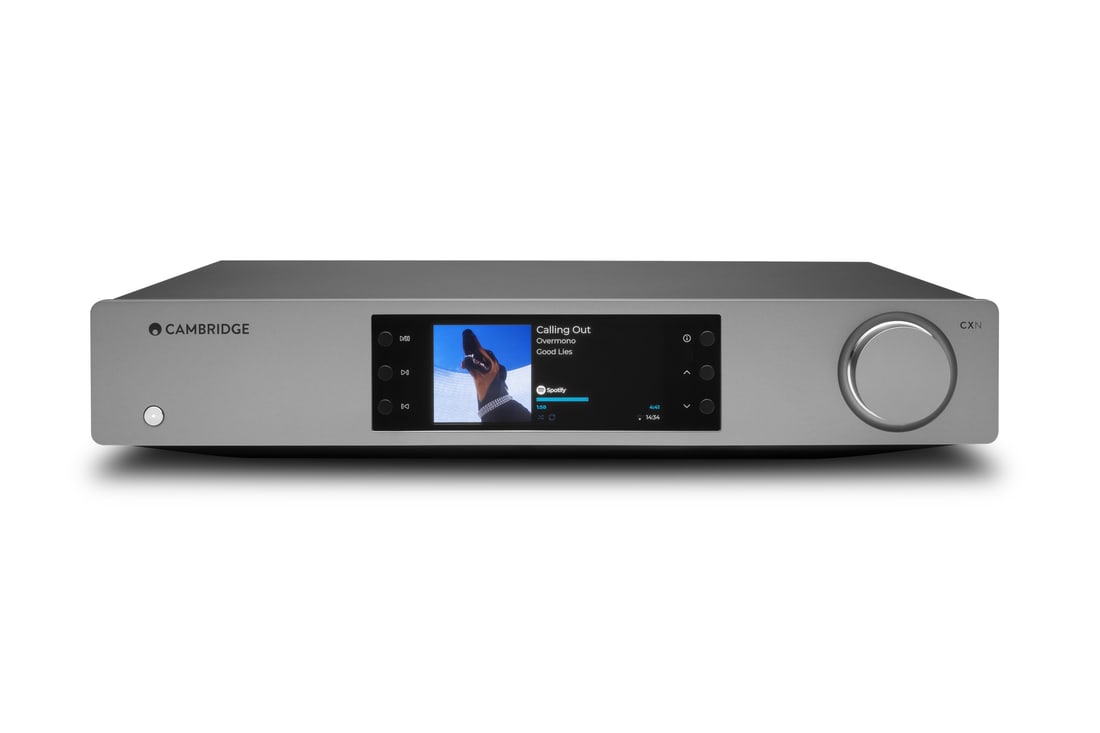
The architecture is client-server: you run a Roon Core on a dedicated machine (a NUC, a Nucleus, a Mac Mini, or their own hardware), and control everything from iOS, Android, or desktop. Endpoints are Roon Ready devices, which now include most serious network streamers. The Cambridge Audio CXN100 (check price) is Roon Ready. So is essentially anything running the StreamMagic or Volumio platform at this level.
The DSP suite inside Roon is sophisticated — convolution filters, parametric EQ, room correction, upsampling to DSD. In the right hands it's powerful. In the wrong hands it silently wrecks your signal chain, which is something the marketing doesn't emphasise. My standing advice: if you're using Roon with a genuinely resolving DAC and competent analogue stage, start with DSP off and only add it with a specific measured goal in mind.
The cost is the obvious friction point. Roon currently charges an annual subscription (around AU$200 per year) or a lifetime licence. For a cost-no-object system, that's not the issue. The issue is dependency: if Roon Labs changes its business model, raises the price significantly, or — in the unlikely but real scenario — ceases to operate, your library organisation and playback chain become partially non-functional overnight. That's a legitimate concern for a system you've spent serious money on.
Honestly, I think the lifetime licence is the only sensible option for committed users. The annual model makes sense for someone testing the ecosystem; paying indefinitely for software at the centre of a reference system feels like the wrong kind of recurring cost.
Linn Kazoo and the Exakt ecosystem
Linn's approach is philosophically different. Kazoo is the UPnP-based control app for non-Exakt Linn streamers, and it's competent if unspectacular — clean, stable, no metadata theatre. But the real Linn story is the Exakt ecosystem and Space Optimisation.
Linn Space Optimisation is speaker and room correction applied at the DSP level inside the network player, calibrated using your room dimensions and speaker placement. It's configured through Linn's Konfig desktop software. Done properly, using accurate room measurements and Linn's own speaker models (which are extensive), it produces genuinely audible improvements in bass control and stereo imaging in real rooms. I've heard it transform a Linn Klimax system in a difficult room in Sydney's inner west — a room with a hard rear wall and a low ceiling — from boomy and congested to controlled and open. The improvement was not subtle.
The trade-off is that you're inside Linn's world. The ecosystem rewards you heavily for using Linn hardware end-to-end. Mixing a Linn streamer with a third-party DAC works, but you lose Exakt. And Exakt is where the serious engineering lives — the lossless digital crossover transmitted to active speakers with per-driver correction. If you're not using Linn active speakers, much of the ecosystem's differentiation evaporates.
For a multiroom system built entirely on Linn hardware, this is among the most coherent experiences available. But it's not cheap, and it's not flexible. If you later want to add a non-Linn zone or integrate a different streaming service cleanly, the edges get rough quickly.
Lumin: hardware-first, app as interface
Lumin's philosophy is simpler. The app exists to control the hardware; the hardware does the heavy lifting. Lumin players are built around a proprietary implementation of OpenHome with Tidal Connect, Qobuz, Spotify Connect, and local UPnP library support. The app is straightforward, genuinely stable, and designed to get out of the way.
What Lumin does well: native Tidal and Qobuz integration that passes lossless audio cleanly without additional software layers. The Lumin app handles gapless playback correctly, which sounds basic but is something several competitors still get wrong under specific conditions. And the hardware — particularly the T3 and X1 — is genuinely well-engineered at the DAC and power supply level.
The weakness is metadata and library management. If you have a large local library, Lumin's browsing experience is functional but thin compared to Roon. There's no editorial layer, no cross-linking of performers across albums, no composition credits. For a streaming-first listener who keeps a small local library, this doesn't matter. For someone with thirty years of ripped CDs, it's a daily friction point.
Lumin hardware is also Roon Ready, which means you can run Roon on top of a Lumin player if you want Roon's library experience without sacrificing Lumin's native playback quality. Some listeners do exactly this, using Roon for browsing and Lumin's own app for casual playback. It's slightly inelegant but it works.
Streaming service integration: where each falls short
All three support Tidal and Qobuz. That's the baseline. But the integration quality varies.
Roon's Tidal and Qobuz integration is deep — albums appear alongside your local files, and the metadata engine treats them equivalently. The search is genuinely good. But Roon does not support Spotify natively (Spotify's API restrictions are the reason), which is a real-world problem if anyone in your household uses Spotify as a primary service. Apple Music is similarly absent. These are not Roon's fault exactly, but they're the gaps you live with.
Linn's ecosystem handles Tidal, Qobuz, and Spotify Connect. The Spotify Connect implementation means Spotify controls the stream directly to the Linn hardware, bypassing Kazoo — which is actually fine for casual listening but means Spotify sessions don't benefit from Space Optimisation DSP.
Lumin supports Tidal Connect and Qobuz natively, plus Spotify Connect. For an Australian household where different family members use different services, Lumin's flexibility is a practical advantage.
Worth noting: if streaming service audio quality settings are something you care about, our earlier explainer on DACs and network streamers covers how to verify what's actually arriving at your converter. The control layer choice affects how directly you can inspect that.
Multiroom and zone management
Roon handles multiroom well, particularly for synchronised playback across zones. If you're running a serious listening room plus a study plus a kitchen, Roon's zone grouping and synchronisation is the most reliable implementation I've used. The latency matching between zones is genuinely impressive — I've stood in doorways between rooms and not heard a discrete echo between them, which is harder to achieve than it sounds.
Linn's multiroom is reliable within the Linn ecosystem but becomes complicated the moment you introduce a non-Linn zone. For a whole-home Linn installation, it works well. For a mixed system — which describes most real homes — it requires workarounds.
Lumin's multiroom is improving but still lags Roon for synchronised multi-zone playback. For a two-zone system it's fine. For four zones played in sync, I'd want to test it carefully before committing. Our guide to streaming amplifiers and all-in-one systems covers several integrated options that handle their own zone management without needing a third-party control layer, which is worth considering for secondary zones.
Which system is actually worth building around?
Short version: the answer depends almost entirely on your library and your household.
If you have a large local library and want the best browsing and metadata experience available, Roon is the answer. Accept the subscription cost, buy the lifetime licence, run a competent Core, and use Roon Ready hardware. The experience is genuinely excellent. Just turn off DSP until you know exactly what you're doing with it.
If you're building an all-Linn system and willing to stay within that ecosystem, the Exakt and Space Optimisation combination offers something neither Roon nor Lumin can match in treated-room performance. The hardware is extraordinary. The lock-in is real.
If you want the cleanest, most hardware-agnostic streaming experience with solid multi-service support and minimal software complexity, Lumin's platform is underrated. It's not glamorous. It does the job without drama. For a streaming-primary system without a massive local library, that's a genuine virtue.
And for what it's worth: I've seen elaborate Roon setups at Munich and RMAF that sounded no better than a well-configured Lumin running direct to a serious DAC. At this level, the control layer's job is to get out of the way. The ones that remember that tend to sound the best.
— Sofia Laurent, High-End & Statement Systems EditorCommon questions
- Can I use Roon with a Lumin or Linn network player?
- Yes, with some caveats. Most Lumin players are Roon Ready, so Roon can use them as endpoints with full control. Linn streamers (non-Exakt) also support Roon as endpoints, but you lose Linn's Space Optimisation DSP when playing via Roon — Roon and Linn's room correction cannot run simultaneously on the same stream.
- Is Roon's lifetime licence actually worth it compared to the annual subscription?
- For anyone treating Roon as the permanent centre of a serious system, the lifetime licence makes more financial sense over three or more years. The annual subscription is more appropriate for trialling the ecosystem. The main risk with any lifetime licence is software-business continuity — Roon Labs is a well-established company, but this is a reasonable consideration for a long-term system investment.
- Does the choice of control layer affect audio quality, or is it just about the interface?
- It can affect audio quality directly. Roon's DSP engine processes audio inside its Core before sending it to the endpoint — if DSP features like upsampling or EQ are active, the signal is altered. Linn's Space Optimisation applies room correction at the network player level. Lumin's native playback is a relatively thin software layer and leaves audio processing to the hardware. In all cases, with DSP disabled and lossless sources, the differences in measured output should be small; the larger variable is how correctly each platform passes bit-perfect data to the DAC.
- Does Roon support Apple Music or Spotify?
- No. Roon does not currently support Apple Music or Spotify as integrated streaming sources. Both services restrict the API access that Roon's architecture requires. Spotify Connect works with Linn and Lumin hardware directly, bypassing the control layer. If Spotify or Apple Music are important services in your household, this is a real limitation of the Roon platform worth factoring into the decision.

I'm Sofia, and I get to play with the silly stuff — the statement amplifiers, the reference loudspeakers, the cost-no-object systems that most of us will only ever hear at a show. Someone has to, and I take it seriously: at this level the price stops mapping to performance and starts mapping to engineering, craft and ego, and part of my job is telling you which is which. I love the extreme end of this hobby, but I'm not dazzled by a big number on a price tag.
Covers flagship and cost-no-object reference systems
More from Sofia Laurent
 Six-figure DACs: what the money actually buys over a good $2,000 boxI've compared statement DACs costing more than a car against a good $2,000 unit. Here's where the extra money genuinely goes, and where it doesn't.
 Diffusion vs absorption: the treatment decision statement rooms get wrongSix-figure speakers, dead-flat frequency response, and a room that still sounds wrong. The fix is usually a diffusion problem, not an absorption one.
- Statement turntables: what six figures of vinyl front-end actually buysFrom air-bearing platters to outboard motor pods, what separates a reference turntable from a very good one, and why the gains get smaller as the price climbs.
- Acoustic treatment at the statement level: what six figures of speaker buys you in a bad roomEven reference loudspeakers can't out-engineer a bad room. Here's what serious acoustic treatment actually buys a statement system, and where the money should go first.
- The last ten per cent: where statement systems actually spend their moneyPast a certain point, extra dollars buy engineering headroom and craft, not more sound. Here's how to tell the difference in a statement system.
 What a statement headphone system actually buys you over a good oneA look at what genuinely changes when you push a headphone system into cost-no-object territory, and what you're really paying for once the sound has stopped improving.