Speaker sensitivity and amplifier power: the matching sum most buyers skip
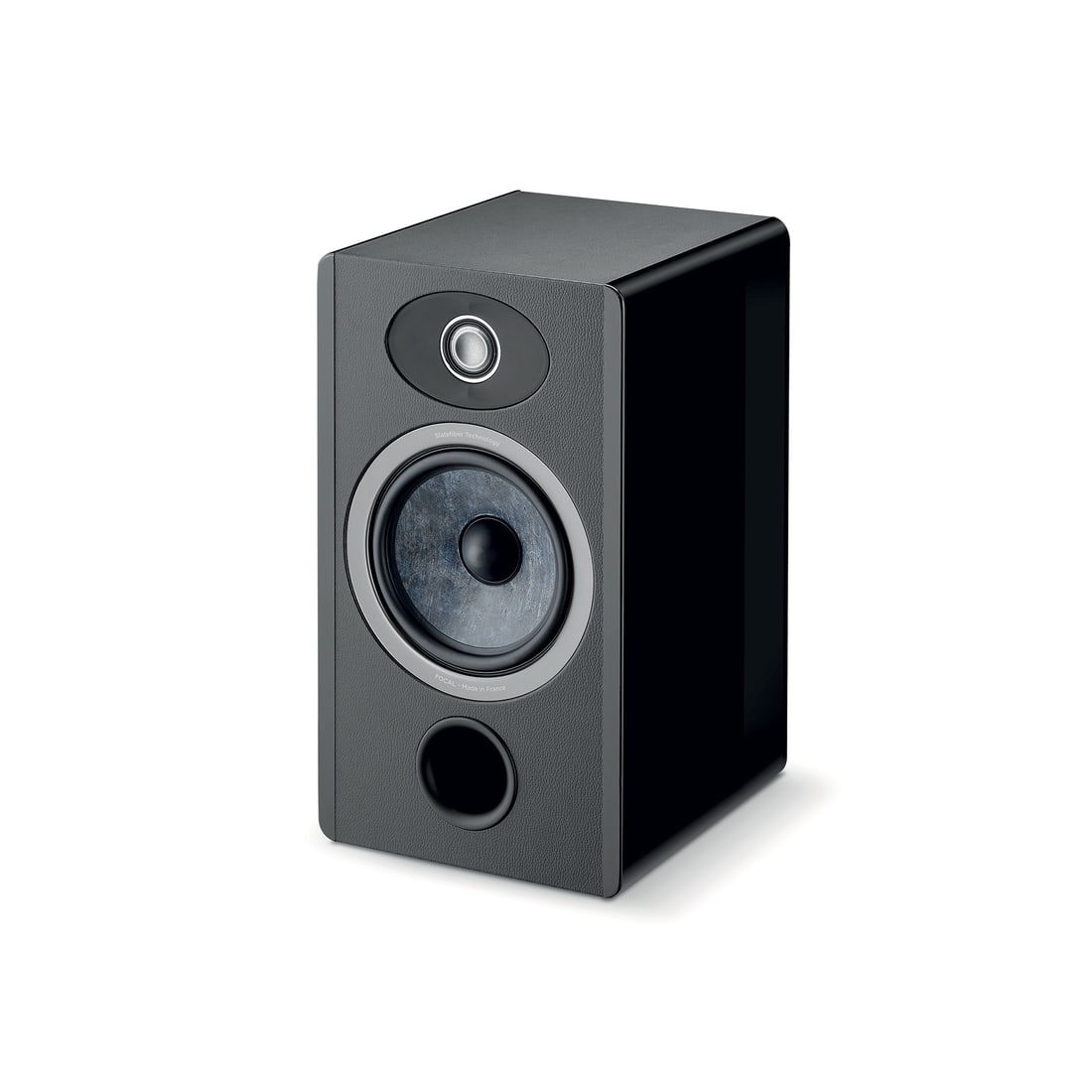
A reader emailed me last month with a spec sheet from a pair of standmounts rated at 84dB sensitivity and a 60-watt integrated amp he'd already bought. He wanted to know if it would be "loud enough." Wrong question, mostly. The right question is what happens to headroom when the volume knob goes past the point where the room stops being comfortable, and that's a maths problem, not a vibe.
I spent fifteen years designing audio electronics before I started writing about this stuff, and the number of people who buy speakers and amps as two completely separate decisions still surprises me. Sensitivity and power aren't independent variables. They're two halves of the same equation, and if you get the ratio wrong you either waste money on watts you'll never use, or you buy a lovely amp that runs out of legs the first time you want to hear a symphony properly.
What sensitivity actually measures
Speaker sensitivity is quoted in dB SPL at 1 metre with 1 watt of input, usually written as dB/W/m. A speaker rated at 88dB will produce 88dB of sound pressure at one metre away when fed exactly one watt. A speaker rated at 91dB will produce more output from the same one watt, because it converts electrical energy into sound pressure more efficiently.
Here's the part that trips people up: it's a logarithmic scale, not linear. Every 3dB increase in output requires a doubling of amplifier power. So the difference between an 84dB speaker and a 90dB speaker isn't small — it's a 6dB gap, which means the 84dB speaker needs four times the power to hit the same SPL. Feed both speakers 60 watts and the 90dB pair will simply play louder, with more headroom in reserve, while the 84dB pair is working much harder for the same result.
This is why a spec sheet number that looks almost identical — 84dB versus 87dB versus 90dB — actually represents a completely different set of demands on your amplifier. I've measured plenty of "budget" standmounts that are less sensitive than their bigger floorstanding siblings simply because the smaller cabinet and driver combination trades efficiency for bass extension. That's a legitimate design decision, but it has consequences for what amp you pair it with.
Working out how much power you actually need
Most rooms need somewhere between 85 and 95dB SPL at the listening seat for realistic peaks in orchestral or rock music, with genuine transient headroom on top of average listening levels. Average listening level for most people sits closer to 70-75dB, but the peaks in well-recorded material can spike 15-20dB above that average, and it's those peaks that either sound effortless or sound like the amp is straining.
Take a speaker rated at 87dB/W/m. One watt gets you 87dB at one metre. Double the power to 2 watts and you gain 3dB, hitting 90dB. Double again to 4 watts for 93dB, and again to 8 watts for 96dB. By the time you want 100dB peaks at a listening distance of roughly 3 metres (which knocks a few dB off due to distance losses), you're often into the 50-100 watt range depending on room size and how forgiving you want to be with headroom.
Now do the same sum for an 84dB speaker and the numbers roughly double at every step. Suddenly that 60-watt amp that felt generous on paper is closer to the edge of comfortable than you'd like, particularly if the speaker also happens to dip to a difficult impedance load at some frequencies, which most do. I've written before about how damping factor and low-impedance speakers compound this problem — a hungry, inefficient speaker with an awkward impedance curve is the worst possible pairing for a marginal amplifier.
Why "enough power" is a room-shaped answer
None of this exists in isolation from the room. A 3.5 x 4 metre bedroom system needs dramatically less SPL headroom than a 6 x 8 metre open-plan living space with a high ceiling, and listening distance matters enormously too because SPL drops roughly 6dB every time you double the distance from the speaker in a free field, less in a reflective domestic room where early reflections add back some energy. I did a fair bit of work years ago on a project in an apartment off Chapel Street in Melbourne — small room, hard surfaces, close listening distance — where the owner had convinced himself he needed a 150-watt monster amp for a pair of modest standmounts. He didn't. The room was small enough and reflective enough that even a modest 40-watt integrated had headroom to spare, and the extra investment would have gone entirely to waste. Room size and listening distance change the equation as much as speaker sensitivity does.
This is also where the argument for standmounts versus floorstanders gets interesting from a power perspective. Floorstanders often have larger cabinets and more drivers, which can mean higher sensitivity for the same tonal balance, but not always — some floorstanders chase bass extension at the expense of efficiency, same as standmounts do.
The amplifier side of the ledger
Rated power on an amplifier spec sheet is usually quoted into 8 ohms, sometimes into 4 ohms with a separate figure, and almost never tells you how the amp behaves into the dips a real speaker load presents at 200Hz or 3kHz where the crossover network does its work. Two amps both rated at "80 watts into 8 ohms" can behave very differently once the load gets difficult, and this is where I'd rather see a manufacturer's own measured impedance and power curve than trust a single headline number. Something like the Rega Brio Mk7 (check price) or the Cambridge Audio CXA81 MkII (check price) both publish sensible, honestly-rated power figures that hold up reasonably well into 4 ohms, which matters more than the headline number alone. Contrast that with some cheaper amps that quote impressive numbers at 1kHz into a resistive dummy load and fall away considerably under real musical demands.
Damping factor matters here too, though I'd argue it's overstated as a standalone spec — it interacts with speaker impedance and cable length far more than most marketing copy admits. What actually matters in practice is whether the amplifier can deliver current into a 4-ohm or lower dip without the rail voltage sagging, and that's rarely on the spec sheet at all. It's usually visible only in independent bench tests or in how confidently a reviewer's ears report the bass staying tight under load.
A contrarian view on "just buy more watts"
The common advice online is to always buy more amplifier power than you think you need, on the theory that headroom never hurts. I don't entirely agree. Buying an amplifier with far more power than a sensitive, easy speaker load actually needs is often just money spent on watts that sit unused, when that budget could have gone into a better source, a better speaker, or into room treatment that will do more for perceived dynamics than raw power ever will. The honest exception is genuinely inefficient, difficult speaker loads — big electrostatic panels or some large three-way floorstanders with steep impedance dips — where under-powering really does risk audible compression and, at worst, clipping damage to tweeters. For an efficient, well-behaved 88-90dB standmount in a modest room, a well-engineered 50-60 watt integrated amp is very often plenty, and the extra 40 watts on a bigger amp buys you almost nothing you'll ever use.
Matching in practice: three real combinations
A pair of KEF R3 Meta (check price) speakers, rated in the mid-80s for sensitivity with a manageable impedance curve, pairs comfortably with something like the Marantz Model 40n (check price) in a mid-sized living room, with headroom to spare for most listening habits. Step up to a less sensitive, more current-hungry load — some large floorstanders with passive radiators, for instance — and I'd want to see an amplifier with genuinely strong current delivery into 4 ohms, not just a higher wattage number on the box. At the budget end, a speaker like the Wharfedale Diamond 12.1 (check price), reasonably sensitive and easy to drive, will sound perfectly confident off a modest amplifier, which is exactly why it turns up so often in giant-killer system recommendations. Sensitivity plus an easy impedance curve is doing a lot of the heavy lifting there, more than raw amplifier wattage.
Reading the spec sheet properly
When I'm assessing a new pairing, I want three numbers from the speaker: sensitivity in dB/W/m, nominal impedance, and the minimum impedance dip if the manufacturer publishes one (not all do, which is itself informative). From the amp, I want rated power into both 8 and 4 ohms, and ideally some indication of how it behaves under sustained dynamic load rather than a single steady-state THD figure at 1kHz. The IEC and AES standards bodies publish measurement methodologies for exactly this reason, aiming to reduce the marketing fudge that creeps into headline spec sheets. None of this needs to be intimidating maths at the point of purchase. The shortcut I give most people: if a speaker's sensitivity is below about 86dB, take amplifier power seriously and lean toward the higher-current end of what's in budget. Above about 89-90dB, in a normal-sized room, you have much more flexibility and the amplifier choice becomes more about sound character than raw capability.
Get the pairing right and the system disappears, which is the whole point of not owning speaker cables as furniture. Get it wrong and you'll spend years chasing a problem that was solved on the spec sheet before you ever plugged anything in.
— Marcus Vale, Editor · Electronics & Measurement
Common questions
- Does higher wattage always mean a louder speaker?
- No. Output depends on both amplifier power and speaker sensitivity together. A high-sensitivity speaker fed modest power can play louder than a low-sensitivity speaker fed much more power, because sensitivity determines how efficiently watts convert to sound pressure.
- Is it safer to over-power or under-power a speaker?
- Generally safer to slightly over-power with a clean amplifier that isn't clipping than to under-power and drive an amp into distortion, since clipped signal is what typically damages tweeters, not high clean power.
- How much does room size change the power I need?
- Substantially. A small, reflective room needs far less amplifier power for the same perceived loudness than a large open-plan space, because SPL falls off with listening distance and room reflections add back energy in smaller spaces.
- Why do two amps with the same wattage rating sound different under load?
- Rated power is usually measured into a steady 8-ohm resistive load at a single frequency, which doesn't reflect how the amp behaves into the reactive impedance dips a real speaker crossover presents, or under sustained musical dynamics.

I'm Marcus, and I'll be honest up front: I trust a measurement before I trust my own ears, because my ears lie to me daily. I spent fifteen years designing audio electronics before I started writing about them, so when a brand tells me a number, I want to see the graph. That doesn't make me cold about this hobby — I love a system that disappears as much as anyone — it just means I'll tell you when an expensive box is selling you confidence rather than performance.
Former audio electronics engineer; objectivist; runs the test bench
More from Marcus Vale
 Why your turntable's earth wire isn't optionalTurntable earthing fixes most phono hum problems. Here's how grounding actually works, why it fails, and how to track down a noisy connection.
 Why your AVR runs cool on music but throttles on AtmosAVR thermal throttling explained: why nine-channel Atmos mixes push receivers into protection mode that two-channel music never triggers.
- Subwoofer delay settings: why your AVR's number is a guessAVR auto-calibration estimates subwoofer delay from distance, not timing. Here's how to measure and correct it properly for tighter bass.
- AVR auto-calibration: what Audyssey, YPAO and Dirac actually measureAudyssey, YPAO and Dirac Live all run a mic sweep and spit out numbers, but they're not measuring the same things or fixing the same problems. Here's what's actually happening.
- Cartridge break-in: what actually changes in the first 40 hoursDoes a new cartridge really need 40 hours to "open up"? I measured one to find out what's mechanical fact and what's audiophile folklore.
- DAC output stages: what the chip doesn't tell youThe DAC chip gets all the marketing attention, but the analogue output stage after it does most of the work shaping what you actually hear.