HIGH END Vienna 2026: Hi-Fi's Biggest Show Sells Out Debut
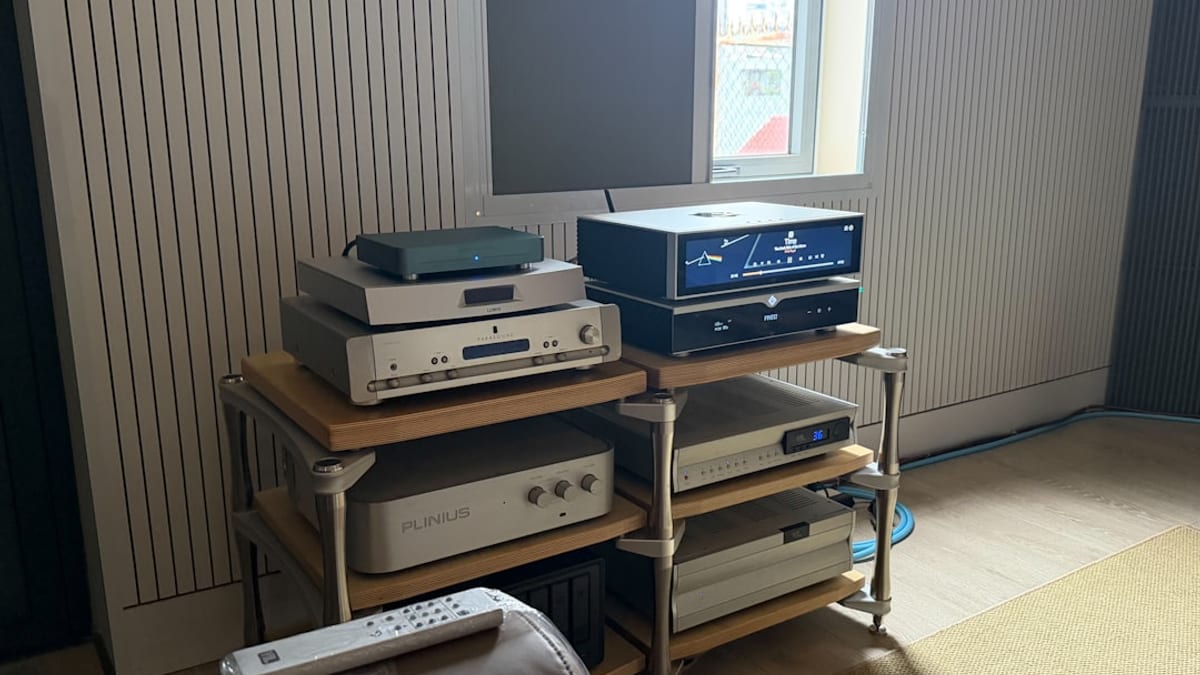
A new chapter for the world's premier audio show
For 21 years, the pilgrimage for serious audio enthusiasts, industry professionals and obsessive gear-heads the world over led to Munich's MOC. HIGH END Munich was, by any reasonable measure, the most important gathering the consumer high-end audio industry had on the calendar: a week-long exercise in sensory overload, corridor negotiations and listening room queues that wound past rooms showcasing everything from five-figure standmounters to turntables that cost more than a good used car. And then, for 2026, HIGH END Vienna took its place.
The relocation to Vienna was confirmed some time ago, but that didn't diminish the anxiety in the enthusiast community. Change on this scale, with a new city, a new venue and a new logistical framework for hundreds of exhibitors, carries genuine risk. Would the magic transfer? Would attendance hold? Would the show room experiences that define HIGH END's reputation survive the transition from Munich's MOC to the Austria Center Vienna?
The answers, delivered across four days from June 4 to 7, 2026, were emphatic. HIGH END Vienna not only survived its debut, it exceeded nearly every reasonable expectation. A total of 23,109 attendees passed through the doors, the show was fully booked months before opening day, and the feedback from attendees, both trade and consumer, was striking in its consistency. People were impressed. Genuinely, not performatively, impressed.
As someone who has followed the high-end audio industry closely and made it my business to understand what drives serious listeners toward genuinely exceptional systems, I find the Vienna debut fascinating on multiple levels. The numbers tell one story, but the texture of what happened (what it means for the industry, for the show itself, and for Australian enthusiasts trying to make sense of it from the other side of the world) is worth unpacking at length.
The numbers behind HIGH END Vienna, and what they mean
Let's start with the attendance figure, because 23,109 visitors is not a number you can dismiss. Breaking it down: 10,603 were trade visitors, meaning importers, distributors, retailers, journalists and industry professionals, while 11,957 were consumers paying their own way to be in the same rooms as the equipment they read about, dream about and occasionally buy. The remaining 549 were accredited media representatives. Five hundred exhibitors represented more than 1,000 brands, and participants came from 41 countries.
That last figure deserves particular attention. Forty-one countries is a genuinely global footprint, and it underscores something about what HIGH END has always been and what Vienna has now inherited: this is not a regional trade fair or a national audio expo. It is the singular moment in the calendar where the entirety of the high-end audio industry, with manufacturers from Japan, Germany, France, the UK, the United States, Denmark, Switzerland and well beyond, attempts to occupy the same physical space at the same time. The gravitational pull of that concentration of expertise, product and decision-making is why the show has always mattered, and why its continuation in Vienna matters enormously.
The fact that the show was fully booked months ahead is perhaps the most telling data point of all. For a debut edition in a new city, with all the inherent uncertainty that entails, exhibitors committed early and decisively. That is not a story about inertia or habit. If inertia were driving decisions, there would have been a measurable exodus when Munich was left behind. Instead, the industry voted with its floor space bookings, and the vote was near-unanimous.
Why Vienna? Why now?
Understanding the move requires some appreciation of the constraints that had been mounting at Munich's MOC over recent years. The MOC (Messe- und Veranstaltungszentrum München) served the show well for two decades, but venue constraints are real. Acoustic performance in any given room is partly a function of the physical space itself: ceiling heights, room geometries, construction materials and the acoustic isolation between adjacent spaces all contribute to whether a manufacturer can meaningfully demonstrate what their loudspeakers, amplifiers and sources are actually capable of. Acoustic treatment can compensate for some room deficiencies, but it cannot manufacture a genuinely good-sounding room out of a fundamentally problematic one.
Attendees who visited both Munich editions and the inaugural Vienna show were vocal in their assessment: the rooms at the Austria Center Vienna sounded better. This is not a trivial observation. If you're spending the equivalent of a small mortgage on a pair of floorstanding loudspeakers, the room in which you first hear them matters enormously. Soundstage and imaging, two of the most meaningful dimensions of high-end audio performance, are deeply sensitive to room acoustics. A show room that destroys imaging or creates destructive low-frequency interference is actively working against the exhibitor's interests and the attendee's ability to make informed assessments. I'd argue the room quality is the real story of this debut, more than the headcount.
Room scale, and a city built around music
The Austria Center Vienna, as a purpose-built international conference and event centre, offers something the MOC was increasingly struggling to provide: physical scale. Larger, better-proportioned rooms mean exhibitors can set up their demonstration systems with appropriate distances between loudspeaker and listening position, with space to manage bass loading and early reflections, and with acoustic separation from adjacent rooms sufficient to prevent bleed-through. For a show built around the act of listening, this is foundational. The same logic applies at home, which is why our piece on choosing speaker format for high-end rooms is worth a read before you commit to a big cabinet.
Vienna itself brings other advantages. As a city, its cultural identity is inseparable from music: the Vienna Philharmonic, the Staatsoper, the Musikverein, and the deep tradition of classical music performance and appreciation that runs through Viennese civic life. Whether that cultural resonance translates into tangible commercial benefit for the show is hard to quantify precisely, but it is difficult to imagine a more appropriate city on earth in which to celebrate the serious pursuit of reproduced sound. Munich is a fine city, but Vienna is a music city in a way that carries genuine symbolic weight.
What the show means for the industry right now
The high-end audio industry has spent the better part of a decade working through genuinely difficult terrain. The pandemic years disrupted supply chains and cancelled or curtailed shows. Demographic anxiety, the perennial worry about whether younger listeners will ever embrace dedicated two-channel systems in the way previous generations did, has been a constant background hum. Streaming has transformed how music is consumed, and while it has arguably made access to high-quality audio sources easier than ever (the digital-to-analogue converter market has never been more vibrant or more competitive), it has also fragmented attention in ways that do not obviously benefit brands whose products require patient, sustained engagement to properly appreciate.
Against this backdrop, HIGH END Vienna's debut success is genuinely encouraging. The consumer attendance figure, just under 12,000 people who paid their own way, suggests that appetite for experiencing high-end audio in person remains strong. You do not travel to Vienna, book accommodation, and spend four days walking exhibition floors unless you are seriously engaged with the hobby and the equipment. This is not casual foot traffic. These are people who have likely already invested meaningfully in their listening rooms and are now considering what comes next. They are, in other words, exactly the audience that justifies the investment every exhibitor makes in attending.
For the brands themselves, the show's success reinforces the value of physical demonstration in a way that no amount of YouTube coverage or online reviewing can replicate. A customer who has sat in a well-set-up demonstration room and heard what a great streaming amplifier, paired with appropriately sensitive loudspeakers and a quality source, is actually capable of, is a fundamentally different prospect from one who has only read about it. The gap between understanding intellectually that a product is well-regarded and experiencing it acoustically is enormous, and shows like HIGH END Vienna exist precisely to bridge that gap.
The Australian angle
For Australian enthusiasts, the move to Vienna is largely an abstraction, since neither Munich nor Vienna is exactly a short hop from Sydney or Melbourne. But the show's health matters to us in indirect, practical ways that are worth articulating clearly.
HIGH END is where Australian distributors and importers make many of their buying decisions for the coming year. It is where they meet the manufacturers whose products they carry, evaluate new lines, negotiate terms and develop the relationships that eventually determine what lands on Australian retail shelves and at what price. A healthy, well-attended HIGH END means a healthier pipeline of interesting product flowing into the Australian market. Conversely, a struggling HIGH END would signal broader industry contraction that would eventually manifest as fewer options, longer lead times and reduced distributor investment in demonstration stock.
The 41-country participation figure is relevant here too. It means that manufacturers from the regions Australian audiophiles care most about (British, French, German, American, Japanese and Danish brands) were all present and engaged. The international character of the show is precisely what makes it the locus of industry decision-making rather than a regional event that can be safely ignored by non-European markets. Closer to home, Australia's biggest hi-fi show is locked in for Melbourne in October 2026.
There is also the question of what products were on show and what trends they represent. While specific product announcements from Vienna are beyond the scope of this piece, our report on Chord Electronics teasing two new Ultima power amps in Vienna gives a flavour of the news that surfaces there. The general trajectory of the industry covers greater integration of high-quality streaming functionality at every price point, renewed interest in analogue sources, and continued refinement of amplification technology, including the ongoing maturation of Class D amplification at the statement level. All of it was no doubt well represented across 500 exhibitors and 1,000-plus brands. Australian buyers considering major purchases in the next 12 months would do well to follow the coverage emerging from Vienna, as it will be the most accurate preview available of what reaches local shores by mid-2027.
What it tells us about the state of serious listening
I want to spend a moment on what I think is the most genuinely interesting implication of HIGH END Vienna's debut success, which is this: the serious audio hobby is not dying. It is not even particularly ill. It is evolving and diversifying, and, if 23,000 people travelling to Vienna in June is any guide, it retains the capacity to inspire commitment and investment that casual entertainment categories simply do not generate.
The people who attend HIGH END are not there because a recommendation algorithm served them a targeted advertisement. They are there because they have spent years, in many cases decades, developing an understanding of what reproduced music can sound like at its best, and they find that pursuit genuinely meaningful. They want to hear how a well-designed standmount speaker in a properly treated room compares to what they've managed to achieve at home. They want to sit in front of a statement system and understand what the distance between where they are and where that system sits actually sounds like, not as an exercise in aspiration or status, but as genuine acoustic education. That distance is also where the question of where diminishing returns kick in becomes very practical.
That instinct to listen carefully, to compare honestly, to take seriously the relationship between equipment quality and musical experience, is not going anywhere. If anything, the renewed accessibility of high-quality source material through streaming, and the improving value proposition at every level of the market from entry-level DACs and network streamers upward, is creating a larger pool of listeners who understand what good sounds like and want more of it.
Looking ahead for HIGH END Vienna
The question now is whether Vienna can sustain and build on what June 2026 delivered. A debut that sells out and generates broadly positive feedback from attendees is an excellent foundation, but it is only a foundation. The show will need to continue improving the exhibitor and attendee experience, managing the logistical complexity that comes with 500 exhibitors from 41 countries, and ensuring that the acoustic quality of the demonstration rooms, the single most important factor in whether HIGH END serves its core purpose, is maintained and improved across future editions.
If the debut is anything to go by, those responsible for the transition have done their homework carefully. Twenty-one years of institutional knowledge does not evaporate when a show changes cities. It travels with the people who built it and the relationships that sustain it. HIGH END Vienna inherits everything that made Munich matter, and adds a venue that appears to serve the music better.
For serious audio enthusiasts, whether you're currently evaluating your first proper two-channel system, considering an upgrade to a streaming amplifier that genuinely does justice to the sources available to you, or contemplating a room-by-room overhaul of a long-established setup, the health of the global high-end industry matters. It matters because it drives innovation, sustains the manufacturers whose products you depend on, and keeps the knowledge base (the engineers, the designers, the reviewers and the dedicated retailers) alive and engaged.
HIGH END Vienna's debut success is, in that sense, good news for all of us. Twenty-three thousand people showed up to listen seriously in June 2026. That is not nothing. That is, in fact, quite a lot.
Common questions
- Why did HIGH END move from Munich to Vienna in 2026?
- The show relocated from Munich's MOC, where it had been held for 21 years, to the Austria Center Vienna. Attendees and exhibitors noted that the new venue offered larger, better-proportioned rooms that produced superior acoustic results compared to the MOC, which had increasingly struggled to accommodate the show's scale and the acoustic demands of high-end audio demonstration.
- How many people attended HIGH END Vienna 2026?
- The inaugural HIGH END Vienna, held June 4–7 2026, drew a total of 23,109 visitors: 10,603 trade professionals, 11,957 consumers and 549 accredited media representatives. The show was fully booked months before it opened, with 500 exhibitors representing over 1,000 brands from 41 countries.
- Does HIGH END Vienna matter for Australian audio buyers?
- Yes, in practical terms. HIGH END is where many Australian distributors and importers make buying decisions for the coming year, meeting manufacturers and evaluating new products. A healthy, well-attended show means a stronger pipeline of interesting gear into the Australian market. Following coverage from Vienna is the best way to preview what's likely to reach local shores in the following 12–18 months.
- Were the demonstration rooms at Vienna better than Munich for listening?
- Based on consistent feedback from attendees who had experienced both venues, yes. The Austria Center Vienna's larger and better-proportioned spaces allowed exhibitors to set up demonstration systems with appropriate room dimensions, reducing acoustic problems common to the Munich MOC such as low-frequency loading issues and inadequate separation between adjacent rooms. For a show centred on the act of critical listening, this was a meaningful improvement.

I'm Sofia, and I get to play with the silly stuff — the statement amplifiers, the reference loudspeakers, the cost-no-object systems that most of us will only ever hear at a show. Someone has to, and I take it seriously: at this level the price stops mapping to performance and starts mapping to engineering, craft and ego, and part of my job is telling you which is which. I love the extreme end of this hobby, but I'm not dazzled by a big number on a price tag.
Covers flagship and cost-no-object reference systems
More from Sofia Laurent
 The synergy tax: why mismatched gear costs more than cheap gearThe synergy tax explained: why pairing mismatched hi-fi components quietly costs more than buying modest, well-matched gear.
 Rear-port floorstanders near a glass wall: a risky pairingRear-ported floorstanders against glass walls cause boundary reinforcement and reflections. Here's how to place, measure and tune them properly.
- Infrasonic bass below 20Hz: chasing the octave you feel, not hearBelow 20Hz is infrasonic bass: felt more than heard. Here's what it takes to reproduce it properly, and whether a statement system should bother.
- Why statement systems still get beaten by the zone two speakerA $150,000 reference system is only as good as the worst-sounding zone it's networked to. Here's why multiroom integration is the statement system's real weak point.
- Why a statement floorstander can be the wrong speaker in the roomSix-figure floorstanders fail in rooms that were never built for them. Here's how to tell if your space can actually support one before you buy.
- Diffusion in statement rooms: when scattering sound beats absorbing itIn a statement room, piling on absorption kills the air around the music. Here's when diffusion is the better tool, and where I've seen it misused.