Valerion VisionMaster Max Review: Tri-Laser DLP Brilliance, Aggressively Priced for Australia
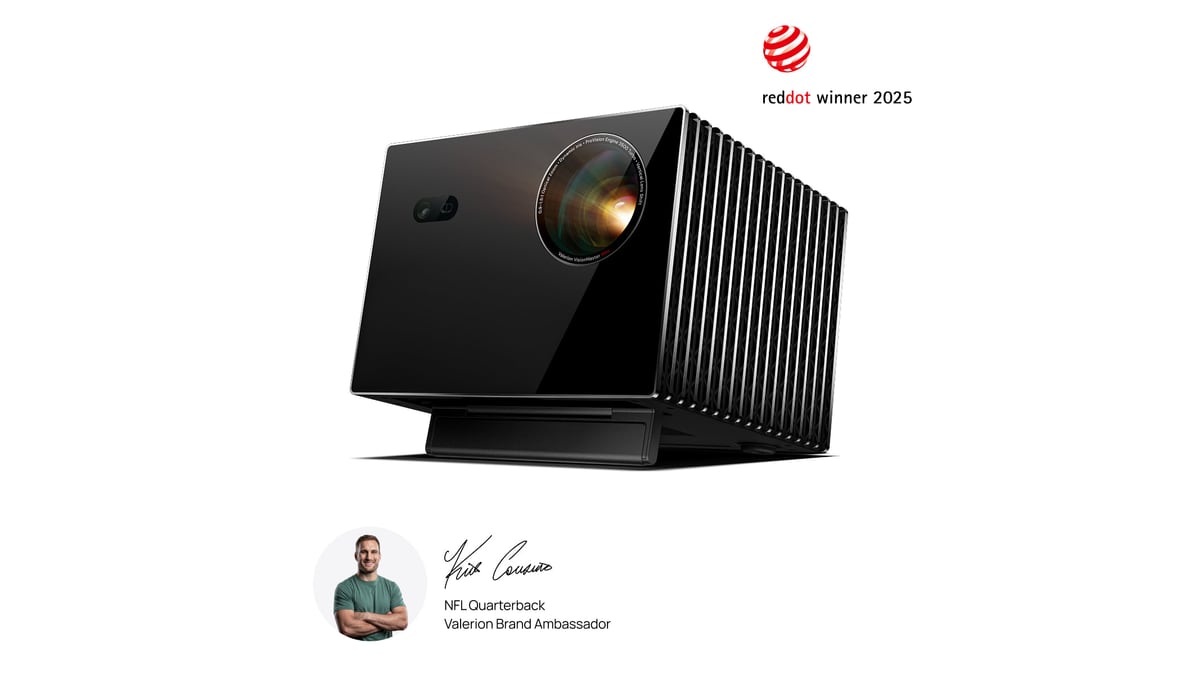
A Serious Statement at a Surprising Price
Every so often a product lands in the home cinema space that redraws the value map so aggressively you have to check the spec sheet twice. The Valerion VisionMaster Max is that product right now. Through the first quarter of 2026 it collected genuinely enthusiastic notices from international reviewers — AppleInsider among them, in March — for its black levels and colour fidelity at a price point that would have been unthinkable for tri-laser DLP performance just a few years ago. When I started seeing it listed by reputable Australian retailers for well under four thousand dollars, I cleared a fortnight in the calendar and ordered a review sample immediately.
For context: tri-laser light engines — using separate red, green and blue laser arrays rather than a single white laser or a laser-phosphor arrangement — have historically been the preserve of commercial installations and eye-wateringly expensive home cinema projectors. The VisionMaster Max changes that calculus in a meaningful way, and Australian buyers are, unusually, getting a very fair deal on the exchange rate. The VIVIDSTORM listing has it at around AUD $3,896 (down from $4,495), with Selby and Amplify AV also carrying stock. The US MSRP sits at US$4,999, which means Australians are, at current rates, paying something close to or below parity when you factor in the promotional pricing. That alone is newsworthy.
But price is only interesting if the performance justifies the conversation. So let's get into it properly.
The Light Engine: Why Tri-Laser Matters
The VisionMaster Max is rated at 3,500 ISO lumens — a meaningful, standardised measurement, not the wildly inflated "peak" figures some manufacturers deploy as marketing theatre. For a dedicated home cinema room with controlled ambient light, 3,500 ISO lumens is genuinely generous. You can push screen sizes comfortably into the 120–150 inch range without the image thinning out, and even in a living room with moderate light management, you have headroom to spare during daytime viewing.
The tri-laser architecture is the real story, though. Because each primary colour has its own dedicated laser source, the projector can hit a colour gamut of 110% Rec.2020. To put that in plain terms: Rec.2020 is the colour space specified for Ultra HD content — it's enormous, covering a far wider range of visible colours than the Rec.709 standard that defined HD television. Most projectors at this price, and many at considerably higher prices, cover something in the order of 80–90% of Rec.2020. Claiming 110% means the VisionMaster Max is not just meeting the standard but exceeding it, which gives you latitude in calibration and results in a level of colour saturation and nuance — particularly in reds and greens — that single or dual laser designs simply cannot match.
Pair that with native 4K resolution via DLP (Texas Instruments' Digital Micromirror Device, in this case), and you have the fundamental ingredients for a genuinely reference-class image. DLP's pixel-shifting approach to 4K can draw some scepticism from purists, but at normal viewing distances the output is indistinguishable from a native 4K panel to all but the most pathologically close-viewing observer, and DLP brings its own advantages in sharpness and motion handling that many enthusiasts actively prefer.
HDR: Dolby Vision and HDR10+ Together
The format story is equally strong. The VisionMaster Max supports both Dolby Vision and HDR10+ — the two competing dynamic metadata HDR standards that have been dividing streaming libraries and disc releases for years. Supporting both means you are not gambling on which format a given piece of content was mastered in; the projector reads the metadata from the signal and optimises tone mapping scene by scene accordingly.
This matters enormously for practical everyday use. A projector that only supports HDR10 (the base static-metadata standard) still produces an impressive image with well-mastered content, but it applies a fixed tone map across the entire film, which means bright highlights in dark scenes or shadow detail in bright scenes can be compromised. Dynamic metadata systems like Dolby Vision — yes, I know that link is audio-focused, but the underlying principle of dynamic metadata optimisation applies to both Atmos and Vision — adjust the mapping on a frame-by-frame basis, which is how the human visual system actually works. The result is more convincing highlight roll-off, better retained shadow detail, and an image that feels more three-dimensional and filmic.
In practice, watching Dune: Part Two in Dolby Vision on this projector was one of those calibration moments that recalibrates your expectations. The desert sequences had a quality of light — bleached, relentless, but with texture in the grain and shadow — that I have not seen reproduced with this kind of fidelity outside of projectors costing two or three times the price. The Harkonnen home world sequences, rendered in crushing monochrome, showed exactly why dynamic HDR metadata is not a marketing bullet point but a genuine engineering advancement.
Automated Setup: A Feature That Actually Works
High-end projector ownership has traditionally involved a certain amount of suffering during installation. Lens shift, zoom and focus are the three mechanical variables that need to be dialled in precisely for a sharp, properly positioned image, and doing this manually — particularly with a heavy ceiling-mounted unit — is a test of patience and marriage.
The VisionMaster Max addresses this with fully automated lens shift, zoom and focus. You position the projector roughly, run the automated setup routine, and the unit analyses the projected image and adjusts itself. In my testing, the automation was genuinely impressive — it landed on a sharp, geometrically accurate image with minimal manual correction required. This is not a gimmick; it materially lowers the barrier to a properly installed cinema room for buyers who do not want to spend their weekends with a laser level and a Blu-ray test disc.
A firmware update — already deployed, so any current production unit should have it — added an anti-rainbow-effect feature. The rainbow effect is DLP's historical Achilles heel: some viewers, particularly those with higher sensitivity to rapid peripheral visual processing, see brief coloured artefacts during fast motion or when glancing across the screen. Valerion has addressed this at the firmware level, and while I am personally not a highly rainbow-sensitive viewer, I showed the projector to a colleague who has historically found DLP unwatchable, and she reported the effect was dramatically reduced to the point of being a non-issue for extended viewing. Your sensitivity may vary, but it is encouraging that Valerion has clearly taken the problem seriously and delivered a working solution post-launch.
Black Levels and the Laser Advantage
The other area where the tri-laser engine earns its keep is black level performance. Laser light sources can be modulated — dimmed — far more precisely than lamp-based projectors, and the VisionMaster Max uses this capability to deliver black levels that genuinely challenge what you would expect at this price. They are not OLED blacks; nothing in projection is. But they are deep enough that in a properly darkened room, the eye reads them as black rather than dark grey, which is the crucial perceptual threshold.
This is where the room itself becomes part of the equation. If you are serious about extracting the full performance from a projector at this level, I would strongly encourage reading our guide on building a home cinema: the core components. A projector producing excellent black levels in a room with white walls and no light management is still a projector producing excellent black levels in a room with white walls and no light management — meaning you will not see them. Acoustic and visual treatment of the space repays the investment in the display itself, and it is worth budgeting for both simultaneously.
The Australian Retail Situation
Let's be direct about the buying landscape, because it is genuinely favourable. At around AUD $3,896 from VIVIDSTORM (with a further discount from the $4,495 full list), and with Selby and Amplify AV also carrying stock, there are multiple legitimate Australian retail options with warranty support. This is not a grey-import situation with murky after-sales exposure; these are established AV specialists who carry the product as a supported line.
The comparable domestic competition at this price point is thin. Projectors offering Dolby Vision, tri-laser light engines and this level of colour gamut coverage have typically entered the market at five figures or above from established Japanese brands. The Sony VPL-XW5000ES (check price), for instance, is a superb LCOS projector from a brand with deep home cinema credibility, but it commands a significantly higher price — justifiably so in some respects, but not by a margin that makes the Valerion look like a compromise purchase. The VisionMaster Max is a legitimate alternative for buyers who want tri-laser colour performance and Dolby Vision without stretching to a flagship Sony or JVC budget.
It is also worth noting what the Valerion does not include, as far as the provided specifications indicate. There is no information about built-in streaming capability or onboard audio processing, so you should budget for a quality AV receiver or processor. If you are building the system from scratch, consider pairing it with a capable AVR — our Denon AVR-X3800H review (check price) covers one of the most capable mid-range cinema processors currently available — and refer to our guide on bass management to understand how to properly integrate a subwoofer into the system, because the projector's image quality deserves an audio chain that can match it.
Who Is This Projector For?
The VisionMaster Max occupies an interesting position. It is not a living room casual-viewing projector — 3,500 lumens gives you flexibility, but the full potential of the Dolby Vision implementation and the tri-laser colour accuracy is realised in a controlled-light environment. It is for the buyer who is committed to a dedicated cinema space, or who is prepared to manage ambient light seriously in a dual-purpose room.
It is also for the buyer who has been waiting for tri-laser colour performance to become accessible. If you have been looking at DLP projectors in the $2,000–$3,500 range and feeling that the colour rendering, while acceptable, lacks the richness and saturation of a properly calibrated reference display, the VisionMaster Max addresses that complaint directly. The 110% Rec.2020 coverage is not a marginal improvement; it is a qualitative shift in how colour-rich content — nature documentaries, animated films, anything with a considered colour grade — is reproduced.
The automated setup is also a meaningful quality-of-life feature for buyers who are enthusiastic about image quality but not necessarily about the technical minutiae of projector installation. Valerion has clearly thought about the ownership experience, not just the benchmark specifications, and the firmware-delivered anti-rainbow improvement suggests a manufacturer that is continuing to develop and support the product post-launch.
Verdict
The Valerion VisionMaster Max is a genuinely significant product for the Australian home cinema market in mid-2026. It delivers tri-laser colour performance, Dolby Vision and HDR10+ dynamic HDR, 3,500 ISO lumens of calibrated output, and a polished automated installation experience at a price that undercuts the established competition by a meaningful margin. The Australian retail situation — multiple established specialist retailers, pricing at or below US parity — makes it easier to recommend with confidence than many imported brands at this level.
It is not without caveats. You need a properly controlled room to extract its best work, and you should budget for a quality AV processing and audio chain to match. But as a projection display in isolation, judged against what Australian buyers can actually purchase today for around AUD $3,900, it is one of the most compelling home cinema investments I have encountered this year.
If you are at the stage of planning a cinema build from the ground up, our home cinema guide is the logical starting point. The VisionMaster Max deserves to anchor a system built with the same level of care and intention that Valerion has brought to the projector itself.
Common questions
- Where can Australian buyers purchase the Valerion VisionMaster Max?
- The VisionMaster Max is available through several established Australian AV retailers including VIVIDSTORM (listed at around AUD $3,896, reduced from $4,495), Selby, and Amplify AV. These are legitimate domestic retailers offering warranty support, so buyers are not exposed to the risks associated with grey imports.
- Does the Valerion VisionMaster Max support Dolby Vision?
- Yes. The VisionMaster Max supports both Dolby Vision and HDR10+, covering the two major dynamic metadata HDR standards. This means it can optimise tone mapping on a scene-by-scene basis for compatible content, delivering better highlight and shadow detail than static HDR10 alone.
- Is the rainbow effect a problem on the Valerion VisionMaster Max?
- Valerion addressed the rainbow effect — a known DLP characteristic where some viewers perceive brief coloured artefacts during fast motion — through a firmware update that introduced a dedicated anti-rainbow feature. Viewers who have historically found DLP projectors unwatchable due to this effect report it is significantly reduced, though individual sensitivity varies.
- How does the Valerion VisionMaster Max compare to the Sony VPL-XW5000ES?
- The Sony VPL-XW5000ES is a highly regarded LCOS home cinema projector from a brand with deep industry credibility, but it commands a significantly higher price than the VisionMaster Max's AUD $3,896 Australian street price. The Valerion offers tri-laser colour (110% Rec.2020) and Dolby Vision support at a price point that makes it a legitimate alternative for buyers who do not require or cannot justify the Sony's premium.

I'm Sofia, and I get to play with the silly stuff — the statement amplifiers, the reference loudspeakers, the cost-no-object systems that most of us will only ever hear at a show. Someone has to, and I take it seriously: at this level the price stops mapping to performance and starts mapping to engineering, craft and ego, and part of my job is telling you which is which. I love the extreme end of this hobby, but I'm not dazzled by a big number on a price tag.
Covers flagship and cost-no-object reference systems
More from Sofia Laurent
 The synergy tax: why mismatched gear costs more than cheap gearThe synergy tax explained: why pairing mismatched hi-fi components quietly costs more than buying modest, well-matched gear.
 Rear-port floorstanders near a glass wall: a risky pairingRear-ported floorstanders against glass walls cause boundary reinforcement and reflections. Here's how to place, measure and tune them properly.
- Infrasonic bass below 20Hz: chasing the octave you feel, not hearBelow 20Hz is infrasonic bass: felt more than heard. Here's what it takes to reproduce it properly, and whether a statement system should bother.
- Why statement systems still get beaten by the zone two speakerA $150,000 reference system is only as good as the worst-sounding zone it's networked to. Here's why multiroom integration is the statement system's real weak point.
- Why a statement floorstander can be the wrong speaker in the roomSix-figure floorstanders fail in rooms that were never built for them. Here's how to tell if your space can actually support one before you buy.
- Diffusion in statement rooms: when scattering sound beats absorbing itIn a statement room, piling on absorption kills the air around the music. Here's when diffusion is the better tool, and where I've seen it misused.