Cheap DACs vs expensive ones: where the money actually goes
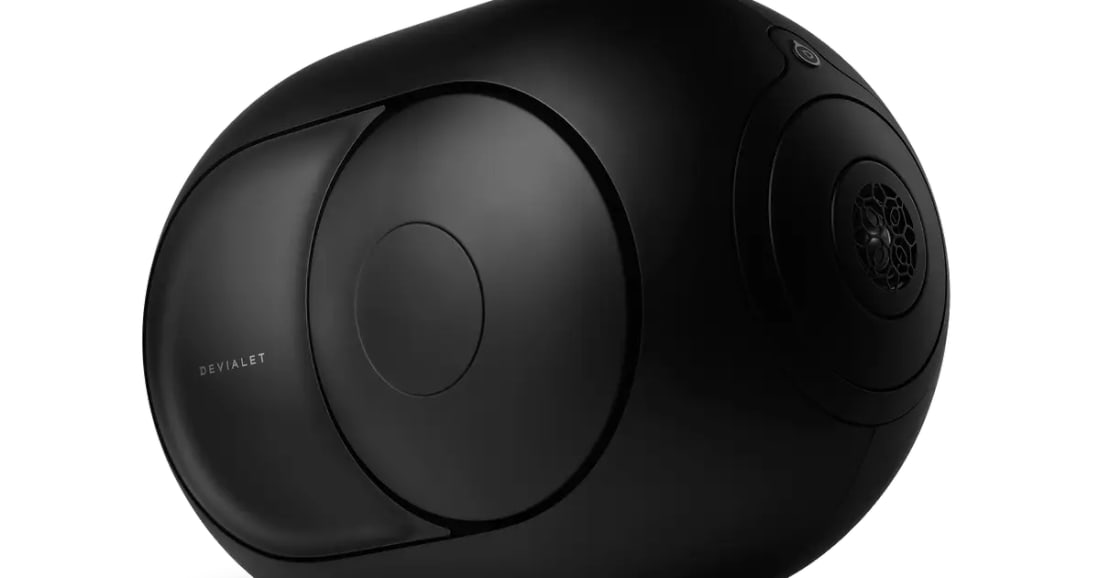
Sixty-five dollars. That's what a PCM5102-based DAC dongle from a reputable Chinese brand costs delivered to your door, and a system tuned well enough can make music with it that embarrasses kit costing ten times more. Not because the dongle is secretly great, but because the amp, the speakers and the room are sorted enough that the DAC isn't the weak link. This is the dirty secret the high-end DAC market doesn't want you thinking about, and it's why cheap DACs deserve a fairer hearing than they get.
That said, a flagship like the dCS Vivaldi Apex does something the dongle cannot in a well-sorted system. The question worth asking is where on the price ladder the jump actually matters.
I'll try to give you an honest answer, because the audio press usually offers either "everything matters, buy the expensive one" or "bits are bits, DACs are all the same." Both are wrong.
What a DAC actually has to do
The job sounds simple: take a stream of digital numbers and turn them into an analogue voltage. If you want the textbook version, the Wikipedia entry on the digital-to-analogue converter covers the basics. In practice, the chip itself, the silicon that does the maths, is only one part of the story. You've also got the output stage, which buffers and amplifies that signal before it leaves the box. You've got the power supply, which feeds everything. And you've got the digital receiver and clock circuitry, which handles incoming data and manages timing.
Each of those four areas has its own price curve. The chip is probably the least important dollar you spend, which is why it drives me slightly mad when people argue about ESS Sabre vs AKM vs Burr-Brown as if chip choice is the whole ballgame. It isn't. A mediocre output stage will wreck a flagship chip. A noisy switched-mode power supply will inject garbage that no chip can clean up downstream. If you want to dig further, we've covered why the output stage shapes sound more than the chip does.
This is where the money actually goes as you climb the price ladder: not into fancier chips, but into better analogue circuitry and quieter power.
The sub-$200 bracket: what cheap DACs actually give you
At this price, manufacturers are overwhelmingly relying on highly integrated chips that do almost everything on a single piece of silicon: conversion, filtering, output buffering, sometimes even the USB receiver. Companies like SMSL, Topping, FiiO, and Cambridge Audio at the entry level have spent years learning to extract genuine performance from these parts. Our piece on why cheap DAC chips are basically solved goes deeper on that.
The honest truth is that below about 80 dB SPL in a typical domestic listening room, a competent $150 desktop DAC will measure at performance levels that were genuinely "high-end" by 2005 standards. THD+N below -100 dB, frequency response flat to 20 kHz, channel separation better than most amplifiers. If you're running a pair of bookshelf speakers in a medium-sized room, say a KEF LS50 Meta off a decent integrated, the DAC is almost certainly not your bottleneck.
What you do sacrifice at this price: the output stage is usually op-amp-based and chosen for cost. The power supply is almost always a switching adapter. Build quality is functional rather than reassuring. And the USB receiver chip can be noisy enough that it introduces mild audible artifacts in revealing systems. Mild. Not catastrophic.
For most people building their first real system, I'd say start here and spend the difference on speakers or room treatment. Our guide to the best DACs and network streamers covers a handful of the better options across price points if you want specifics.
$300–$800: where things get genuinely interesting
This bracket is where I'd point most people who care but don't have deep pockets. A few things start happening around the $400–$500 mark that make a real difference in practice.
First, discrete output stages start appearing: actual transistors and op-amps chosen for sound quality rather than minimum cost, with proper passive filtering. Second, linear power supplies either appear on-board or become available as upgrade options. Third, the USB isolation and reclocking circuitry tends to be substantially better, which matters if you're feeding signal from a laptop or NAS with noisy USB outputs. If you're weighing connection types, see USB versus S/PDIF inputs.
The Chord Electronics Mojo 2 sits comfortably in this bracket and is worth mentioning because Chord does something genuinely different. Their WTA (Watts Transient Aligned) filter is implemented in an FPGA rather than using an off-the-shelf DAC chip. Whether you think that matters is a separate argument, but it is architecturally distinct, and the Mojo 2 earns its reputation (check price) in careful listening. I'll admit I'm sceptical of plenty of Chord's marketing claims, but the architecture is hard to dismiss on a decent pair of headphones.
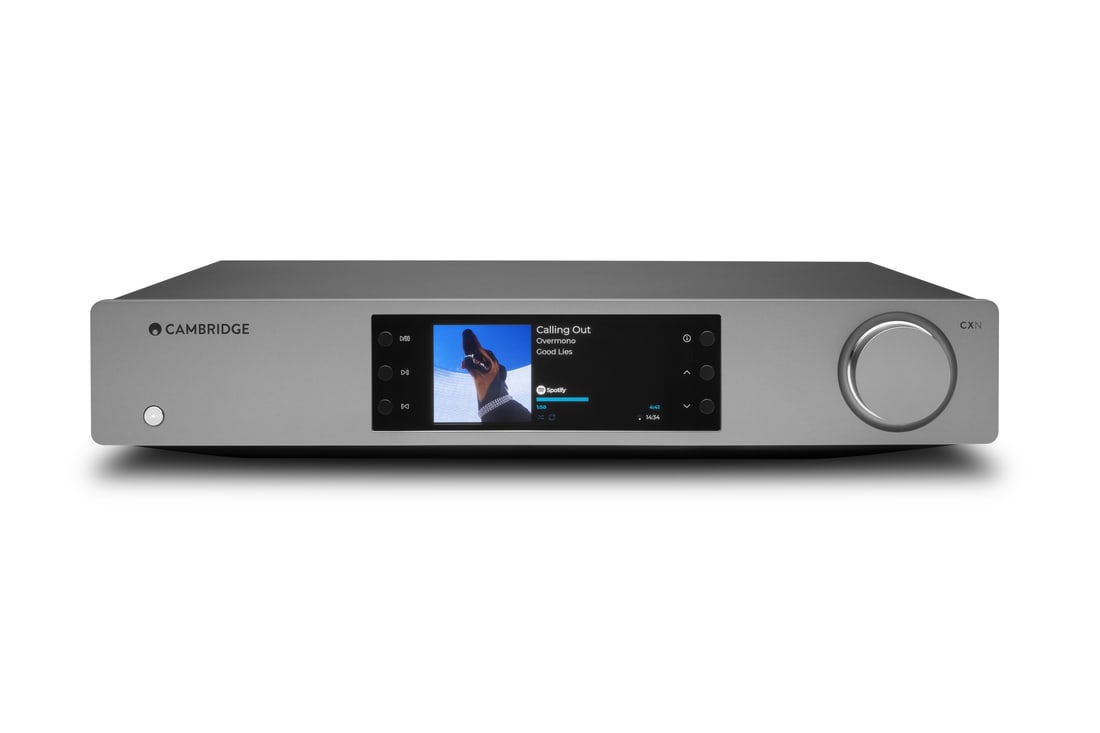
The Cambridge Audio CXN100 plays in this bracket as a networked streamer-DAC. It adds Ethernet streaming and a genuinely usable app experience to competent conversion, which is actually worth more than the pure DAC hardware to most people who want a clean single-box source. Worth a look at our review (check price) if you're thinking about going the streamer-DAC route.
The hi-res myth problem: 24-bit, 192 kHz and whether any of it matters
Here's where I'm going to say something that'll annoy some people: the sample rate and bit-depth marketing on DAC boxes is largely irrelevant for most listeners, and the audio industry knows it.
Human hearing rolls off below 20 kHz. 44.1 kHz sampling (the CD standard) captures everything up to 22.05 kHz, comfortably beyond what any adult can hear. 24-bit depth delivers a theoretical noise floor around -144 dB, which is roughly 70 dB below the thermal noise floor of a typical listening room. Squeezing 96 kHz or 192 kHz playback out of a $200 DAC doesn't make your music sound better; it makes the spec sheet look better.
That's not to say hi-res files are worthless. The recording and mastering quality on many hi-res releases is genuinely superior to the equivalent CD master, and that absolutely does sound better. But that's a mastering question, not a sample rate question. A well-mastered 16/44.1 file on a good DAC will beat a badly mastered 24/192 file every single time. The AES (Audio Engineering Society) has published extensively on this, and their technical committee work on perceptual audio quality is the most honest source I know on the topic. It doesn't support the hi-res hype in the way the streaming services market it.
Buy a DAC based on its analogue output quality and its implementation, not its maximum supported sample rate.
$800–$2,000: genuine separation begins
In this range you start seeing things that make engineering sense rather than marketing sense. Proper toroidal transformers in the power supply. Dual-mono layouts where left and right channels get their own regulation and often their own conversion. Temperature-stable clocks for jitter reduction that genuinely measures below the noise floor. Output stages that start to rival those in mid-tier integrated amplifiers.
Does it audibly matter? Honestly, yes, but less than the marketing suggests, and only in systems where everything else is already sorted. If you're running $800 speakers in an untreated room, a $1,500 DAC is spending its money in the wrong place. If you're running something like a KEF R3 Meta (reviewed here (check price)) in a room with at least some basic treatment, and a quality integrated, then a properly implemented $1,000 DAC starts to show you things that a $250 unit doesn't quite resolve.
The differences tend to be in the low-level detail and the sense of space rather than tonality or frequency response. A good $250 DAC and a good $1,200 DAC will measure similarly on THD+N, but the more expensive unit often has better channel separation, a lower noise floor in the analogue domain, and a power supply that doesn't get stressed and noisy when driving a demanding load. Those differences are real. They're just subtle enough that most people won't notice them over a standard listening level comparison.
Above $2,000: paying for diminishing returns, and that's fine
I'm not going to pretend the $5,000–$15,000 DAC market is all snake oil, because it isn't. Some of it is extraordinary engineering. R2R ladder DACs, like those in the dCS stack or in Schiit's Yggdrasil, avoid oversampling and use precision resistor networks in ways that genuinely differ from the chip-based approach and appeal to listeners who find the standard oversampling filter presentation fatiguing. There's real engineering rationale there.
But. The law of diminishing returns in digital-to-analogue conversion is steep. You are genuinely spending $8,000 to get the last 5% of what a $1,500 DAC can do, if that. In a reference-grade system, in an acoustically treated room, driven by a great amplifier and exceptional speakers, you might hear it. For most people? The money is better spent on room treatment, cables that actually need replacing, or better speakers. We've mapped the same curve in where to spend on a digital front end, and looked at what six-figure DACs actually buy over a good $2,000 box.
If you want an all-in-one streaming source that covers both DAC and network player duties without going broke, check our best DACs and streamers guide for current recommendations at different price points. And if you're wondering whether a streaming amplifier just collapses the whole chain into one box sensibly, our streaming amplifier guide is worth a read. For some rooms and setups it genuinely is the smarter spend.
The practical decision: where to put your money
Here's my rough guide based on system context, not arbitrary price point worship.
If your speakers cost under $1,000 and your room is untreated, a $150–$300 DAC is genuinely sufficient. Spend the difference on acoustic panels or a better amp. If your speakers are in the $1,500–$4,000 range and you're running a quality integrated, a Marantz Model 40n, say, or similar, then a $500–$1,000 DAC starts to make sense and will reveal itself over extended listening. If you're above $5,000 in speakers and running separates in a treated space, a $1,500–$2,500 DAC is probably as far as I'd personally go unless you have a specific reason (DSD playback, R2R preference, a particular interface requirement) to go further.
The rest is furniture.
It's common to see someone drop $4,000 on a DAC upgrade and hear no difference, then spend $400 on two corner bass traps and find the whole system snaps into focus. The room wins almost every time. The DAC is a real thing, diminishing returns are real, and the sweet spot is almost always lower than the marketing wants you to believe.
Anyway. That's my honest take, and I'll stand by it even if the expensive DAC crowd disagrees.
— Dave Okafor, Value & Giant-Killers Contributor
Common questions
- Does an expensive DAC make a noticeable difference?
- It depends heavily on the rest of your system. In a well-sorted setup with quality speakers, amplifier and room treatment, a better-implemented DAC can reveal low-level detail and space that a budget unit misses. But if your speakers, room or amplifier are the weak link, a DAC upgrade will do almost nothing audible. Fix those first.
- Is hi-res audio (24-bit, 192 kHz) actually better than CD quality?
- The sample rate itself rarely matters — 44.1 kHz already captures everything within human hearing. Where hi-res files genuinely do sound better, it's almost always because of superior mastering on the hi-res release, not the higher numbers. A well-mastered CD-resolution file will beat a poorly mastered 192 kHz file every time.
- What DAC chip should I look for when buying?
- The chip is less important than the implementation around it — the output stage, power supply and clocking circuitry matter more. A well-implemented Burr-Brown chip will outperform a poorly-implemented flagship ESS Sabre every time. Focus on the manufacturer's track record and measured performance rather than chip brand.
- Do I need a separate DAC if I already have a streaming amplifier or AV receiver?
- Probably not, at least not right away. Modern streaming amplifiers and mid-to-upper-tier AV receivers include competent DAC circuitry. A separate external DAC is worth considering when you've genuinely maxed out everything else in your chain and want to extract more from a high-quality analogue amplifier stage.

I'm Dave, and I'm the cheapskate of the team — and proud of it. My whole thing is finding the gear that punches three times above its price, the so-called "giant-killers," because most people don't have forty grand for a system and shouldn't feel bad about it. I've heard the megabucks stuff, and a lot of it is gloriously good; I've also heard $800 setups that get you 85% of the way there. I'll always tell you where the law of diminishing returns kicks in.
Lifelong bargain-hunter; budget-to-midfi specialist
More from Dave Okafor
- Matching speaker and amp cost: ignore the price-parity mythForget the old rule of matching speaker and amp cost dollar-for-dollar. Here's what actually decides a good pairing, and why it isn't price.
 Turntable mats and platters: what actually changes the soundFelt, rubber, cork or acrylic — turntable mats and platter materials change the sound more than most upgrades. Here's what actually works.
- Buying a demo unit: the giant-killer move retailers hateEx-demo hi-fi gear can save 20-40% with near-zero risk. Here's how to actually negotiate it, what to check, and when to walk away.
- Flutter echo: the room fault that sounds like nothing's wrongFlutter echo blurs detail in parallel-wall rooms without obvious boom. Here's how to find it cheaply and kill it without over-treating.
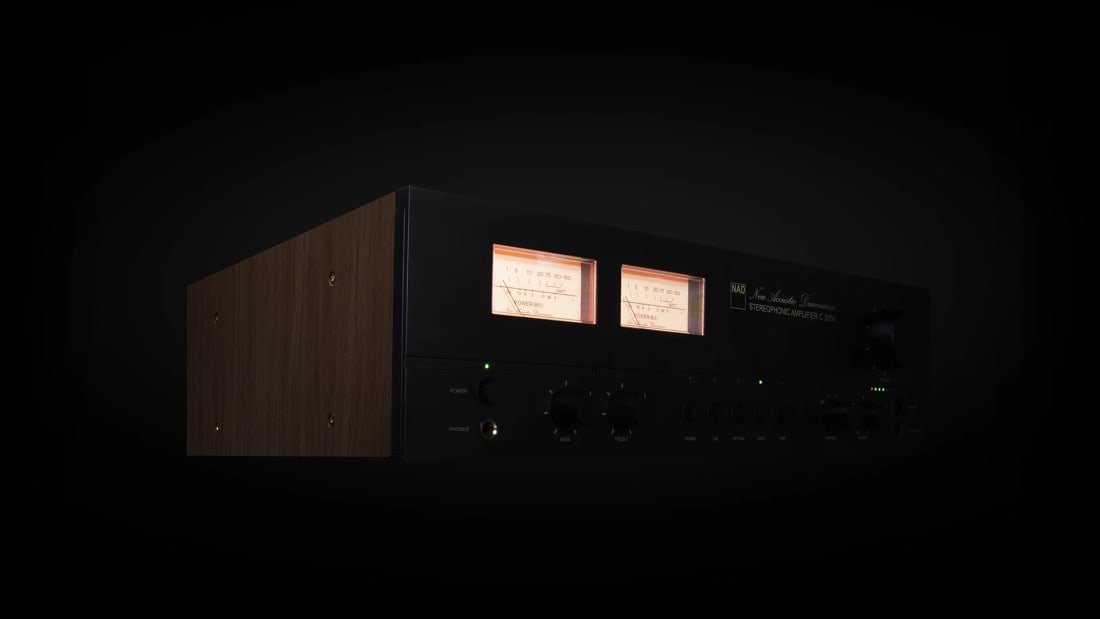 Amp power ratings into 8 vs 4 ohms: the spec sheet trapWhy an amp's 4-ohm wattage figure can mislead buyers, and how to actually match power output to real speaker loads on a budget.
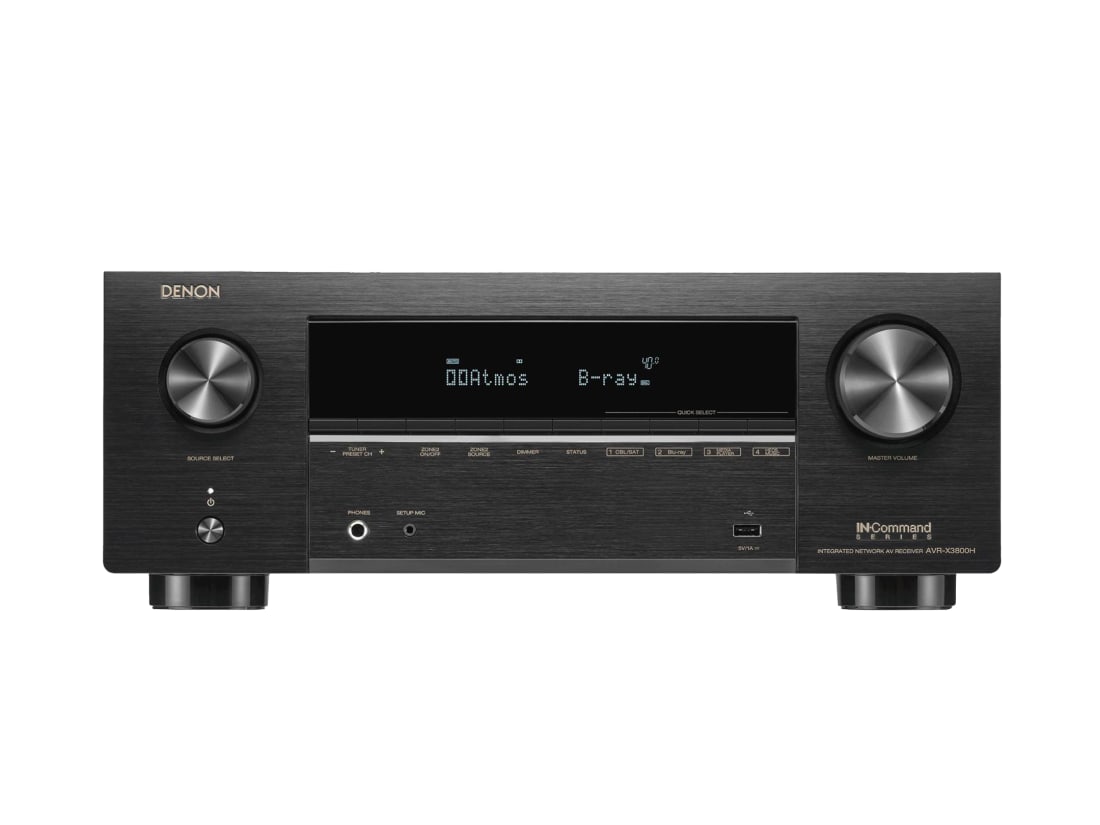 5.1.2 vs 7.1.4: the Atmos layout decision for real roomsChoosing between 5.1.2 and 7.1.4 Atmos layouts comes down to room shape and seating, not speaker count. Here's the giant-killer logic.