HARMAN absorbs Sound United: B&W, Denon and Marantz
The deal that redrew the map
On 23 September 2025, the high-fidelity audio industry quietly crossed a threshold it won't be stepping back over. HARMAN International, itself a wholly owned subsidiary of Samsung Electronics since 2017, completed the cash acquisition of Sound United from medical-technology company Masimo Corporation for $350 million USD. If you've been following the tortured ownership history of some of audio's most storied brands, you'll know that number represents something of a bargain-basement price for what is, on paper, an extraordinary collection of names.
Sound United brought with it Bowers & Wilkins, Denon, Marantz, Polk Audio, Definitive Technology, the HEOS ecosystem and Classé Audio. Slot those into HARMAN's existing stable (JBL, Revel, Arcam and Mark Levinson) and you end up with a single corporate entity that, by early 2026 analyst estimates, commands more than 18 per cent of the global hi-fi audio market. That is not a rounding error. That is a structural shift in an industry that has historically prided itself on artisanal independence and the idea that passion, not scale, makes great sound.
For Australian enthusiasts, this matters in ways that go beyond brand-loyalty tribalism. It affects the products on shelves, the pricing structures local distributors negotiate, the customer support chains behind the gear you already own, and, perhaps most critically, the design philosophies that shape what gets engineered in the first place. Let's take this apart properly.
What HARMAN actually looks like now
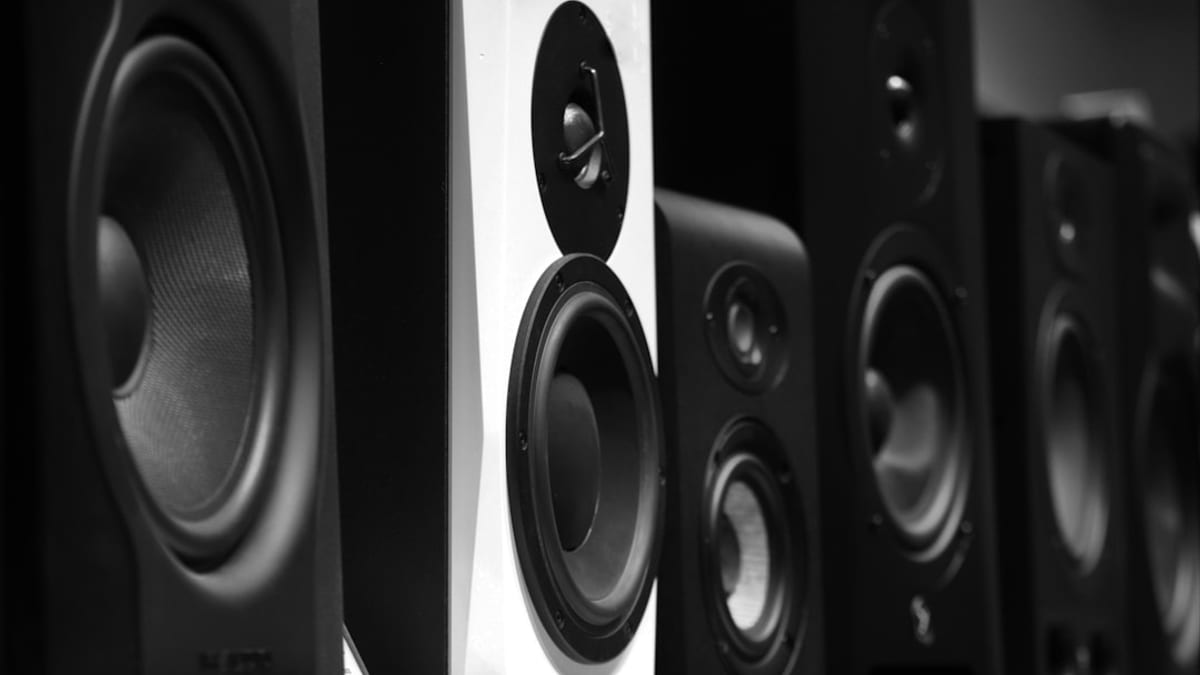
It's worth pausing to appreciate the sheer breadth of what Samsung now controls through HARMAN. On the speaker side alone, you have Bowers & Wilkins, a brand whose engineering heritage, from the original Nautilus to the current 800 Series Diamond, is genuinely world-class. It sits alongside JBL (the ubiquitous professional and consumer giant), Revel (a California-based engineering-first brand beloved by acousticians), Polk Audio (a mass-market American staple) and Definitive Technology (bipolar tower specialists with a loyal following).
The electronics picture is equally striking. Mark Levinson, arguably the defining American ultra-high-end amplifier brand, now shares a parent company with Marantz, a name synonymous with musical Japanese amplification, and Denon, whose AV receivers have powered Australian home cinemas for decades. Arcam, the quietly excellent British electronics house, was already in the HARMAN fold before this deal. And Classé, the Montreal-based manufacturer of serious Class AB power amplification, rounds out what is now a genuinely stratified offering from budget to stratospheric.
Then there's the ecosystem layer. HEOS, Denon and Marantz's multi-room streaming platform, joins a corporation that already operates at the centre of professional audio, automotive audio and enterprise communications. If Samsung ever chooses to fully integrate these pieces, the resulting platform could rival or exceed what Sonos built, with significantly more hardware headroom at the top end.
Why Sound United sold for so little
To understand why HARMAN got Sound United for what looks like a reasonable price, you have to understand the strange detour these brands took through medical technology. Masimo, a pulse-oximetry and patient monitoring company, acquired Sound United in 2022 for approximately $1.025 billion, a transaction that baffled the audio industry at the time and baffled it further over the following three years. The strategic rationale, to the extent one was ever clearly articulated, appeared to involve using audio hardware distribution channels for health-monitoring consumer devices. It did not go well.
Masimo's consumer audio ambitions stalled, its core medical business faced headwinds, and by late 2024 it was clear the Sound United brands were not receiving the investment attention they needed. When HARMAN came to the table, Masimo was not in a position to be selective. The $350 million figure, against the $1.025 billion paid just three years earlier, tells you everything about how that experiment concluded. For the brands themselves, the outcome is arguably a relief. Whatever one thinks about corporate consolidation in audio, these are companies that need engineering investment and distribution infrastructure, and HARMAN at least understands the audio business.
The consolidation argument: efficiency versus soul
Here is where I need to be honest about my own scepticism, because this is not a straightforward good-news story. Corporate consolidation in high-end audio has a mixed record, and the audiophile community's concerns are not simply romantic attachment to the idea of the lone genius in a workshop. They reflect real patterns.
When brands share ownership, the pressures toward platform standardisation and shared component sourcing are enormous. It is simply more economical to develop one streaming module, one room correction engine, one digital-to-analogue conversion platform and deploy it across multiple product lines than to maintain bespoke solutions for each. That logic produces real cost savings, which in theory can be passed to consumers or reinvested in engineering. But it also tends to homogenise products at precisely the level where differentiation matters most. The same pressure shows up in power design, which is why power supply topology in high-end amplifiers is one of the first places a shared platform can quietly change how a product sounds.
Consider what's at stake with something like Marantz's house sound. The Marantz Model 40n (check price) demonstrates exactly what I mean: there is a warmth and midrange density to Marantz amplification that its engineers have maintained across decades, and that character comes from specific decisions about circuit topology, component selection and voicing philosophy. Will those decisions survive indefinitely when HARMAN's platform engineering team is also serving JBL, Revel and Mark Levinson? The honest answer is: probably, for a while, and then subject to increasing pressure.
The same question applies to Bowers & Wilkins. Their transducer engineering, including the Continuum cone, the diamond tweeter and the specific crossover implementations, has historically been the result of independent, obsessive R&D. That independence is now formally over. The engineering teams may retain autonomy in practice, and HARMAN has generally been more respectful of brand identity than some predatory acquirers. But the structure has changed, and structures shape outcomes over time.
What this means for Denon and the AV receiver market
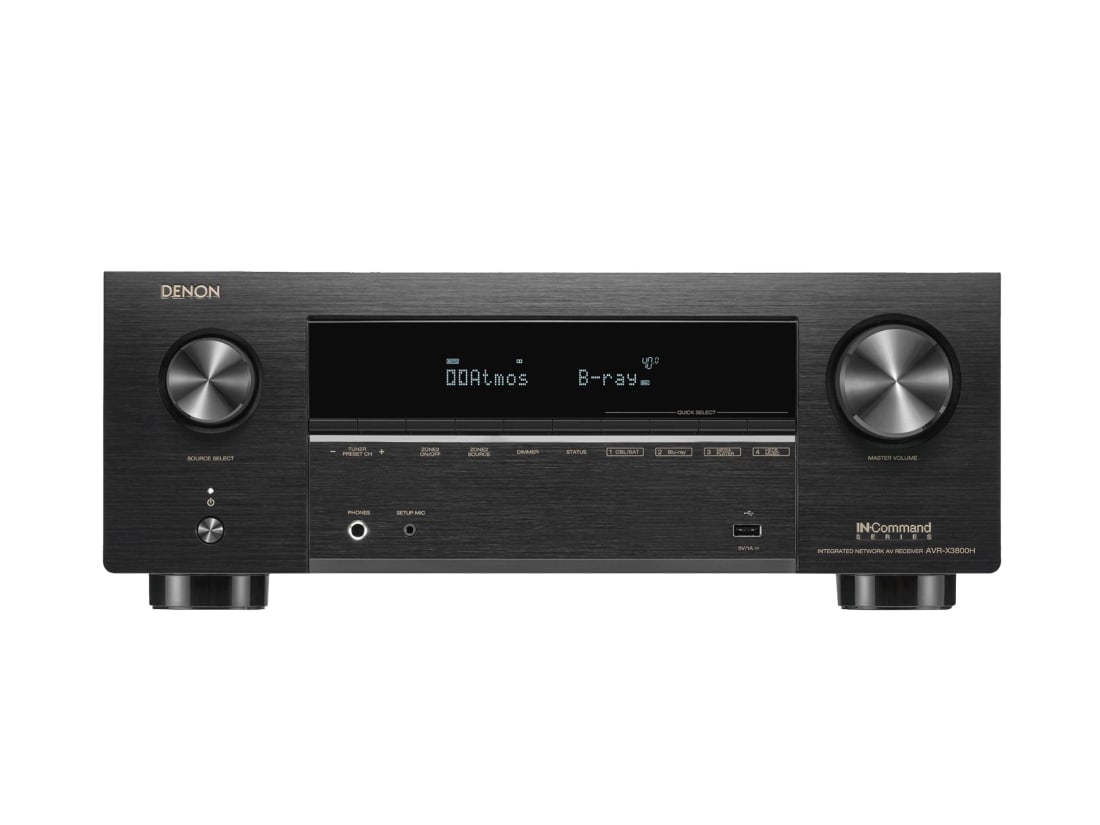
For home cinema enthusiasts specifically, the Denon-HARMAN relationship is particularly interesting to watch. Denon's AV receivers, including the well-regarded Denon AVR-X3800H (check price), have long been among the most feature-complete and reliably supported options in the Australian market. They run Audyssey room correction, HEOS for streaming integration, and a firmware update cadence that has historically been reasonably responsive to new format requirements.
Now those receivers sit in the same family as Arcam's AV processors and Mark Levinson's two-channel electronics. There is both opportunity and risk in that adjacency. The opportunity is that shared platform investment could accelerate feature development: better room correction algorithms, faster adoption of new audio formats, stronger streaming integration. The risk is tiering. If HARMAN begins directing its most advanced platform work toward Mark Levinson and premium Arcam products, mid-market Denon and Marantz could receive slower trickle-down than they currently enjoy as the top of their own stack.
For Australians building a home cinema, this is worth monitoring. The Denon and Marantz AV product lines have been exceptional value propositions for years. That value is not guaranteed to persist at the same level as internal resource allocation decisions shift toward serving a much larger and more diverse product portfolio.
The streaming and ecosystem angle
One dimension of this acquisition that deserves more attention than it's received is what happens to HEOS. Denon and Marantz's multi-room platform has always been capable but never quite as polished or as widely adopted as it deserved to be. It suffered from Masimo's ownership partly because Masimo had neither the software infrastructure nor the consumer-electronics credibility to meaningfully develop it.
HARMAN, by contrast, operates at Samsung's scale. Samsung's SmartThings ecosystem, its relationships with streaming services and its software development resources all represent potential leverage for HEOS that simply didn't exist before. Whether that potential is acted upon is a different question. Corporate integration moves slowly, and HARMAN has historically treated its audio brands with a reasonable degree of operational independence. But the ceiling for HEOS just rose considerably.
For enthusiasts considering streaming amplifiers and all-in-one systems, this is worth factoring into purchasing decisions. A Denon or Marantz integrated amplifier with HEOS built in could, within a few years, offer meaningfully better platform integration than it does today, or it could remain essentially as it is. The acquisition creates the possibility; it doesn't guarantee the outcome. Whatever the platform does, the quality of any streaming chain still depends on details such as network audio clocking and streamer jitter, which no ecosystem announcement changes by itself.
The competitive landscape: who's watching nervously
An entity controlling more than 18 per cent of the global hi-fi market doesn't just affect the brands inside the fence. It reshapes the competitive environment for everyone outside it. Companies like KEF, Focal, Naim, Cambridge Audio and the various Japanese survivors of the market's long consolidation now face a competitor with genuinely unprecedented distribution leverage, marketing scale and, if the integration is handled well, cross-brand ecosystem advantages.
The standmount speaker segment is a useful lens here. Consider the competitive dynamics between something like the Bowers & Wilkins 705 S3 (check price) and rivals like the KEF R3 Meta (check price) when their manufacturers are operating at vastly different scales. B&W can now, in principle, use HARMAN's global distribution, shared manufacturing negotiations and marketing infrastructure in ways that a still-independent KEF, itself Chinese-owned since 2014 and so not entirely a cottage operation, has to match on different terms.
For the genuinely independent boutique manufacturers, this consolidation is more sobering still. When the brands that set reference points for loudspeaker and electronics performance are increasingly concentrated in corporate hands, the positioning of truly independent voices becomes both more difficult and arguably more important. Brands like Naim, Chord, Rega and the various high-end cottage specialists now occupy a differentiated position not just sonically but structurally, and there's a market for that, particularly among enthusiasts who value knowing exactly whose vision they're buying into.
Classé: the quietly significant addition
I want to briefly draw attention to Classé, because it tends to get overlooked in the headline-level coverage of this deal. Founded in Montreal and long regarded as one of North America's most serious high-end amplification manufacturers, Classé has had a complicated recent history. Its production was effectively suspended during the Bowers & Wilkins ownership years, with limited new product releases. Its inclusion in the HARMAN acquisition means it now sits alongside Mark Levinson in a two-brand ultra-high-end electronics proposition.
Whether HARMAN revives Classé as a serious engineering enterprise or allows it to quietly atrophy as a legacy marque is one of the more interesting open questions from this deal. The brand has genuine engineering credibility and a loyal customer base, particularly in North America. With adequate investment, it could be meaningfully revived. Without it, the brand risks becoming a nameplate that sells on heritage alone, a fate that has befallen more than a few legacy audio brands in the past two decades.
Practical takeaways for Australian buyers
So what should you actually do with all of this? A few thoughts for different segments of the market:
- If you're in the market for Denon or Marantz electronics now: Buy with confidence for the medium term. These brands are better resourced today than they were under Masimo, and the product lines that exist, including recent integrated amplifiers and AV receivers, represent genuinely strong value. Warranty and support infrastructure should be stable or improving.
- If you're considering Bowers & Wilkins speakers: The engineering in current products reflects the independent R&D of prior years. Near-term product quality is not in question. Longer-term, watch whether new product releases maintain the same level of bespoke transducer development or begin sharing more components across the HARMAN family.
- If you're building a multi-room or streaming-integrated system: HEOS-based systems have more long-term platform potential than they did twelve months ago, though that's a qualified endorsement. DACs and network streamers from outside the HARMAN umbrella remain strong alternatives if ecosystem lock-in concerns you.
- If you value brand independence as a purchasing criterion: That calculation has meaningfully changed. Brands once perceived as independent, such as B&W, Marantz and Denon, are now firmly inside a Samsung-controlled corporate structure. That's neither inherently good nor bad, but it's a different thing than it was, and it's fair to factor it into your decision-making.
If amplifier technology is part of your thinking, it's also worth reading why Class D, valve and solid-state value compare the way they do, since platform decisions inside big groups tend to follow whatever is cheapest to build well.
The longer view
Consolidation in audio, like consolidation in most industries, follows a logic of its own that doesn't always align with what enthusiasts would choose if they were designing the landscape from scratch. The brands inside the HARMAN-Sound United family are not necessarily diminished by this transaction. Some of them are arguably better positioned for survival and investment than they would have been under continued Masimo ownership or as fully independent entities in an increasingly brutal market.
But the audio industry has always derived much of its vitality from the friction between competing visions, from engineering teams at different companies making different decisions based on different philosophies. When 18-plus per cent of the market resolves toward a single corporate decision-making structure, that friction is reduced. Reduced friction means fewer accidents of genius, fewer products that exist because a small team with a strong opinion ignored the market research. It also means, let's be fair, fewer products that fail because a small team with a strong opinion ignored the market research.
The $350 million that changed hands on 23 September 2025 bought a collection of extraordinary audio brands. What it made of them will take years to fully understand. In the meantime, the rest of the industry, and the enthusiasts who fund it, will be watching closely.
Common questions
- Which brands did HARMAN acquire through the Sound United deal?
- HARMAN's acquisition of Sound United, which closed on 23 September 2025, brought Bowers & Wilkins, Denon, Marantz, Polk Audio, Definitive Technology, HEOS and Classé into the HARMAN portfolio. These join existing HARMAN brands including JBL, Revel, Arcam and Mark Levinson.
- How much did HARMAN pay for Sound United?
- HARMAN paid $350 million USD in cash for Sound United, acquiring it from medical-technology company Masimo Corporation. Masimo had originally acquired Sound United in 2022 for approximately $1.025 billion, making the sale a significant loss on that original investment.
- What share of the global hi-fi audio market does Samsung/HARMAN now hold?
- Following the completion of the Sound United acquisition, 2026 analyst estimates placed Samsung/HARMAN's share of the global hi-fi audio market at more than 18 per cent, making it by far the largest single corporate entity in the premium audio space.
- Should I still buy Denon or Marantz products given the ownership change?
- In the short to medium term, yes. The existing product lines — including recent Denon AV receivers and Marantz integrated amplifiers — are strong performers, and the brands are now better resourced than they were under Masimo. Warranty and support infrastructure should be stable. Longer-term, watch for signs of platform homogenisation or changes to the individual brand engineering philosophies.

I'm Marcus, and I'll be honest up front: I trust a measurement before I trust my own ears, because my ears lie to me daily. I spent fifteen years designing audio electronics before I started writing about them, so when a brand tells me a number, I want to see the graph. That doesn't make me cold about this hobby — I love a system that disappears as much as anyone — it just means I'll tell you when an expensive box is selling you confidence rather than performance.
Former audio electronics engineer; objectivist; runs the test bench
More from Marcus Vale
 Why your turntable's earth wire isn't optionalTurntable earthing fixes most phono hum problems. Here's how grounding actually works, why it fails, and how to track down a noisy connection.
 Why your AVR runs cool on music but throttles on AtmosAVR thermal throttling explained: why nine-channel Atmos mixes push receivers into protection mode that two-channel music never triggers.
- Subwoofer delay settings: why your AVR's number is a guessAVR auto-calibration estimates subwoofer delay from distance, not timing. Here's how to measure and correct it properly for tighter bass.
- AVR auto-calibration: what Audyssey, YPAO and Dirac actually measureAudyssey, YPAO and Dirac Live all run a mic sweep and spit out numbers, but they're not measuring the same things or fixing the same problems. Here's what's actually happening.
- Cartridge break-in: what actually changes in the first 40 hoursDoes a new cartridge really need 40 hours to "open up"? I measured one to find out what's mechanical fact and what's audiophile folklore.
- DAC output stages: what the chip doesn't tell youThe DAC chip gets all the marketing attention, but the analogue output stage after it does most of the work shaping what you actually hear.