Onkyo returns to AV separates with a 15-channel processor
Onkyo is back, and this time it means business
If you'd written Onkyo off as a spent force in the high-end home cinema market, CES 2026 just handed you a reason to reconsider. The Japanese brand spent the better part of the early 2020s working through ownership changes and a significant contraction of its product portfolio. It turned up in Las Vegas with something nobody was expecting: a genuine return to the AV separates market, headlined by a 15-channel processor that goes toe-to-toe with the best the category has to offer. Couple that with a refreshed receiver line and a pair of dedicated power amplifiers, and suddenly Onkyo is a conversation worth having again.
For those of us who cover custom install and high-performance home cinema full-time, this is significant news. The AV separates segment has been slowly contracting for years. Anthem, Arcam, StormAudio and Trinnov hold the premium end of the market with considerable authority, while Marantz and Denon have kept the integrated receiver format alive and healthy in the mid-tier. Onkyo stepping back into separates, properly and with flagship-grade credentials, changes the competitive landscape and gives integrators and serious enthusiasts another option worth specifying.
Here is what was shown, what it means technically, and what Australian buyers should be thinking about before these products arrive.
The flagship: PR-RZ91 processor
The centrepiece of Onkyo's CES announcement is the PR-RZ91, a standalone 15-channel AV processor carrying full THX Dominus certification. That last detail matters enormously. THX Dominus sits at the very top of the THX certification hierarchy, above Select and Ultra, and is reserved for components that can demonstrably reproduce cinema-reference levels in large dedicated rooms. If you're building a serious home theatre and you want the closest possible approximation to what the mastering engineer heard in the dubbing suite, THX Dominus is the benchmark you're chasing.
The PR-RZ91 also integrates Dirac Live alongside Dirac Live ART (Active Room Treatment). For the uninitiated, Dirac Live is already considered among the most sophisticated room correction systems available in consumer electronics. It operates in both time and frequency domains simultaneously, which is a meaningful advantage over older systems that only address frequency response. ART takes things further by targeting low-frequency modal problems specifically, the kind of room-induced bass issues that can make even an excellent subwoofer system sound bloated, one-note or uneven across different seating positions. The combination of both systems in a processor at this price tier is a strong statement of intent.
Channel count is 15, with the architecture flexible enough to accommodate 7.1.6 or 9.1.4 layouts. That gives integrators meaningful latitude. A 7.1.6 configuration (seven primary channels, one LFE, six height channels) is increasingly the preferred layout for serious Atmos rooms, giving you a proper overhead hemisphere rather than the compromise four-height systems offer. The 9.1.4 path suits wider rooms where broad left-centre-right coverage is the priority.
From a custom install perspective, a 15-channel processor that handles its own room correction at this level of sophistication is the kind of component that earns its rack position. You're not buying a box and then spending additional thousands on a third-party correction platform to make it competitive, because the PR-RZ91 appears to arrive with that capability built in. For anyone building a dedicated home cinema, that's a genuine value proposition even before we know the Australian price.
The receiver: TX-RZ51
Sitting below the separates stack is the TX-RZ51, a 9-channel integrated receiver carrying THX Select2 certification. It also runs Dirac Live plus ART, which is noteworthy. Pushing ART down into a receiver rather than reserving it for the flagship processor suggests Onkyo wants to make a quality argument right across the new line, not just at the top.
The TX-RZ51 features up to four subwoofer outputs, which is the kind of detail that separates a serious cinema receiver from a music-first unit with a cinema afterthought bolted on. Multiple sub outputs allow you to run distributed bass arrays, with subwoofers positioned at different locations in the room to smooth modal response, without needing an external bass management device. Combined with Dirac ART for bass correction, this receiver could perform surprisingly well in acoustically challenging rooms where a single sub system would always struggle.
Nine channels of amplification handles the majority of mainstream Atmos configurations comfortably. A 7.1.2 system covers the bases for most dedicated rooms up to around 40 square metres, and the TX-RZ51's channel count leaves room for that. Whether the internal amplification will satisfy the more demanding custom install builds is a separate question, and it brings us neatly to the power amplifiers. If you're still deciding between the two formats, our comparison of an AVR versus an AV processor lays out the trade-offs.
The muscle: PA-RZ04 and PA-RZ11 power amplifiers
Onkyo has announced two dedicated power amplifiers to complete the separates ecosystem: the PA-RZ04 (four channels) and the PA-RZ11 (11 channels), both rated at 150 watts per channel and both carrying THX Select2 certification.
The PA-RZ11 in particular is the kind of component that integrators dream about specifying: a single chassis delivering 11 channels at 150 WPC represents genuine flexibility for complex speaker layouts. Pair it with the PR-RZ91 processor and you've got the foundation of a very capable, all-Onkyo separates stack for a large dedicated room. The PA-RZ04 makes more sense in modular builds, perhaps driving the four height channels in a 7.1.4 or 9.1.4 system while a larger amp handles the main and surround array, or as a cost-effective way to biamp front speakers in a two-channel-primary setup that also serves cinema duty.
150 WPC is a number worth contextualising. In a properly treated room with speakers of reasonable sensitivity, 150 watts is entirely adequate for THX reference-level reproduction. Where custom install gets interesting is when you start running long cable runs to difficult-load speakers, or working with impedance curves that dip aggressively in the bass. 150 WPC into 8 ohms may look different into 4 or 2 ohms depending on the amplifier's topology and power supply. We won't know the full electrical picture until review samples arrive, but the THX Select2 certification at minimum guarantees the amps meet a defined set of performance criteria at reference levels.
Why the AV separates market matters, and why Onkyo's return is significant
There's been a quiet but persistent trend in home cinema toward the higher end of the market. Streaming services delivering Dolby Atmos at Blu-ray-comparable bitrates, 4K laser projectors coming down in price, and acoustic treatment becoming more widely understood and accepted among enthusiasts have collectively raised the standard of what a serious home cinema can be. More people are building proper dedicated rooms. More integrators are specifying systems that go beyond the receiver-and-soundbar default.
In that context, the AV processor, rather than the integrated receiver, is having something of a moment. A standalone processor separates the signal processing and decoding from the amplification, which allows you to independently upgrade either component, match amplifiers to the specific impedance and power requirements of your speakers, and generally build a system that can grow with the room rather than being replaced wholesale every time you want to improve a specific element. Marantz is working the same idea, as its own cinema separates show.
Onkyo understands this market intimately, or at least it did. The brand's earlier separates products, particularly the PR-SC5530 era, were well-regarded in custom install circles for their flexibility and competitive pricing relative to the Anthem and Arcam alternatives. A return to that space, with updated processing including Dirac Live ART and THX Dominus certification, suggests Onkyo has thought carefully about where it can compete effectively rather than just releasing something to fill a catalogue gap.
The THX Dominus certification on the PR-RZ91 is particularly telling. Earning that certification requires more than good marketing; it involves rigorous third-party testing and a genuine commitment to reference-level performance. It's a credible signal that the processor is engineered to compete at the top of the category. For background on the certification programme itself, there's a Wikipedia entry on THX.
Dirac Live ART: understanding what it actually does
Dirac Live ART deserves a closer look, because it's appearing across the entire new Onkyo lineup and it's a meaningful differentiator. Standard Dirac Live corrects the frequency and impulse response of your system as measured at the listening position. It's genuinely excellent and handles time-domain correction better than most competitors. ART (Active Room Treatment) layers on top of this to specifically target low-frequency room modes.
Room modes, the standing waves that occur when bass frequencies resonate between parallel room boundaries, are one of the most persistent problems in home cinema acoustics. Physical acoustic treatment can address them, but effective bass trapping requires significant volume and placement discipline that isn't always practical in a real installation. Dirac ART uses the subwoofer system itself as an active corrective element, applying filters and timing corrections that counteract modal behaviour. When the underlying system is properly set up, it can dramatically smooth out the kind of bass bloom and unevenness that makes large screen scenes feel unnatural. Our explainer on how Dirac Live ART works goes deeper, and what DSP can't fix is a useful reality check.
Having both standard Dirac Live and ART available in the TX-RZ51 receiver is genuinely impressive. That's a capability that previously required either a more expensive processor or an external Dirac hardware solution. For integrators specifying mid-range systems where the room is less than ideal, the TX-RZ51 could be a compelling choice.
What about Australian pricing and availability?
Here's where we have to be honest with you: Onkyo hasn't confirmed pricing or availability for Australia, or anywhere else for that matter. The first models from this new lineup are expected in late 2026 at the earliest, with some potentially slipping to early 2027. CES 2026 announcements with six-to-twelve-month lead times are standard practice in the AV industry, particularly for flagship products that require extended certification and manufacturing ramp-up.
For Australian buyers, this means now is the time to start conversations with local custom install dealers about system planning, not the time to expect stock availability. If you're in the design phase of a dedicated home cinema build, it's worth factoring the PR-RZ91 into your planning horizon, but don't delay an otherwise ready-to-proceed project waiting for these products to land locally.
The Australian dollar's performance against the yen and US dollar will influence final pricing significantly, as it does for all imported AV hardware. THX Dominus-certified processors have historically occupied the $8,000–$15,000+ price tier in the Australian market when converted and margined through local distribution. Until Onkyo's distribution partner (which at time of writing hasn't been officially confirmed for the Australian market under the new ownership structure) announces local pricing, any specific number is speculation.
How it fits into the broader market
The incumbent competition is formidable. Anthem's AVM 90 is the obvious reference point for a THX-certified processor with sophisticated room correction at this tier. Trinnov's Altitude range commands premium prices but offers arguably the most sophisticated processing available to consumers. StormAudio has carved a strong position in the high-end custom install market. Arcam's AV processors offer a more traditionally audiophile-oriented approach to cinema sound.
What Onkyo brings to this table is brand recognition, a history of good value relative to competition, and the specific combination of THX Dominus plus Dirac Live ART, a pairing that isn't universally available across competing products. Whether the execution matches the specification sheet won't be answered until we get review samples. But the intent is clear, and it's credible. I'd argue the receiver, not the flagship processor, is where Onkyo could do the most damage.
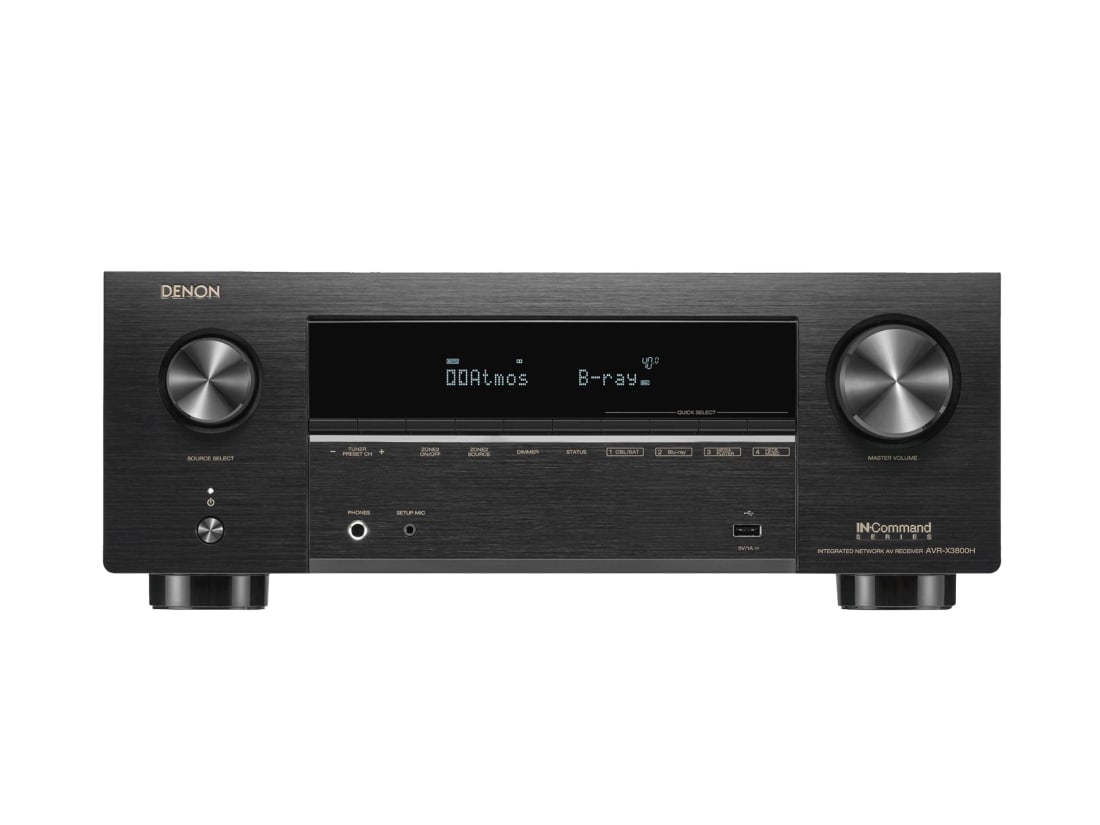
For those weighing options, including a Denon or Marantz receiver upgrade path, the TX-RZ51 sits in a space occupied by products like the Denon AVR-X3800H (check price), and the Dirac ART inclusion could make it genuinely competitive at that tier once pricing is known.
What to do right now
If you're an Australian enthusiast or custom install client with a serious home cinema project in the pipeline, here's a practical framework:
- For dedicated room builds: Keep the PR-RZ91 on your radar but don't delay acoustic work or speaker selection waiting for it. Good room design and speaker placement are prerequisites for any processor to perform at its best. Read up on room correction to understand what correction can and cannot fix.
- For receiver upgrades: The TX-RZ51 with four sub outputs and Dirac ART is a genuinely interesting proposition. Watch for Australian pricing when announced and compare carefully against the established competition.
- For system builders interested in separates: The PA-RZ11 eleven-channel power amp deserves serious attention from integrators building large format systems. A single rack-mount chassis for eleven channels at 150 WPC simplifies wiring and reduces rack space requirements significantly.
- For everyone: Register your interest with a local custom install dealer now so you're notified when Australian availability is confirmed. Flagship products frequently arrive in limited initial allocation.
Onkyo's CES 2026 showing is the most compelling thing the brand has done in years. Whether it translates into products that actually ship, perform to specification, and arrive in Australia at competitive prices is a question only time will answer. But the intent of flagship separates, THX Dominus certification and Dirac Live ART across the range is the right intent. This is a brand that appears to understand what the serious home cinema market needs. Now it has to deliver.
Common questions
- What is THX Dominus certification and why does it matter for the Onkyo PR-RZ91?
- THX Dominus is the highest tier of THX certification, reserved for components that can reproduce cinema-reference sound levels in large dedicated home theatre rooms. It requires rigorous third-party testing and guarantees the processor meets defined performance standards at reference playback levels. For the PR-RZ91, earning Dominus certification signals that Onkyo is positioning this processor at the very top of the consumer AV separates category, not merely adding a badge for marketing purposes.
- What is Dirac Live ART and how is it different from standard Dirac Live room correction?
- Standard Dirac Live corrects both the frequency response and impulse response of your audio system as measured at the listening position — it's considered one of the most capable room correction systems available. Dirac Live ART (Active Room Treatment) adds a further layer specifically targeting low-frequency room modes, using the subwoofer system as an active corrective element to smooth bass unevenness caused by standing waves in the room. Having both systems in the same product, as Onkyo has done across the new PR-RZ91 and TX-RZ51, is a meaningful advantage in real-world installations where the room's acoustics are less than ideal.
- When will the Onkyo PR-RZ91 and TX-RZ51 be available in Australia?
- Onkyo has not announced Australian pricing or availability dates. The first models from the new lineup are expected to begin shipping internationally in late 2026, with some products potentially arriving in early 2027. Australian availability will depend on local distribution arrangements being confirmed. We recommend registering interest with a custom install dealer now so you're informed as soon as local details are announced.
- How does the Onkyo TX-RZ51 receiver differ from something like the Denon AVR-X3800H?
- Both are nine-channel receivers targeting serious home cinema applications, but the TX-RZ51 distinguishes itself with THX Select2 certification, Dirac Live plus ART room correction, and up to four dedicated subwoofer outputs — features that make it particularly well-suited to multi-subwoofer bass array configurations and acoustically challenging rooms. The Denon AVR-X3800H uses Audyssey MultEQ XT32 for room correction and has established strong Australian pricing and availability. A direct comparison will only be possible once Onkyo confirms Australian pricing for the TX-RZ51.

G'day, Jonno here. I spent the better part of twelve years as a custom installer building theatres — everything from a media room squeezed into a Queenslander to a fully blacked-out, acoustically-treated cinema with a hundred grand of gear behind the screen. The thing nobody tells you is that the room matters more than the boxes, and I'll bang on about acoustics until you're sick of me. If you're planning a theatre, talk to me before you spend a cent on speakers.
Ex CEDIA-trained installer; dedicated-theatre and Atmos specialist
More from Jonno Fraser
 Guest Wi-Fi and audio: why visitor networks break multiroomGuest Wi-Fi networks isolate devices by design, which quietly breaks multiroom audio. Here's why it happens and how to fix it properly.
 Ceiling speakers vs upfiring Atmos modules: what actually worksCeiling speakers vs upfiring Atmos modules compared for real rooms: when in-ceiling wins, when upfiring is the better call, and why.
- Why your home cinema amp runs hotter on movies than musicFilm soundtracks push amplifier channels harder and longer than stereo music ever does. Here's why that matters for topology, power supplies and what actually fails.
- Screen-wall speaker placement: building around a UST projector properlyUltra short throw projectors sit right where your centre channel wants to be. Here's how I actually solve that in real theatre builds, not in theory.
 Headphone isolation vs room noise: why your desk setup fights youOpen-back headphones and a noisy home office don't mix. Here's how to actually diagnose room noise before you blame the gear.
 Toe-in and rake: the free speaker tuning most owners never touchToe-in angle and cabinet rake cost nothing but change tonal balance and imaging more than most upgrades. Here's how I set both on site.