Roon vs UPnP vs proprietary apps: which streaming protocol actually sounds best?
Every few months someone posts a thread on a forum claiming their system sounded dramatically better after switching from UPnP to Roon — or from Roon to their DAC manufacturer's own app. The replies devolve fast. I've been watching this particular argument cycle for years, and the frustrating truth is that the answer is both simpler and more complicated than either side admits.
Let's start with what these protocols actually are, because half the confusion is terminological.
What each protocol is actually doing
UPnP (Universal Plug and Play) and its audio subset DLNA are a set of open standards that let a control point — your phone, a tablet, a dedicated app — discover and instruct a renderer (your streamer or DAC) to pull audio from a server. The key word is pull. The renderer fetches the file itself. The control point just issues commands.
Roon works differently. It runs a dedicated server application (the Roon Core) on a local machine — a NUC, a NAS, a Nucleus, or a Mac/PC — and uses its own proprietary RAAT (Roon Advanced Audio Transport) protocol to push audio to endpoints. Roon also handles all the metadata, DSP, and library management centrally, rather than delegating to the endpoint.
Proprietary protocols — think Naim's UPnP-adjacent implementation in the Uniti range, Linn's Songcast, Lumin's own app stack, or Cambridge Audio's StreamMagic — are typically manufacturer-specific refinements built on or alongside open standards. They exist partly because open UPnP has some rough edges around gapless playback, MQA unfolding, DSD handling, and volume management.
So what does this mean for sound? Mostly: nothing, and sometimes: quite a bit. Let me explain the distinction.
The bit-perfect question
If a protocol delivers bit-perfect audio to the DAC's input buffer — every bit in the file arrives intact, in order, without modification — then the protocol itself cannot affect the sound. This is not an opinion; it's arithmetic. A WAV file is a sequence of numbers. If those numbers arrive correctly at the DAC, the DAC converts them. The transport layer is irrelevant to the conversion.
Modern UPnP, Roon/RAAT, and most proprietary protocols are all capable of bit-perfect delivery over a local network. TCP/IP error-corrects. Packets that arrive corrupted are retransmitted. Ethernet does not introduce audible jitter in the same way a coaxial S/PDIF cable can, because the audio data sits in a buffer on the receiving device and is clocked out by the DAC's own master clock — not by the network.
This is why the claim that "Roon sounds better than UPnP" is almost always a description of something other than the transport protocol itself. What people are usually hearing — or not hearing — comes down to four things: DSP, volume handling, sample rate conversion, and the quality of the endpoint implementation.
Where Roon actually earns its subscription
Roon's $US17.99/month (or ~$AU850 lifetime, though pricing has shifted over the years — check the current Roon Labs site) is not buying you a better-sounding wire. What it is buying you is a genuinely excellent piece of software.
The parametric EQ and convolution engine in Roon DSP is legitimately useful. If you have room correction filters from REW or a measured impulse response from something like a miniDSP DDRC-24, you can load that into Roon and apply it to every zone in your house. That capability alone justifies the cost for certain listeners.
Roon also handles upsampling and sample rate conversion in a way that's well-documented and user-configurable. You can choose the filter type, the target rate, dither algorithm. Whether upsampling improves things is a separate argument — but Roon at least makes it transparent and controllable, rather than hiding it behind a manufacturer's firmware.
The metadata and discovery layer is also genuinely better than anything else I've used. Roon pulls from AllMusic, MusicBrainz, and its own editorial database, cross-references your local library with Tidal and Qobuz simultaneously, and handles large collections (I have around 4,000 local albums) without the interface becoming unusable. That's a software quality argument, not a sound quality one — but it's real value.
Where Roon falls down is price, complexity, and the requirement for always-on server hardware. If your Core machine goes to sleep, your music stops. That's fine in a dedicated listening room; it's annoying in a multiroom setup where your partner just wants to play something from Spotify in the kitchen at 7am without waking a server.
UPnP's strengths (and honest weaknesses)
UPnP gets a bad reputation it only partially deserves. On a well-configured network with a decent server — MinimServer is the one I'd point most people toward, and it's free — UPnP delivers bit-perfect audio reliably. I've run MinimServer on a Synology NAS for years without a meaningful dropout.
The genuine weaknesses are practical rather than sonic. Gapless playback across UPnP implementations is inconsistent; whether it works depends entirely on the renderer's firmware. DSD-over-PCM (DoP) support varies. The control apps are, with a few exceptions, not great — BubbleUPnP on Android is serviceable, but nothing in the UPnP ecosystem approaches Roon's interface.
UPnP also exposes some vulnerability to network configuration issues that proprietary protocols sometimes handle more gracefully. If you have a mesh Wi-Fi system with multiple SSIDs or VLANs separating IoT devices from your main network, UPnP discovery can fail silently. I spent a genuinely unpleasant afternoon at a friend's place in Fortitude Valley working out why his Linn DS couldn't see his Synology — the answer was a UniFi VLAN setting that was blocking multicast. Roon, by contrast, tends to handle mixed-network topologies better because the Core actively reaches out to endpoints rather than relying on mDNS broadcast.
Proprietary ecosystems: the manufacturer's bet
Lumin, Naim, Cambridge Audio, Linn, and others have all made variations of the same bet: if we control the full stack from server to app to endpoint, we can guarantee gapless playback, handle format edge cases, and provide a polished experience without relying on third-party software.
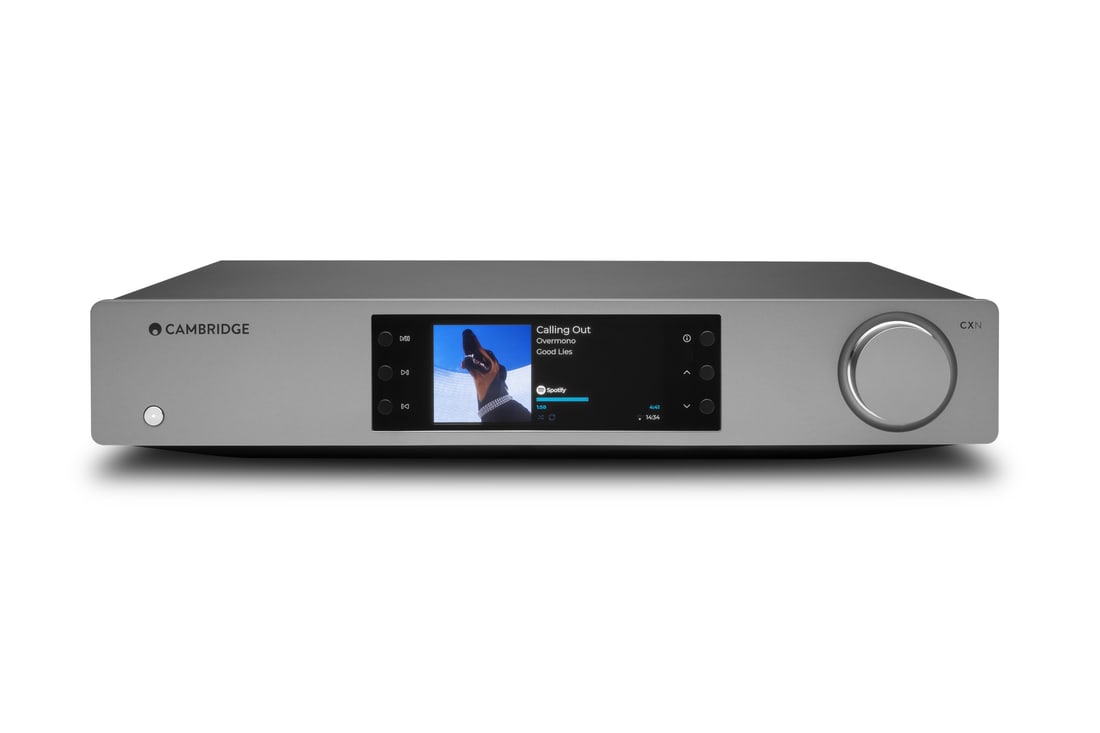
For single-brand setups, this often works well. The Cambridge Audio CXN100, which I've spent time with, is a good example — StreamMagic handles Qobuz, Tidal, internet radio, and local UPnP sources in one reasonably coherent app, and it's genuinely reliable. You lose the advanced DSP capabilities of Roon, but you gain simplicity and the knowledge that Cambridge has tested this exact hardware/software combination.
The problem is lock-in. If you have a Naim streamer, a non-Naim DAC, and speakers from three different manufacturers, Naim's proprietary layer stops mattering past a certain point. Roon's value proposition grows as your system becomes more heterogeneous — multiple zones, multiple brands, different formats. A single dedicated streamer in one room? The proprietary app is usually fine.
I'd argue the audiophile industry's tendency to treat proprietary apps as a premium feature is slightly backwards. Open standards, properly implemented, give you more flexibility. The manufacturer's app should be optional polish, not the only supported path. Naim has historically done a better job than most of supporting both OpenHome (an extended UPnP profile) and their own app simultaneously — that's the model I'd like to see more of.
Multiroom: where architecture actually matters
Synchronised multiroom audio is where the choice of protocol has the most practical impact. Getting two or more zones to play in sync — close enough that walking between rooms doesn't produce an echo — requires either a single clock source or a protocol designed for sync from the ground up.
Roon handles this well via RAAT. So does Linn's Songcast. AirPlay 2 does it adequately. Vanilla UPnP does not — two UPnP renderers playing the same stream will drift. If multiroom synchronisation matters to you, this is a genuine architectural difference, not folklore.
For most people building a serious two-channel system in one room with occasional background music elsewhere, synchronisation matters less than interface quality and reliability. But if you're designing a whole-home audio system from scratch — and you want to think carefully about how the zones interact — this is worth planning before you buy hardware. Our guide to the best DACs and network streamers covers some of the hardware options, and the best streaming amplifiers guide addresses the all-in-one category where the protocol choice is often made for you.
What the sound quality differences people report are actually from
When someone reports a genuine, repeated, consistent sound quality difference between two streaming protocols carrying the same file to the same DAC, I take it seriously enough to look for an explanation. In my experience, the causes fall into a short list.
Volume control is the most common culprit. Some UPnP control apps apply digital volume reduction without telling you. Roon's volume management, if set to "Device Volume" rather than "DSP Volume", passes through at 100% digital gain. If you were comparing Roon at full volume to a UPnP app that was quietly attenuating 6dB, you'd hear a difference — and it's not the protocol.
Sample rate conversion is the second common cause. Some DACs and streamers will resample everything to a fixed rate if the incoming stream's sample rate doesn't match an internal target. Whether that resampling is transparent depends entirely on the quality of the SRC implementation. Roon lets you see and control what's happening; UPnP often doesn't.
Third: DSP applied by the manufacturer's app that you didn't know about. "Sound enhancement" features — loudness curves, bass boost, spatial processing — are sometimes on by default. I've seen this in several streaming amplifier apps. Always check.
Fourth, and genuinely less common than the forums suggest: endpoint implementation quality. Some DAC/streamer combinations have streaming modules that introduce measurable noise or interference into the analogue stage. This is a hardware design problem, not a protocol problem, but it can be exposed or hidden depending on how hard the streaming module is working. A device playing a 44.1kHz/16-bit file may behave differently to one upsampling to DXD on the fly. The Cambridge Audio CXN100 (check price) and the Naim Uniti Atom (check price) both address this with good electrical isolation between the streaming and analogue sections — it's worth asking about this when evaluating any integrated streaming device.
A practical recommendation
Start with the proprietary app for whatever streamer you own. If it handles your sources reliably, plays gaplessly, and doesn't secretly apply DSP you didn't ask for, it's probably enough. Add Roon if you want advanced room correction via convolution, better metadata for a large local library, or proper synchronised multiroom across mixed brands. Consider UPnP with MinimServer if you want an open, low-cost solution for local file playback without a subscription.
Don't add Roon expecting it to fix a DAC that measures poorly, or hoping it will somehow tighten the bass on your standmounts. It's software. It cannot change physics. What it can do is give you more control over the digital chain, surface music you'd forgotten you owned, and handle the genuinely hard problem of multiroom sync gracefully.
The forum debates will continue regardless. But now you know what to look for when someone claims their system transformed after switching protocols: ask them what their volume control was doing, whether any DSP was active, and whether the sample rates were matched. Usually the mystery dissolves pretty quickly.
For hardware that gives you the flexibility to use any of these approaches, the best DACs and network streamers guide is a good place to start, and our streaming amplifiers buying guide covers the all-in-one category where the choice is often already made for you.
— Theo Mensah, Digital, DACs & Streaming Editor
Common questions
- Does Roon actually sound better than UPnP?
- Not by virtue of the protocol itself. If both are delivering bit-perfect audio at the same volume level with no DSP applied, they are mathematically identical at the DAC input. Perceived differences almost always trace back to volume control, sample rate conversion, or hidden DSP rather than the transport layer.
- Do I need Roon for multiroom audio?
- Not necessarily, but it's one of the better options for synchronised multiroom across mixed-brand hardware. AirPlay 2 also handles sync adequately for most listeners. Vanilla UPnP does not synchronise multiple zones and will produce an echo effect between rooms.
- Is UPnP/DLNA still worth using in 2024?
- Yes, particularly for local file playback with a well-configured server like MinimServer. It's free, open, and bit-perfect. The weaknesses are gapless playback inconsistency across renderers and less polished control apps compared to Roon or modern proprietary solutions.
- Why does my streaming sound different depending on which app I use?
- The most common causes are: digital volume attenuation applied by the app, sample rate conversion happening silently in the background, or sound-enhancement DSP that's enabled by default. Check your volume level is at 100% digital gain and that no EQ or enhancement features are active before assuming the protocol is the cause.

Theo here. By day I write software, by night I argue with people on forums about whether bit-perfect playback is "solved" (it mostly is, and then it isn't). I cover the digital end — DACs, streamers, servers, the whole messy ecosystem of getting a file to sound its best. My promise to you: I'll separate the genuine engineering from the audiophile folklore, and I'll never tell you a $500 streaming bridge sounds "blacker" unless I can explain why.
Software engineer; network-audio and DAC specialist
More from Theo Mensah
 Cartridge alignment: why the last half-millimetre matters more than the cartridgeOverhang, zenith angle and azimuth decide more about vinyl sound quality than the cartridge you buy. Here's the engineering, explained by a digital guy.
- Streamer output stage vs speaker sensitivity: matching the digital front end to your pairYour streamer's output impedance and gain structure interact with speaker sensitivity more than most buying guides admit. Here's how to actually match them.
- Bass management over network audio: why your streamer's DSP matters for subsModern streamers now carry crossover and room EQ duties that used to live in an AVR. Here's what that shift actually changes for your subwoofer.
 Digital source, analogue speakers: why your streamer choice still shapes the pairA DAC engineer's take on why speaker matching starts upstream — how digital volume, output stage and streamer choice interact with standmounts and floorstanders.
- Phono preamp gain and loading, explained by someone who'd rather not own a turntableGain and loading settings on a phono stage aren't optional extras. Here's what they actually do to your cartridge's signal, explained without the mysticism.
 AVR vs processor plus power amps: when to make the jumpThinking about splitting your AV receiver into a processor and separate amps? Here's the engineering case for and against, without the marketing fog.