Subwoofer placement: how to find bass that actually works in a real room
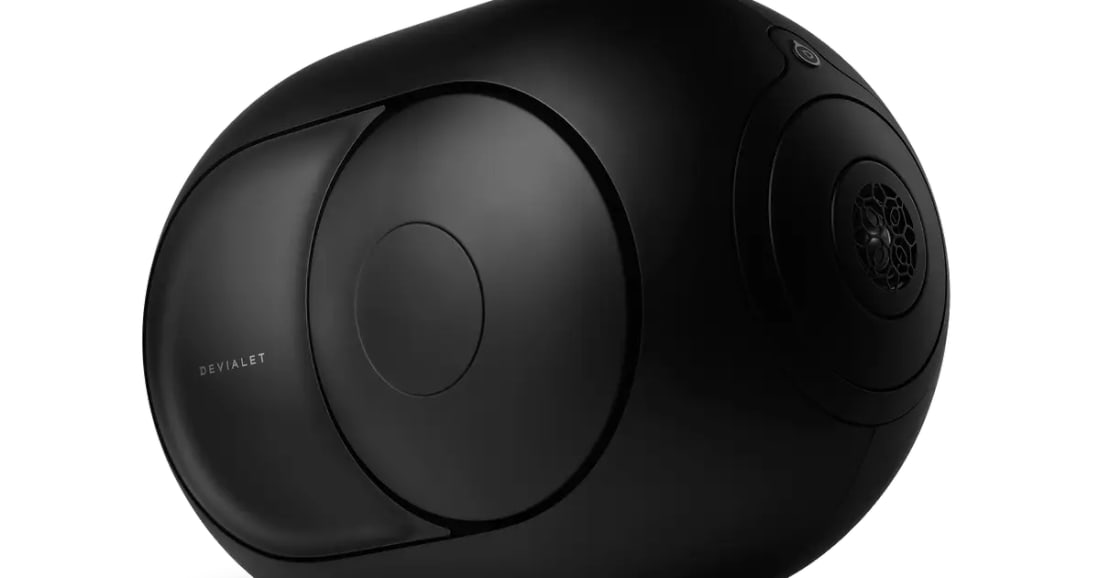
The single most common question I fielded when I was still running the shop on Smith Street in Fitzroy was some version of: "My bass is boomy and horrible — do I need a better sub?" Almost always, the answer was no. The sub was fine. The placement was a disaster.
Bass is the hardest thing to get right in any room, and it's the thing that gets the least attention. People spend months agonising over cartridge loading and tonearm geometry, then drop a subwoofer in the corner because it's out of the way and wonder why their system sounds like a cement mixer. I've done it myself — I will not pretend otherwise.
This isn't a guide about which subwoofer to buy. It's about what happens after you bring one home, which is where most of the real work lives.
Why bass behaves so differently to everything else
At low frequencies — roughly below 300 Hz, and especially below 100 Hz — sound waves are long enough to interact with your room's physical dimensions in ways that mid and high frequencies don't. A 40 Hz tone has a wavelength of about 8.5 metres. Your listening room is, in most Australian homes, somewhere between four and eight metres across. The maths means those waves fold back on themselves, reinforcing in some spots and cancelling in others. These are room modes, sometimes called standing waves, and they are responsible for the majority of bass problems people blame on their speakers or their amplifier.
The corner of a room is where all three room modes (length, width, height) converge. Putting a subwoofer in a corner maximises its output — it will play louder for the same power input — but it also excites every single mode simultaneously. You get more bass, but far less even bass. In my experience, corner placement works well in genuinely large rooms (think 30 square metres or more) where the modes are spread further apart, and it works terribly in small to medium rooms, which covers most of us.
The subwoofer crawl: unglamorous but genuinely useful
Before you reach for a room correction app or start running measurements, do this. It takes twenty minutes and costs nothing.
Put your subwoofer in your listening position — literally on the couch or the chair where your head would normally be. Play some bass-heavy music or a sine sweep. Then crawl around the floor along the front wall, side walls, wherever you're considering placing the sub. When the bass sounds most even, most tuneful rather than just loud, that's a promising position. The physics that make a location sound smooth from the listening position when the sub is there, make it sound smooth at the listening position when you are there instead. It's reciprocal.
Yes, this looks ridiculous. I did it in my flat in Brunswick and my partner walked in halfway through and has not let me forget it. Worth it.
Distances from walls and what actually matters
There's a lot of received wisdom about keeping subs away from walls — "at least 30 centimetres" or "at least half a metre" — and while that's not wrong exactly, it misses the point. What you're trying to avoid is boundary reinforcement turning a specific frequency range into a one-note drone. The distance between the sub's driver and the nearest wall determines which frequencies get reinforced.
Placing a sub flush against a wall (say, 5–10 cm) actually tends to be more neutral than placing it somewhere in between, because at very small distances the boundary reinforcement is broad and relatively flat rather than peaking at one particular frequency. "Almost touching" or "well away" both beat the awkward middle ground. The worst position is typically somewhere between 40 cm and 1.5 metres from a wall, where the reinforcement peak falls squarely in the upper bass range and makes everything sound thick and muddy.
Try pushing your sub right up to the front wall, close to your main speakers. For a lot of people in smallish rooms, this is the cleanest result. The sub is also less localised perceptually when it's near the main speakers — and if your crossover is set appropriately (more on that below), you shouldn't be hearing the sub's position anyway.
Crossover frequency: where bass management becomes placement
Placement and crossover frequency interact more than most people realise. A higher crossover point (say, 120 Hz) means the sub is reproducing frequencies where stereo imaging starts to be audible, and where your ear begins to localise sound sources. That makes placement relative to your main speakers more important — you don't want a smear of upper bass coming from a different direction to your mids and highs.
A lower crossover (80 Hz and below) gives you more placement freedom, because at those frequencies the sound is genuinely omnidirectional and your ear can't pin down the source. Most home cinema processors default to 80 Hz and there's a reason for that. For music-only systems — especially if you're running reasonably full-range standmounts, like a pair of KEF R3 Metas (check price) or B&W 705 S3s (check price) — I'd be experimenting in the 60–80 Hz range and letting the speakers do the work above that. Crossing too high is the most common mistake I see in music-first systems.
For a detailed walkthrough of the crossover controls themselves, our bass management explainer covers the signal chain from AVR output to driver in plain language.
Phase and polarity: stop guessing
Most subwoofers have a phase control — often a knob that sweeps from 0 to 180 degrees, sometimes just a 0/180 toggle. It's one of those controls that confuses people into ignoring it. Don't.
Phase tells the subwoofer's driver which direction to move when a signal arrives. If the sub is out of phase with your main speakers at the crossover frequency, they cancel each other rather than add. You lose exactly the bass you were trying to add. The fix is simple: play music with a strong bass line in the crossover region (bass guitar, upright bass, a kick drum), then switch the phase control back and forth. One position will sound louder and fuller at the listening seat. Use that one.
If you have a continuously variable phase control, the process is the same — sweep slowly from 0 to 180 while listening, and stop where bass is fullest. In rooms where the sub is positioned asymmetrically or at an unusual distance from the mains, the optimal phase setting is often somewhere in between, not at the 0 or 180 extremes. Treat it as a real tuning variable rather than a "set and forget" switch.
Listening height and vertical placement
This one gets almost no attention. Most subwoofers sit on the floor, and the floor is the most powerful boundary in the room for bass. That's usually fine and it does give you free boundary gain. But in rooms with lower ceilings — under 2.4 metres — floor placement can reinforce a room mode that happens to sit right in an unpleasant part of the bass range. Raising the sub onto a sturdy stand or a low credenza sometimes changes which modes are excited and can clean things up. I've seen this work genuinely well in Melbourne terrace houses, where ceiling heights are often modest and room modes cluster in the 60–100 Hz range.
It's not a standard recommendation. Worth trying if crawl-position optimisation and wall distance adjustments haven't sorted a persistent problem.
When room correction fits into the picture
I want to be clear about something: room correction software — Dirac Live, Audyssey, YPAO, whatever your processor ships with — is enormously useful, but it works best after you've placed the sub well. It is not a substitute for placement. Trying to EQ your way out of a severe room mode at the listening seat is like turning up the volume to fix a hum. You're treating the symptom rather than the cause.
Get the sub to a position where the crawl test tells you the bass is reasonably even, then run your room correction. The software will then be smoothing out modest irregularities rather than fighting a catastrophic cancellation null. The result is consistently better.
If you're running a dedicated home cinema system with an AV receiver, our review of the SVS SB-3000 (check price) covers how a well-designed sealed sub behaves before and after correction. The SB-3000's companion DSP app also gives you parametric EQ bands you can apply manually — useful if your AVR's room correction doesn't extend as low as the sub's problem frequency.
For a broader cinema context, the building a home cinema guide covers how the sub fits into the wider system architecture, including bass management routing through an AVR or processor.
One honest admission about "rules"
Every placement rule I've described above — corners are risky, near-wall is usually safer than mid-room, 80 Hz is a sensible crossover default — is a starting point, not a law. I've heard systems where the sub in the corner sounded magnificent, because the room happened to be the right shape and the modes fell in useful places. I've heard systems where textbook placement still produced uneven bass, fixed only by repositioning the listening seat.
The honest truth is that bass in a real room is messy, and the only reliable method is to move things and listen. The crawl test costs you nothing. Moving the sub half a metre along the front wall costs you nothing. Adjusting the phase costs you nothing. Try those before you spend money on a second subwoofer or a room correction processor — although if you get to the point where you've genuinely optimised one sub's position and you still want more evenness across the room, that's exactly when a second sub starts making sense. We've covered why multiple subs outperform a single unit in detail, and the short version is that two subs in different positions average out each other's room mode peaks in ways that no EQ can replicate.
Anyway. Move it around before you give up on it. The room is the instrument, and it needs tuning — not a bigger woofer.
— Priya Anand, Vinyl & Valves Editor
Common questions
- Does a subwoofer always need to go at the front of the room with the main speakers?
- Not necessarily, but it's often the best starting point. Placing the sub near your main speakers reduces the chance of localising the bass as a separate source, especially if you're crossing over above 80 Hz. That said, in some rooms a side-wall or rear position genuinely measures and sounds better. Use the subwoofer crawl technique to find the optimal spot for your specific room rather than assuming the front wall is correct.
- My subwoofer has a phase knob — what should I actually set it to?
- Play music with a strong bass line in the crossover frequency region, then slowly sweep the phase knob from 0 to 180 degrees while sitting in your listening position. Stop at the setting where bass sounds fullest and most even. There's no universal correct answer — the optimal phase depends on your sub's distance from the main speakers and the room's reflections. Switching between 0 and 180 and picking the louder one is a quick approximation; the slow sweep gives you a more precise result.
- Will room correction software fix bad subwoofer placement?
- Room correction (Dirac Live, Audyssey, YPAO and similar) can smooth out modest irregularities very effectively, but it struggles with severe room mode nulls — positions where the bass is cancelling rather than just uneven. EQ cannot add back energy at a cancellation null. Get the placement as good as you can first using the crawl test and wall-distance adjustments, then run room correction to refine what remains.
- What crossover frequency should I use for a music-only system?
- For most music systems using reasonably full-range standmounts, somewhere between 60 and 80 Hz is a good starting range. This keeps the sub handling only the frequencies where it's genuinely omnidirectional and hard to localise, while letting your main speakers do the work from the upper bass upwards. Crossing too high (120 Hz or above) risks audible localisation of the subwoofer, which is distracting in a stereo music context.

Hello — I'm Priya. I ran a second-hand record shop in Fitzroy for the better part of a decade, which is a polite way of saying I have three thousand records and nowhere to put them. I listen to vinyl through valve amplification because I like the ritual as much as the sound, and yes, I know the measurements aren't perfect — I don't care, and I'll explain why on the page. If you want someone to tell you a turntable is "just a motor and a bearing," I am not your person.
Record collector (3,000+); valve-amp enthusiast; ex record-shop owner
More from Priya Anand
 USB vs S/PDIF for DACs: does the digital input matter?USB, coaxial and optical into a DAC: which digital input actually changes the sound, and when the difference is real versus imagined.
- Qobuz vs Tidal for your record collection's digital halfQobuz vs Tidal compared for vinyl collectors who want a digital half that matches their records, not just a bigger catalogue.
- Why a subwoofer makes a valve system sound more honestAdding a subwoofer to a valve amp system can tighten bass, cut distortion and let low-power tubes sing. Here's how to do it properly.
- Tidal vs Qobuz vs Apple Music: which one actually suits a valve systemStreaming services aren't interchangeable once you're running valves. Here's how Tidal, Qobuz and Apple Music actually behave through a warm front end.
 Speaker matching to valve amps: sensitivity beats watts every timeWhy sensitivity, not power output, decides whether a valve amp and speaker pair actually works together — and how to read a spec sheet properly.
- Your phone's volume slider is quietly re-encoding your musicTurning your phone down before a Bluetooth speaker or DAC often re-processes the digital signal. Here's what's actually happening, and when it matters.