The system-building order of operations, from the top down

A reader wrote to me last month with a spreadsheet. Genuinely a spreadsheet — three tabs, a column for "resale confidence," another for "wife approval factor." His question was simple: he had roughly $40,000 to spend and wanted to know whether to start with the amplifier or the speakers. I told him neither, and he didn't love that answer. But it's the right one, and it's the thing almost nobody selling you gear will say out loud, because the correct order of operations doesn't always put the most expensive box first.
I spend most of my working life around systems that cost more than a decent car, sometimes more than a decent house deposit. At that end of the market you'd think the order would matter less — surely if you've got the money, you just buy the best of everything and it sorts itself out. It doesn't. I've stood in rooms with a quarter-million dollars of electronics being throttled by a speaker placement problem that a $200 pair of stands would have fixed. The money didn't buy sense. It just bought better mistakes.
Room first, and I mean it this time
Everyone says "the room matters most" and then buys speakers anyway. I get it — a room isn't sexy, you can't put a room on a rack, nobody photographs a room for their forum signature. But the room is doing more to your frequency response than any component swap will, and it's not close.
This isn't an argument for spending your whole budget on acoustic panels before you own a system. It's an argument for knowing your room's dimensions, its worst modal problems, and its realistic speaker positions before you spend a cent on boxes. A 3.4-metre-wide room with the listening position hard against the rear wall is going to punish certain speaker types — big reflex-loaded floorstanders, mostly — no matter how much you spend on the amplifier feeding them. We've written before about matching speaker footprint to room footprint, and it remains the most-ignored piece of advice I give. People buy the speaker they read about, then discover the room they own doesn't want that speaker.
Speakers before electronics, almost always
Once the room's constraints are honest and on paper, the speakers come next — before the amplifier, before the source, before the cabling debates that eat forum threads alive. This is the one place I'll happily contradict a chunk of the industry's marketing, which likes to sell you the amplifier or DAC as the "heart of the system." It isn't. The speaker is the only component in the chain that's doing mechanical work, converting electrical signal into moving air, and it is by a wide margin the biggest single determinant of what you'll actually hear. Swap an amplifier and you'll hear a difference, sometimes a meaningful one. Swap a speaker and you've built a different system.
I'd rather see someone spend sixty percent of a $10,000 budget on speakers and find a good, honest, moderately priced amplifier to drive them than the reverse. The amplifier's job, in most home systems, is to get out of the way. The speaker's job is everything downstream of that — tonal balance, dispersion, how it loads the room, whether it disappears or announces itself. Look at the gap between something like the KEF R3 Meta (check price) and a step-up floorstander in the same range and you're mostly hearing what the drivers and cabinet are doing, not what's feeding them.
Then, and only then, sensitivity and power matching
Once you know the speaker, the amplifier decision becomes a maths problem, not a taste problem. Sensitivity, nominal impedance, the depth and location of any impedance dips — these tell you what the amp needs to do before you start auditioning for "musicality," a word I'm always slightly suspicious of. We've covered the sensitivity-and-power relationship in detail elsewhere, and it's worth reading properly rather than skimming, because it's the single most skipped piece of matching in the entire hobby. A speaker with an awkward impedance curve dipping below 4 ohms in the upper bass will expose a marginal amplifier in ways a spec sheet never warns you about, and I've watched perfectly good speakers get blamed for an amplifier's shortcomings more times than I can count.
This is also where the ratio question comes up constantly in my inbox: should the amplifier cost as much as the speakers, more, less? There's no fixed ratio, and I'd treat anyone who gives you one with mild suspicion. What matters is whether the specific amplifier can control the specific speaker's low end and handle its dynamic swings without strain — a $2,500 integrated like the Marantz Model 40n (check price) will comfortably drive plenty of speakers that cost more than it does, provided the impedance and sensitivity numbers line up. Money spent chasing a ratio instead of a genuine electrical match is money wasted.
Source and digital front end: later than people think
Here's where I'll offend the DAC obsessives, gently, because I do this for a living and I know the arguments. The source matters, and at the reference end of my job I've heard six-figure digital front ends do things a $2,000 box genuinely can't. But that gap only becomes audible once the speakers and room and amplifier matching are already sorted. Put a state-of-the-art streamer into a system with boomy, badly placed speakers in an untreated room and you will not hear the streamer's virtues. You'll hear the room's problems with better resolution, which isn't the same thing as hearing more music.
Practically, this means: buy a genuinely competent, not-embarrassing source early — something like the Cambridge Audio CXN100 (check price) or a well-regarded all-in-one such as the Naim Uniti Atom (check price) — and don't revisit the digital front end until everything upstream of it is settled. Our guide to DACs and streamers is a reasonable place to start when that day comes, but for most systems under, say, $15,000 all-in, the source upgrade should be the last major spend, not the first. I'd argue this is the most consistently backwards habit I see among buyers with real budgets — they lead with the shiny digital box because it's the easiest thing to research online, and leave the speakers and room for later, when it should be almost exactly reversed.
Cables, racks, mains — the last ten percent, genuinely last
I've written elsewhere about where statement systems really spend their final increments, and the short version applies here too: cabling, isolation, and mains conditioning are real, they're measurable in some cases and inaudible-but-present in others, and they belong absolutely last in the spending order. Not because they don't matter, but because their effect is a fraction of what's available from getting the room, speakers, and matching right first. I've sat in rooms where a four-figure cable swap was audible — genuinely, not placebo — and I've also sat in rooms where the same cable swap was drowned out entirely by a boundary reflection off a nearby side table. Sequence matters. Skip ahead to cables before the fundamentals are settled and you're polishing a problem you haven't found yet.
Where the diminishing-returns curve actually bends
If you plotted spend against audible improvement for a typical system build, the curve doesn't decline smoothly — it has a knee. Below that knee, every dollar buys a noticeable amount of performance: going from a poor speaker to a good one, from an underpowered amp to an adequately matched one, from no room treatment to basic first-reflection control. Above the knee, you're paying for increasingly small increments, and — this is the part I find genuinely interesting about my job — you're also starting to pay for things that aren't strictly sonic at all. Build quality that will outlast you, an amplifier chassis machined by a company with a specific engineering pedigree, the tactile satisfaction of a beautifully damped volume control. None of that is fake value. It's just a different kind of value than the one most buyers think they're purchasing.
Where that knee sits depends entirely on the system, but for most Australian buyers building a serious two-channel rig, I'd put it somewhere in the vicinity of a well-chosen standmount or compact floorstander, a matched integrated amplifier in the low-to-mid four figures, and a source that doesn't embarrass the rest of the chain — think a system built around something like the Rega Brio Mk7 (check price) or Cambridge Audio CXA81 MkII (check price) paired with genuinely well-matched standmounts. Past that, you're buying refinement, not competence, and refinement is a legitimate thing to want. Just be honest with yourself about which one you're chasing.
The spreadsheet answer
I did eventually give my reader with the spreadsheet a straight answer, which is roughly what's above: room constraints documented honestly, speakers chosen to suit both the room and the budget, amplifier selected to properly drive those specific speakers, source upgraded last, cabling and mains treated as the final polish rather than the opening move. He wasn't thrilled that the "fun" part — the amplifier shopping — came third rather than first. But six months later he emailed to say the system sounded better than he'd expected for the money, and that the biggest single improvement had come from moving his speakers forty centimetres off the rear wall, which cost him nothing at all. That's usually how it goes. The order matters more than the number on the invoice.
Common questions
- Should I spend more on the amplifier or the speakers?
- Speakers first, in almost every case. The speaker is the only component doing mechanical work in the chain and it has the largest single influence on what you actually hear. Choose speakers suited to your room, then find an amplifier that properly matches their sensitivity and impedance.
- Is it worth spending on cables and mains conditioning before upgrading speakers or the room?
- No. Cabling and mains treatment are real but their audible effect is small compared with fixing speaker placement, room modes, or a poorly matched amplifier. Treat them as the last five to ten percent of a build, not the first move.
- How do I know when I've hit diminishing returns in a system build?
- You've usually hit the knee of the curve once your speakers are well matched to the room, the amplifier comfortably drives them without strain, and the source is competent rather than embarrassing. Beyond that point you're paying for refinement and build quality more than audible improvement.
- Does the source (DAC or streamer) matter less than people think?
- It matters, but later than most buyers assume. A brilliant digital front end can't overcome bad speaker placement or an untreated room — you'll just hear the room's flaws in higher resolution. Get the fundamentals sorted first, then revisit the source.

I'm Sofia, and I get to play with the silly stuff — the statement amplifiers, the reference loudspeakers, the cost-no-object systems that most of us will only ever hear at a show. Someone has to, and I take it seriously: at this level the price stops mapping to performance and starts mapping to engineering, craft and ego, and part of my job is telling you which is which. I love the extreme end of this hobby, but I'm not dazzled by a big number on a price tag.
Covers flagship and cost-no-object reference systems
More from Sofia Laurent
- The synergy tax: why mismatched gear costs more than cheap gearThe synergy tax explained: why pairing mismatched hi-fi components quietly costs more than buying modest, well-matched gear.
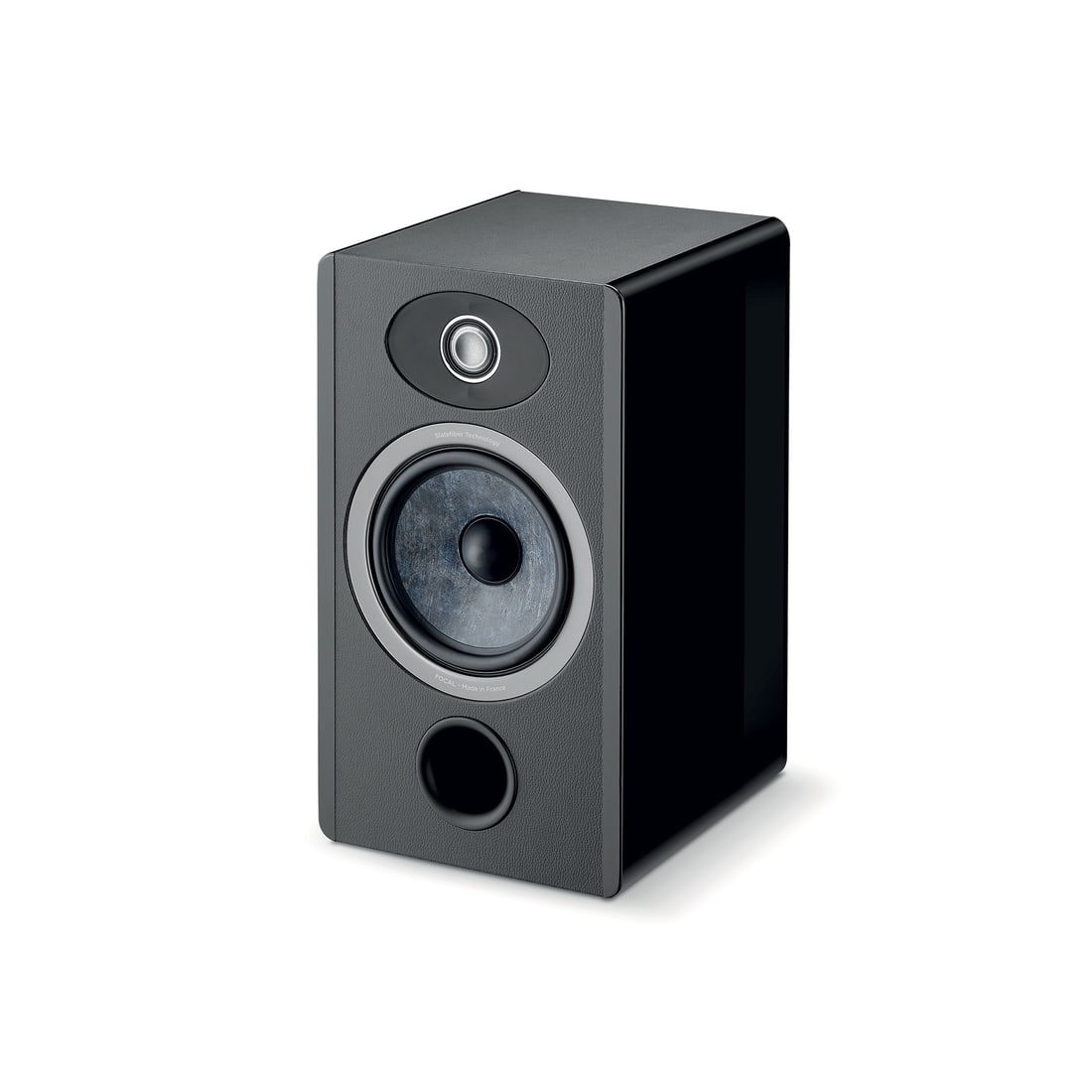 Rear-port floorstanders near a glass wall: a risky pairingRear-ported floorstanders against glass walls cause boundary reinforcement and reflections. Here's how to place, measure and tune them properly.
- Infrasonic bass below 20Hz: chasing the octave you feel, not hearBelow 20Hz is infrasonic bass: felt more than heard. Here's what it takes to reproduce it properly, and whether a statement system should bother.
- Why statement systems still get beaten by the zone two speakerA $150,000 reference system is only as good as the worst-sounding zone it's networked to. Here's why multiroom integration is the statement system's real weak point.
- Why a statement floorstander can be the wrong speaker in the roomSix-figure floorstanders fail in rooms that were never built for them. Here's how to tell if your space can actually support one before you buy.
- Diffusion in statement rooms: when scattering sound beats absorbing itIn a statement room, piling on absorption kills the air around the music. Here's when diffusion is the better tool, and where I've seen it misused.