Where to spend on cables, racks and power: what actually moves the needle
A client of mine once spent $4,000 on a single HDMI cable for a theatre we'd built together in Paddington. The room had a $120,000 system in it — projector, processor, the lot — so I understood the impulse. What I couldn't understand was why he'd chosen to do it before sorting out the rattling equipment rack that was buzzing in sympathy with the subwoofer every time an action scene hit. Priorities matter. And in my experience, most enthusiasts get them back to front when it comes to the so-called "accessories": cables, racks, and power conditioning.
These three categories attract more folklore per dollar than almost anything else in audio. That's partly because the effects are hard to measure cleanly, partly because audiophile marketing is extraordinarily good at exploiting uncertainty, and partly because, honestly, some of it does make a small but real difference. The trick is knowing which part.
The honest case for cables (and where it stops)
I'll be upfront: I'm not a cable sceptic in the absolute sense. I've heard differences in interconnects and speaker cables in controlled back-to-back tests. I've also heard "differences" that evaporated the moment we matched levels properly. Both things are true, and anyone telling you otherwise — in either direction — is selling something.
For digital connections, the cable debate is mostly settled. A well-terminated HDMI cable that meets the bandwidth spec for your signal (48Gbps for 4K/120 or 8K content, per the HDMI Forum's published specification) is all you need. Whether it costs $15 from Jaycar or $150 from a hi-fi boutique is largely irrelevant to the signal integrity over runs under five metres. For longer runs — anything above eight or ten metres — active HDMI cables or a good-quality fibre-optic HDMI are genuinely worth considering, because passive copper starts to struggle at those distances regardless of price. That's physics, not marketing.
Analogue interconnects are more nuanced. Low-capacitance construction genuinely matters for long runs between components, because high cable capacitance can roll off high frequencies when the source impedance is elevated. A $50 cable from a reputable brand like QED or van den Hul will be properly specified and terminated. A $500 cable from a boutique brand might sound subtly different — but I'd want a proper level-matched blind test before I'd stake money on it. Most people can't pass one. I'll admit I got this wrong for years, favouring expensive interconnects before I started doing proper A/B tests in theatre builds.
Speaker cables are where I'm most conservative. For runs under five metres in a typical home cinema, 2.5mm² or 4mm² oxygen-free copper does the job. Resistance is what matters electrically — keep it low relative to your speaker's impedance and you're fine. A good reference point is keeping the cable's total loop resistance below five per cent of the speaker's rated impedance. Beyond that, you're buying confidence and aesthetics, which is a legitimate reason to spend money, just not an acoustic one.
Equipment racks: the underrated foundation
This is where I reckon most systems are genuinely let down, and where spending real money pays back in ways you can hear and measure.
The problem with a bad rack is threefold. First, poor shelf isolation allows mechanical vibration — from transformers, cooling fans, subwoofer energy bouncing off the floor — to feed back into components that are sensitive to it. Turntables are the obvious case, but CD transports and even some DACs with crystal oscillators can be affected by structure-borne vibration. Second, a badly designed rack restricts airflow, which pushes components into thermal stress and shortens their service life. Third, a rack that resonates mechanically adds colourations to the room's acoustic signature — not directly to the audio signal, but to the room itself, in ways that can muddy bass or add a subtle buzziness to the listening environment.
Good racks address all three. The approach varies: some brands use mass-loading and isolation feet (Atacama and Target do this well at mid prices), others use constrained-layer damping with alternating layers of materials with different resonant properties (the approach taken by Finite Elemente and similar high-end German makers), and some use a combination. At the custom-install end, I've built dedicated equipment rooms that decouple the rack from the listening space entirely — the gear sits in a ventilated plant room, cables run through the wall, and the theatre is completely quiet. That's the gold standard, but it requires planning from the architectural stage.
For most people, a mid-tier rack from a brand that takes the engineering seriously — think Atacama's Evoque range, or the older but still excellent Target HiFi stands if you can find them — will outperform a glass-and-chrome flat-pack unit by a meaningful margin. Budget $400 to $1,200 for a decent five-shelf unit. I'd spend that before I spent $300 on upgraded interconnects every time.
One thing I see installers get wrong: overloading shelves without considering the rack's resonant modes. Each shelf has a fundamental resonant frequency that depends on its mass, area, and material. A shelf loaded right at that resonance will vibrate more, not less. Proper isolation feet — Sorbothane, brass cones, or aftermarket spikes — help by shifting and damping those modes. It's worth spending an afternoon experimenting with placement and support points, particularly under turntables and CD transports.
Power conditioning: real problems and real solutions
Australian mains power is, diplomatically speaking, variable. Anyone who's built systems in Queensland and New South Wales knows that the grid in suburban areas can carry genuine noise — switching transients from neighbours' air conditioners, dimmer switches, and EV chargers are real phenomena that show up on an oscilloscope. Whether they show up at the listening seat is a different question, and one that depends heavily on the noise rejection of the components in your chain.
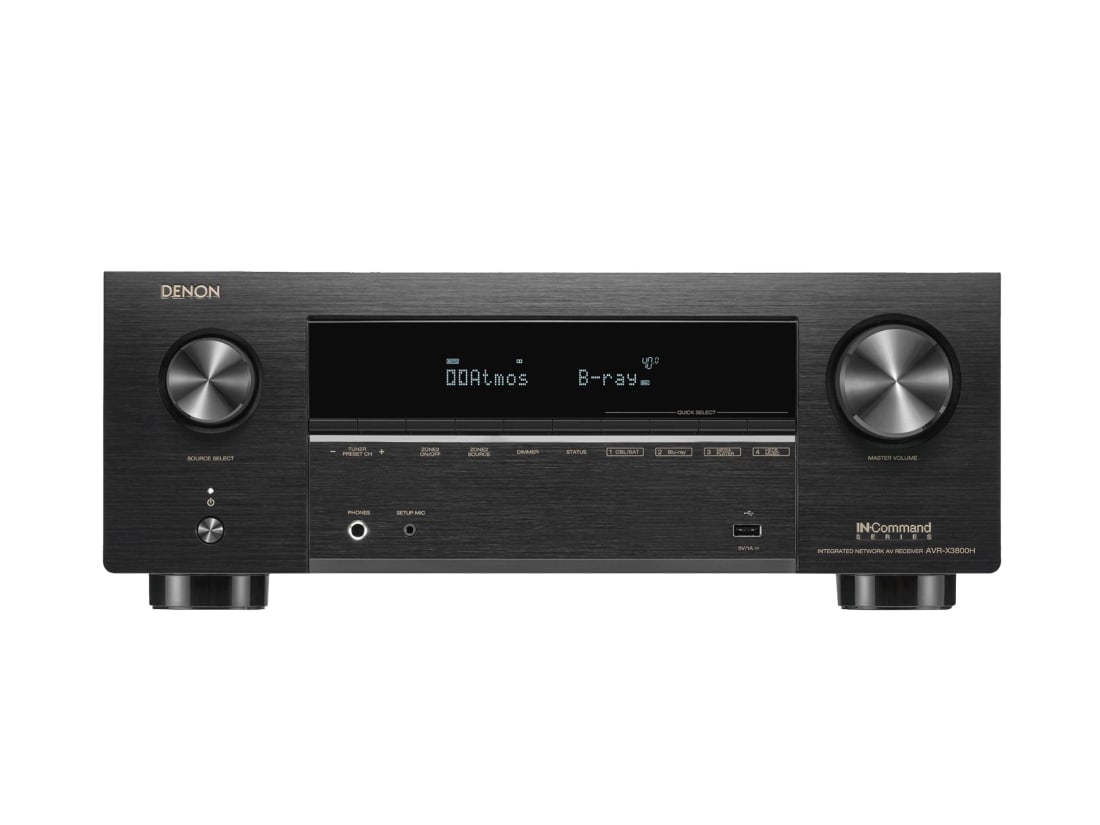
Modern well-designed electronics, particularly those with regulated switch-mode power supplies, reject a lot of mains noise internally. A good AVR like the Denon AVR-X3800H (check price) has internal filtering that handles most of what the Australian grid will throw at it. You are probably not hearing the mains in that scenario.
Where power conditioning earns its keep is in three specific situations. The first is analogue sources — turntables with motors and phono stages with high gain can pick up noise that digital components reject. The second is high-power amplifiers that draw large transient current; a power conditioner with proper current-delivery capability (not a simple filter that restricts current) can provide a cleaner, lower-impedance supply for those peaks. The third is whole-system protection — surge protection and isolation from lightning events, which in subtropical Queensland is genuinely not a trivial concern. I've lost gear to indirect strikes twice in twelve years of installs up here on the Gold Coast, and both times the clients didn't have proper surge protection.
The key distinction in power conditioning is between passive filtering and active regeneration. Passive units — most of the sub-$500 power boards marketed as "audio grade" — do some filtering but can't do much about voltage sag or waveform distortion. Active regenerators (PS Audio's Power Plant range is the well-known example, though they're priced accordingly) actually rebuild the mains waveform from scratch, which addresses voltage irregularities that passive filters can't touch. For a dedicated high-end cinema or two-channel reference system, a regenerator is worth considering. For a mid-tier AV setup, a quality surge-protected distribution board with some passive filtering — something from Furutech or similar — is a sensible precaution without being a massive investment.
What I'd avoid: the $2,000 passive conditioners that claim dramatic sonic improvements through proprietary filtration "technology" with no published specifications. If the manufacturer won't tell you the filter topology, the insertion impedance at different frequencies, or the let-through voltage on surge events, I'd be suspicious. The AES Journal has published peer-reviewed work on mains conditioning and audio; it's a useful counter to marketing claims.
Where the hierarchy actually sits
If I'm building a system from scratch, or advising someone on where to spend the next dollar of an existing system, here's roughly how I order these categories in terms of genuine audible and measurable return:
Surge protection and basic power distribution comes first — this is about not losing equipment, not sound quality, and it's non-negotiable in Australian conditions. A quality surge-protected board from a brand that publishes real clamping voltages is $100 to $300 well spent.
A decent equipment rack comes second, before any cable upgrades. The mechanical stability of your system underpins everything that sits on it. Flimsy furniture costs you real performance from components that are doing their job correctly.
Speaker cables and interconnects come third, and only once the rack situation is sorted. Upgrade from truly bargain-bin cables to something properly specified — 2.5mm² or better for speaker cables, properly terminated interconnects from a named brand — but don't agonise over the premium tier unless you've done proper A/B testing and heard a consistent difference with your own ears.
Active power regeneration comes last in the hierarchy and only makes sense once everything else is in order. If you're spending $300 on cables before you've bought a surge protector, you've got it backwards.
For the home cinema context specifically, I'd also note that all of this is downstream of the room itself. Before you spend $500 on cable upgrades, consider whether $500 of acoustic treatment would do more for your listening experience. In my honest view, it usually would — and I've written about the full component hierarchy for a dedicated cinema if you want the longer version of that argument.
The diminishing-returns curve in practice
Every category above has a point of genuine diminishing returns, and it arrives earlier than the marketing suggests.
For cables, that point is probably around the $100-to-$200 mark for a one-metre interconnect pair and similar for a two-metre speaker cable run. Below that, you might genuinely be buying quality termination and reliable construction. Above it, you're increasingly paying for metallurgy claims and aesthetics. I'm not saying the expensive cables are worse — I'm saying the incremental audible improvement, if any, is very hard to reliably identify, and your money likely has better work to do elsewhere in the system.
For racks, the curve is gentler. There are real engineering differences between a $600 and a $1,500 rack — better isolation materials, tighter tolerances, more effective constrained-layer damping. Above $2,000, you're moving into aesthetics and prestige territory for most residential applications. The exception is purpose-built custom installs with very high-end analogue gear, where a proper isolation platform under a reference turntable can make a consistent and measurable difference to noise floor.
Power conditioning has the sharpest diminishing returns of the three. A good surge protector is genuinely useful. A passive conditioner offers modest additional benefit in noisy environments. An active regenerator makes a real difference in measurable terms but costs multiples of the passive alternatives. The value calculation is personal and depends on your system's sensitivity and your local grid quality.
Getting the order right
The enthusiast community — forums, YouTube rabbit holes, the usual — has a tendency to fixate on the exotic and expensive while the fundamentals slip. I've walked into rooms with $800-per-metre speaker cable, a rack that wobbles when you lean on it, and no surge protection anywhere in the chain. The cable budget would have been better allocated, full stop.
If you're building or upgrading a serious system, whether it's a two-channel reference rig or a dedicated home cinema (and our guide to building a home cinema covers the full picture), treat cables, racks, and power as supporting cast, not lead actors. Get the sources, amplification, and speakers right first — check our streaming amplifier guide if you're building around a modern integrated — then allocate the accessory budget in the order above.
The room still matters more than all of it. But that's a different argument for a different day.
— Jonno Fraser, Home Cinema & Custom Install Editor
Common questions
- Do expensive HDMI cables actually make a difference to picture or sound quality?
- For runs under five metres, a properly certified HDMI cable that meets the bandwidth spec for your signal (48Gbps for 4K/120Hz or 8K) is all you need, regardless of price. The signal is digital — either it gets there intact or it doesn't. For longer runs, active HDMI cables or fibre-optic HDMI are worth considering because passive copper struggles beyond eight to ten metres, not because of cable brand but because of physics.
- What should I look for in a power conditioner for a home cinema system in Australia?
- First, make sure it offers genuine surge protection with published clamping voltages — this matters in Australian conditions, particularly in subtropical regions prone to lightning. For most systems, a quality filtered distribution board from a reputable brand is sufficient. If you have high-sensitivity analogue components or a reference-level system, an active power regenerator addresses voltage irregularities that passive filters can't, but the cost is significantly higher. Avoid passive conditioners that make large sonic claims without publishing their filter specifications.
- Is a dedicated equipment rack worth the money over a regular piece of furniture?
- Yes, particularly for analogue components like turntables and CD transports, which are sensitive to structure-borne vibration. A well-engineered rack controls resonance, allows proper airflow to prevent thermal stress, and provides a stable mechanical foundation for your components. Budget $400 to $1,200 for a quality unit. In most cases, that investment will deliver more audible improvement than a similar spend on cable upgrades.
- How thick should my speaker cables be?
- For runs under five metres, 2.5mm² cross-section oxygen-free copper is generally sufficient. For longer runs or speakers with low impedance (4 ohms or below), step up to 4mm². The key metric is keeping the cable's total loop resistance below roughly five per cent of the speaker's rated impedance. Beyond that, the conductor material and jacket construction make very little measurable difference to the audio signal.

G'day, Jonno here. I spent the better part of twelve years as a custom installer building theatres — everything from a media room squeezed into a Queenslander to a fully blacked-out, acoustically-treated cinema with a hundred grand of gear behind the screen. The thing nobody tells you is that the room matters more than the boxes, and I'll bang on about acoustics until you're sick of me. If you're planning a theatre, talk to me before you spend a cent on speakers.
Ex CEDIA-trained installer; dedicated-theatre and Atmos specialist
More from Jonno Fraser
 Building a home cinema budget: the spending order that actually pays offWhere to put the first dollar in a home cinema build, and why most people spend it on the wrong box first. A spending order from twelve years of installs.
 Desktop headphone setups: getting the desk itself right firstBefore you chase another DAC or amp, sort the desk. Reflections, cable strain and monitor height quietly wreck more desktop headphone rigs than gear ever does.
- Open-back headphones and a shared house: when the leak actually mattersOpen-back headphones leak sound both ways. Here's how much, when it genuinely matters in a share house or apartment, and when it's a non-issue.
- Subwoofer crawl vs measurement: how to actually find the right spotThe subwoofer crawl is a good starting point, not a finish line. Here's how I actually locate sub placement on real jobs, and when to trust the numbers instead.
- Headphone listening rooms: why the space around your head still mattersHeadphones bypass room acoustics for the direct sound, but the room you sit in still shapes fatigue, focus and what you hear. Here's why.
 Speaker format by room: when standmounts beat floorstanders (and vice versa)Choosing between standmounts and floorstanders isn't about budget or looks. It's a room-shape and listening-distance decision, and I've watched it wreck good systems.