DAC chips versus DAC engineering: what you're really paying for
Pull the lid off a $600 desktop DAC and a $30,000 reference unit and, more often than you'd think, you'll find a very similar-looking conversion chip in both. That fact alone drives some people mad. If the part doing the actual digital-to-analogue conversion costs a few dollars either way, where does the other $29,000-odd go?
I get asked this constantly, usually by someone who's just read a forum post claiming "all DACs sound the same now" and wants me to either confirm or demolish it. The honest answer sits uncomfortably in between, and it's the reason I wanted to write this one properly rather than give the usual hedge. The conversion chip stopped being the interesting part of a DAC's story a long time ago. What's interesting, and what actually separates the giant-killers from the genuinely special, is everything built around it.
The chip is not the DAC
A conversion chip's job is narrow: take a stream of digital numbers and turn it into an analogue voltage, many thousands of times a second, with as little error as possible. The major chip families from ESS, AKM and Texas Instruments' Burr-Brown line have been extraordinarily good at this core task for well over a decade now. My colleague Theo has covered this ground from the engineering side in cheap DAC chips are basically solved, and he's right that the raw part, measured on its own test bench, in isolation, will often hit noise floors and distortion figures that are already inaudible.
But nobody listens to a bare chip. It sits on a circuit board, fed by a clock, powered by a supply, and its output is shaped by an analogue stage before it ever reaches your amplifier. Each of those four things can be done cheaply or done with real care, and the gap between cheap and careful is where almost the entire price of a high-end DAC actually lives.
Clocking is where good chips get ruined
Jitter is the timing error in when samples get converted, and it's the single easiest way to take a theoretically excellent chip and make it sound flat and glassy in practice. A converter needs a clock signal telling it exactly when to fire, and if that clock has noise or timing wobble, the chip converts accurately but at slightly the wrong moments. The result is a form of distortion that doesn't show up neatly on a simple THD spec but is audible as a loss of image focus and a slightly hard top end.
At the budget end, clocking is whatever's cheapest that clears the datasheet's minimum requirement. At the reference end, you're looking at temperature-controlled crystal oscillators, sometimes multiple clock domains isolated from each other, and physical shielding to keep electrical noise from the rest of the circuit out of the clock's path. None of that is glamorous. It's also genuinely expensive to do well, and it's a large part of why a six-figure digital front end exists at all, something I went into in more depth in reference DACs: what a six-figure digital front end actually buys.
Power supplies and the analogue stage do the rest
The second big lever is power. Digital circuits generate electrical noise as a matter of course, switching millions of times a second, and that noise wants to leak into the sensitive analogue circuitry sitting right next to it on the same board. A well-engineered DAC separates digital and analogue power supplies entirely, sometimes with separate transformers, and filters each stage aggressively before it reaches anything that matters to the sound.
Then there's the output stage itself, the analogue circuitry that takes the chip's raw signal and turns it into something your amplifier can use cleanly. This is where component quality, gain staging and output impedance all come into play, and it's an area where I've heard genuinely well-regarded chips sound mediocre because the output stage around them was an afterthought. It's also where a manufacturer's house sound gets decided; two DACs using an identical chip can differ more here than the datasheet would ever suggest.
None of this is folklore. AES publishes ongoing research on jitter audibility and digital audio measurement standards that backs up why these downstream stages matter as much as they do, and it's worth a look if you want the engineering detail rather than my summary of it.
Digital filters: the part nobody agrees on
Every delta-sigma DAC chip applies a digital filter to the incoming signal, and manufacturers get real creative here. Sharp filters, slow filters, minimum-phase, apodising, the naming gets baroque fast. This is one of the few areas where there's a genuine, audible, and legitimately debated design choice happening, rather than just a quality gap. I covered the mechanics of what's actually happening to your signal in DAC upsampling explained, and it's worth reading if you've ever wondered why the same file sounds subtly different switching filter modes on the same unit.
At the reference end, some manufacturers ditch the chip's built-in filter entirely and run their own custom filter implementation on a separate DSP or FPGA, tuned by ear over months. That's real engineering time from real people, and it costs real money, but it's also the kind of thing where I'd argue diminishing returns set in earlier than the price tags suggest. I've sat through A/B filter comparisons on genuinely exceptional gear where the difference was there, but subtle enough that I wouldn't bet my house on picking it blind a second time.
Does spending more actually buy you more, at every step?
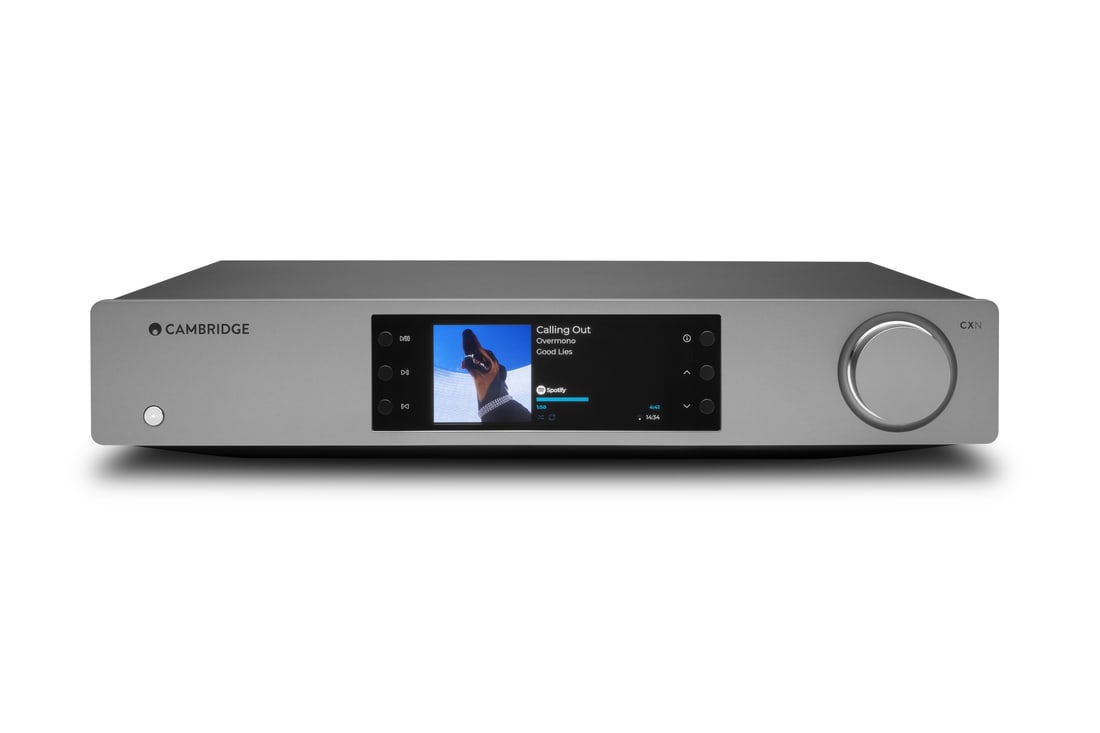
Here's my mildly unpopular view, and I say this as someone whose job is largely covering the top end: the jump from a genuinely cheap, poorly engineered DAC to a competently engineered one in the $1500-$3000 bracket, something like the RME ADI-2 DAC FS (check price) or the streaming-capable Cambridge Audio CXN100 (check price), is the single biggest audible step you'll take on this ladder. Clocking gets serious, power supplies get properly separated, output stages stop being an afterthought. After that point, every further improvement costs disproportionately more for a smaller, more specific gain.
That's not an argument against reference-level digital. I've spent long sessions with six-figure digital front ends and the best of them do things a $2000 unit simply can't; a sense of ease and tonal richness that's real, not imagined, and that I'd happily pay for if it were my money and my system could show it off properly. But I'd be lying if I said the improvement scales linearly with the price. It doesn't, and anyone telling you otherwise is selling something.
Desktop units worth mentioning at the accessible end include the Chord Electronics Mojo 2 (check price) and the iFi Audio ZEN DAC 3 (check price), both of which show what careful engineering around a modest chip can achieve on a real-world budget, and both are covered in more depth in our best desktop DAC/amps guide alongside the excellent-value FiiO K11 (check price).
What this means when you're actually shopping
Ignore the chip name printed on the box entirely. It's marketing shorthand at best and tells you almost nothing about how the unit will actually sound. Instead, look at how a manufacturer talks about power supply design, clocking, and output stage topology in their own technical documentation, if they bother to publish any at all. A company that's proud of its engineering usually says so in detail; one that leads with the chip name and stops there is often hoping you won't ask further.
Read measurement-focused reviews where someone has actually put the unit on a bench rather than just relayed the datasheet. And then, critically, listen. Not because measurements lie, they generally don't, but because two DACs can both measure very well while sounding meaningfully different through your particular amplifier and speakers. Our broader roundup of best DACs and network streamers is a reasonable starting point for narrowing the field before you go and do that listening yourself.
I'll also say this: don't assume a streamer's onboard DAC section is automatically the weak link that needs replacing. Plenty of modern all-in-one units, the Naim Uniti Atom (check price) among them, do the conversion stage properly and the money's better spent elsewhere in the chain, on your speakers or your room, than on a separate box chasing a problem that isn't really there.
The part of the chain that actually decides this for you
None of this exists in a vacuum. A beautifully engineered DAC feeding a mediocre amplifier into a poorly placed pair of speakers in an untreated room will lose to a modest DAC in a system that's been put together with more care elsewhere. I've watched this happen at shows more times than I can count, systems with digital front ends worth more than a car, undone by room placement that a first-year acoustics student would flag immediately.
So spend on the DAC in proportion to what the rest of your system can actually reveal, not in proportion to what the marketing suggests it deserves. That's not false modesty from someone who covers statement gear for a living; it's just the order operations actually happen in, and it's the same order I'd tell anyone building a system from the top down, a topic Marcus and I have gone back and forth on more than once over coffee near his office off George Street.
The chip was solved years ago. What you're buying now, at every price point above the absolute entry level, is the engineering built around it, and increasingly, the judgement of the people who decided how far to take it.
— Sofia Laurent, High-End & Statement Systems Editor, Sound Technology
Common questions
- If the chip is the same, why do two DACs at wildly different prices measure differently on a bench?
- Because the chip is only ever a starting point. Clock jitter, power supply noise, the analogue output stage, and the digital filter implementation all sit downstream of the conversion itself, and cheap execution of any one of them can undo a good chip's numbers. The datasheet figure is a best case under lab conditions, not a guarantee of what ships in the box.
- Is a discrete R-2R ladder DAC always better than a chip-based delta-sigma design?
- Not always, and not automatically. R-2R designs can sound excellent but they live and die on resistor matching and calibration, which is exactly the kind of hand-built precision that gets expensive fast. Plenty of delta-sigma designs from the likes of ESS and AKM measure and sound superb when the surrounding engineering is done properly. The topology is one variable among several, not a shortcut to quality.
- Does a six-figure DAC actually sound six-figures better than a $2000 one?
- In a blind comparison, on a well-recorded track, through a resolving enough system, most listeners can tell the two apart but the gap narrows a lot faster than the price does. The improvement above roughly $5000-$8000 becomes increasingly about specific traits, tonal richness, a particular sense of ease, rather than a broad, obvious lift. Worth doing if the rest of your system and room can show it; not worth doing on faith.
- Should I just buy the DAC with the best measured specs?
- Measurements will tell you if something is broken. They won't tell you which of two well-engineered, well-measuring DACs will suit your ears, your amp and your room. Use specs to screen out genuinely poor engineering, then trust a proper listen for the final call.

I'm Sofia, and I get to play with the silly stuff — the statement amplifiers, the reference loudspeakers, the cost-no-object systems that most of us will only ever hear at a show. Someone has to, and I take it seriously: at this level the price stops mapping to performance and starts mapping to engineering, craft and ego, and part of my job is telling you which is which. I love the extreme end of this hobby, but I'm not dazzled by a big number on a price tag.
Covers flagship and cost-no-object reference systems
More from Sofia Laurent
 The synergy tax: why mismatched gear costs more than cheap gearThe synergy tax explained: why pairing mismatched hi-fi components quietly costs more than buying modest, well-matched gear.
 Rear-port floorstanders near a glass wall: a risky pairingRear-ported floorstanders against glass walls cause boundary reinforcement and reflections. Here's how to place, measure and tune them properly.
- Infrasonic bass below 20Hz: chasing the octave you feel, not hearBelow 20Hz is infrasonic bass: felt more than heard. Here's what it takes to reproduce it properly, and whether a statement system should bother.
- Why statement systems still get beaten by the zone two speakerA $150,000 reference system is only as good as the worst-sounding zone it's networked to. Here's why multiroom integration is the statement system's real weak point.
- Why a statement floorstander can be the wrong speaker in the roomSix-figure floorstanders fail in rooms that were never built for them. Here's how to tell if your space can actually support one before you buy.
- Diffusion in statement rooms: when scattering sound beats absorbing itIn a statement room, piling on absorption kills the air around the music. Here's when diffusion is the better tool, and where I've seen it misused.