Desktop headphone rigs: how to build a serious listening station around a laptop or PC
Twelve years wiring up home theatres — and the question I'm getting more often these days isn't about screen size or projector throw distance. It's from the same clients, sitting at their desks, asking why their expensive headphones sound mediocre plugged into a laptop. Fair question. And honestly, the answer is the same one I've been giving about rooms and speakers for a decade: the chain matters as much as the transducer at the end of it.
So let's sort this out properly. This is for anyone building a desktop rig — whether that's a study in a Queenslander in Toowong or a dedicated home-office corner in a new build — who wants genuinely satisfying headphone listening rather than just "good enough."
Why the desktop chain is different from a conventional hi-fi setup
A traditional two-channel system has the luxury of separation. Source sits in a rack, amplifier on a shelf, speakers in the room. The room does most of the acoustic heavy lifting, and the sources of noise — switch-mode power supplies, digital clocks, network gear — are physically away from the signal path.
A desktop rig compresses all of that. Your DAC might sit ten centimetres from a spinning laptop fan. Your amp is next to a monitor that's pumping out switching noise. The headphone cable runs along the same desk surface as USB hubs and charging bricks. None of this is insurmountable, but you need to understand it before you spend money on the wrong things.
The other key difference is load. Headphones are a wildly variable load compared to a passive speaker. You might be running something like the Sennheiser HD 660S2 (check price) at 300 ohms, or a sensitive IEM that's below 20 ohms with a sensitivity above 110 dB/mW. The same amplifier will behave very differently with each. Output impedance — which we've covered in depth elsewhere — is the number that actually governs which amps suit which headphones.
Starting with the source: your computer's audio output
The built-in audio output on most laptops and desktop PCs is, bluntly, not the starting point for serious listening. That's not snobbery — it's physics. The DAC silicon is shared board space with every other chip on the motherboard, ground planes are compromised, and the analogue output stage is designed to drive earbuds at conversation volume, not anything more demanding.
MacBooks have improved noticeably over the years, and some of the recent Apple Silicon machines measure reasonably well in isolation. But the moment you plug in a charger, or run a USB hub, you can see noise floors rise on a measurement rig. For casual listening, fine. For a rig you're genuinely investing in, an external DAC is the first real upgrade you can make.
USB is almost always the practical connection for a desktop. Optical — TOSLINK — is worth considering if your laptop has it, because it provides galvanic isolation from the computer's ground noise. Coaxial S/PDIF is less common on modern laptops but superior to optical in some applications. We've already gone into the weeds on the best DACs and streamers for the broader hi-fi context, and most of that advice carries across to the desktop.
Choosing a DAC for desktop use: what actually matters
The DAC conversation gets theological very quickly online, and I'll admit I'm more pragmatic than some of my colleagues would be here. A well-implemented DAC at a moderate price point will measure well and sound fine. Where the money genuinely buys you something in a desktop context is in the output stage and the headphone amp section — if the DAC has one built in.
The Chord Electronics Mojo 2 (check price) is a good example of a device that does something genuinely different with its FPGA-based approach to digital filtering. Whether you hear that difference reliably is another question, but it's not voodoo — there's a coherent engineering reason behind it. Battery power also helps enormously in a noisy desktop environment, because you remove the mains supply entirely from the signal path during playback.
For the desktop specifically, I'd prioritise: clean USB implementation (ideally with asynchronous transfer and a separate USB power draw), a decent output impedance from the headphone stage (under 1 ohm is ideal, under 2 ohms is acceptable for most full-size cans), and physical size that suits your workspace. A unit the size of a paperback that sits neatly under your monitor beats a half-rack unit on a cluttered desk every day of the week.
Do you need a separate headphone amp?
Short answer: sometimes. Longer answer: it depends almost entirely on what you're driving.
Most modern DAC/amp combos — including well-regarded units from iFi, Schiit, Topping, and Chord — will drive the majority of full-size dynamic headphones without strain. The Sennheiser HD 660S2's 300-ohm impedance looks scary on paper but its sensitivity is reasonable, and a decent desktop DAC/amp will handle it. Where you start needing real current delivery is with planar magnetic headphones — things like the Audeze LCD series, which present a low-impedance but power-hungry load that exposes weak amps quickly.
Separate amp topology is worth thinking about too. Solid-state desktop amps (including Class A designs like the Schiit Magni or the iFi ZEN CAN) give you a clean, quiet noise floor that's essential for sensitive IEMs. Valve-based desktop amps like the Feliks Audio or Woo Audio small units are genuinely enjoyable with high-impedance dynamics, but they're almost never the right choice for IEMs — the output impedance is usually too high, and the valve's electrical noise can be audible with sensitive in-ears.
My personal take: for most people building a desktop rig up to around $1,500 all-in, a quality all-in-one DAC/amp is the smarter choice. Separate units start making sense above that budget, or when your headphone collection is genuinely varied enough to benefit from different pairings.
IEMs on a desktop rig: different rules apply
I'll be honest — IEMs weren't on my radar for years. They seemed like the domain of people on trains. But the IEM market has matured dramatically, and there's now a tier of in-ear monitors — particularly from boutique manufacturers and the better Chi-Fi releases — that genuinely rival full-size headphones in resolution and imaging.
The problem for a desktop rig is that most IEMs are extremely sensitive and very low impedance. Plug a sensitive multi-BA IEM into a desktop amp designed for 150-300 ohm headphones and you'll hear the noise floor immediately. Any hiss at all from the amp becomes audible. This is where output impedance and noise floor specifications become the numbers that actually govern your purchasing decision, not power output.
For IEM-focused desktop use, look for something specifically designed with that load in mind — the iFi iDSD series includes specific IEM-biased gain settings, and several desktop amps now offer switchable gain stages. Alternatively, a dedicated portable DAC/amp with a genuinely low noise floor (the Mojo 2 again, or the iBasso DC-Elite for a pure dongle approach) can sit on the desktop and serve IEMs beautifully, even if it lacks the power headroom for demanding full-size cans.
The desk itself: managing noise and ergonomics
This is the bit nobody writes about, and it's where twelve years of custom install thinking actually applies to a desktop context. Ground loops. Shared USB power. Monitor switching noise coupling into analogue stages. These aren't abstract concerns — they're the reason a rig that measures perfectly in a test lab sounds gritty and fatiguing on a real desk.
A few things that genuinely help. First: dedicated USB power. A cheap USB isolator (the iFi iSilencer or similar) between your computer and DAC will make an audible difference in noisy desktop environments — it's one of the few cables-and-accessories purchases I'll actually defend. Second: physical separation. Keep your DAC/amp away from your monitor's power supply and your router. Thirty centimetres of distance matters more than most people realise. Third: if you're using a desktop PC, try USB ports on the rear I/O rather than front-panel headers — rear ports connect directly to the motherboard controller and are typically cleaner.
And ergonomics. This sounds trivial but it isn't. A desktop rig you enjoy using is one you'll actually use. Volume knob placement, cable length to your listening position, whether the unit's headphone socket is on the front (sensible) or rear (a pain) — all of these affect whether the rig becomes a daily ritual or just expensive shelf furniture. At Bunnings on Wickham Street in Fortitude Valley they'd call it the right tool for the right job. Same logic applies here.
Open-back or closed-back for desktop listening?
We've covered the broader open vs closed question in a dedicated piece, but the desktop context adds some wrinkles worth addressing. Open-back headphones are usually the better-sounding option for critical desktop listening — wider soundstage, better air, typically lower distortion. But they let sound in both directions. If you're on video calls, your colleagues will hear your music. If you have family or flatmates nearby, they'll hear it too.
Closed-back designs — particularly well-implemented ones like the Focal Celestee or the Beyerdynamic DT 1770 Pro — have closed the gap on open-back sound quality considerably. If your listening environment has background noise, or if you're sharing a house, a good closed-back might genuinely give you better results even if its measured performance is slightly below an equivalent open-back. Listening in a quiet environment matters as much as the hardware doing the work.
Building the rig: a practical budget framework
Rather than recommend specific products that will age out of the market, here's how I'd think about budget allocation for a desktop headphone rig in Australian dollars.
At around $500-800 all-in: spend 60-70% on the headphones or IEMs, and the remainder on a clean USB DAC/amp combo. At this level, the transducer is the bottleneck — a mediocre DAC/amp will hold back good cans less than mediocre cans will be helped by a great DAC/amp.
At $1,500-3,000: the equation shifts. Now you can run genuinely capable separates or a high-quality all-in-one, and the headphone choice becomes more about personal sound signature. This is where buying a dedicated headphone amp starts making sense if your primary cans are planars.
Above $3,000: you're into the territory where source quality genuinely matters, and where the infrastructure decisions — power conditioning, USB treatment, desk layout — start returning audible dividends.
For anyone wanting to understand how the broader digital chain feeds into this kind of rig, our guide to DACs and network streamers is a solid starting point, and the principles in our streaming amplifier guide cross over more than you'd expect to the desktop context.
The room doesn't go away just because you're wearing the speakers. The desk, the computer, the USB chain, the power environment — it's all still a system. Get those things right before you start chasing the last few percent in hardware, and you'll end up with something genuinely satisfying to sit at every morning.
— Jonno Fraser, Home Cinema & Custom Install Editor
Common questions
- Does my laptop's headphone output really matter that much?
- It matters more than most people expect, particularly once you're spending serious money on headphones. Laptop audio circuits share board space with electrically noisy components, and their output stages are designed for sensitive earbuds rather than demanding full-size headphones. An external USB DAC/amp is usually the single most impactful upgrade you can make to a desktop listening setup.
- Can I use the same desktop DAC/amp for both IEMs and full-size headphones?
- Sometimes, but with caveats. IEMs are typically very sensitive and low impedance, which means they expose hiss and noise that full-size headphones mask. Some desktop amps include a switchable low-gain or 'IEM' mode specifically for this reason. If you're switching between both regularly, look for a unit with adjustable gain rather than assuming one setting suits everything.
- Is USB audio from a PC always noisier than optical (TOSLINK)?
- Not always, but optical has the advantage of galvanic isolation — it physically breaks the electrical connection between your computer and DAC, which can eliminate ground-loop noise. A well-implemented asynchronous USB connection with a clean power supply can match or beat optical in practice. In a noisy desktop environment, optical or a USB isolator is worth trying before spending up on a more expensive DAC.
- Do I need a valve headphone amp for a desktop rig?
- Only if you specifically enjoy what valve output stages do to high-impedance dynamic headphones — a slight softening of transients and a particular harmonic texture that some listeners prefer. Valve desktop amps are almost never suitable for IEMs due to their typically high output impedance and noise floor. For a mixed-use desktop rig, a solid-state amp is the more practical choice.

G'day, Jonno here. I spent the better part of twelve years as a custom installer building theatres — everything from a media room squeezed into a Queenslander to a fully blacked-out, acoustically-treated cinema with a hundred grand of gear behind the screen. The thing nobody tells you is that the room matters more than the boxes, and I'll bang on about acoustics until you're sick of me. If you're planning a theatre, talk to me before you spend a cent on speakers.
Ex CEDIA-trained installer; dedicated-theatre and Atmos specialist
More from Jonno Fraser
 Building a home cinema budget: the spending order that actually pays offWhere to put the first dollar in a home cinema build, and why most people spend it on the wrong box first. A spending order from twelve years of installs.
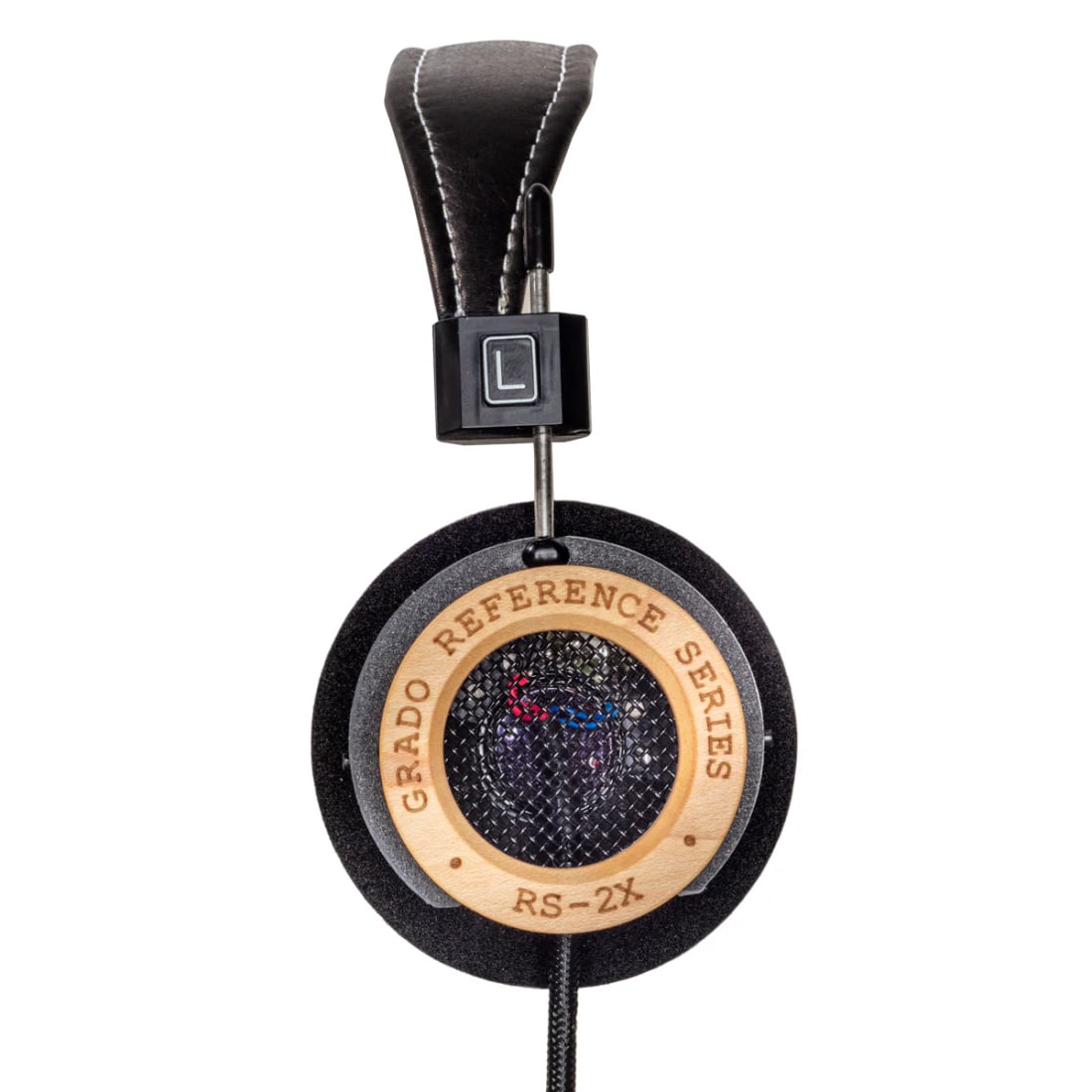 Desktop headphone setups: getting the desk itself right firstBefore you chase another DAC or amp, sort the desk. Reflections, cable strain and monitor height quietly wreck more desktop headphone rigs than gear ever does.
- Open-back headphones and a shared house: when the leak actually mattersOpen-back headphones leak sound both ways. Here's how much, when it genuinely matters in a share house or apartment, and when it's a non-issue.
- Subwoofer crawl vs measurement: how to actually find the right spotThe subwoofer crawl is a good starting point, not a finish line. Here's how I actually locate sub placement on real jobs, and when to trust the numbers instead.
- Headphone listening rooms: why the space around your head still mattersHeadphones bypass room acoustics for the direct sound, but the room you sit in still shapes fatigue, focus and what you hear. Here's why.
 Speaker format by room: when standmounts beat floorstanders (and vice versa)Choosing between standmounts and floorstanders isn't about budget or looks. It's a room-shape and listening-distance decision, and I've watched it wreck good systems.