Standmount speakers on the wrong stands: why the support matters as much as the speaker
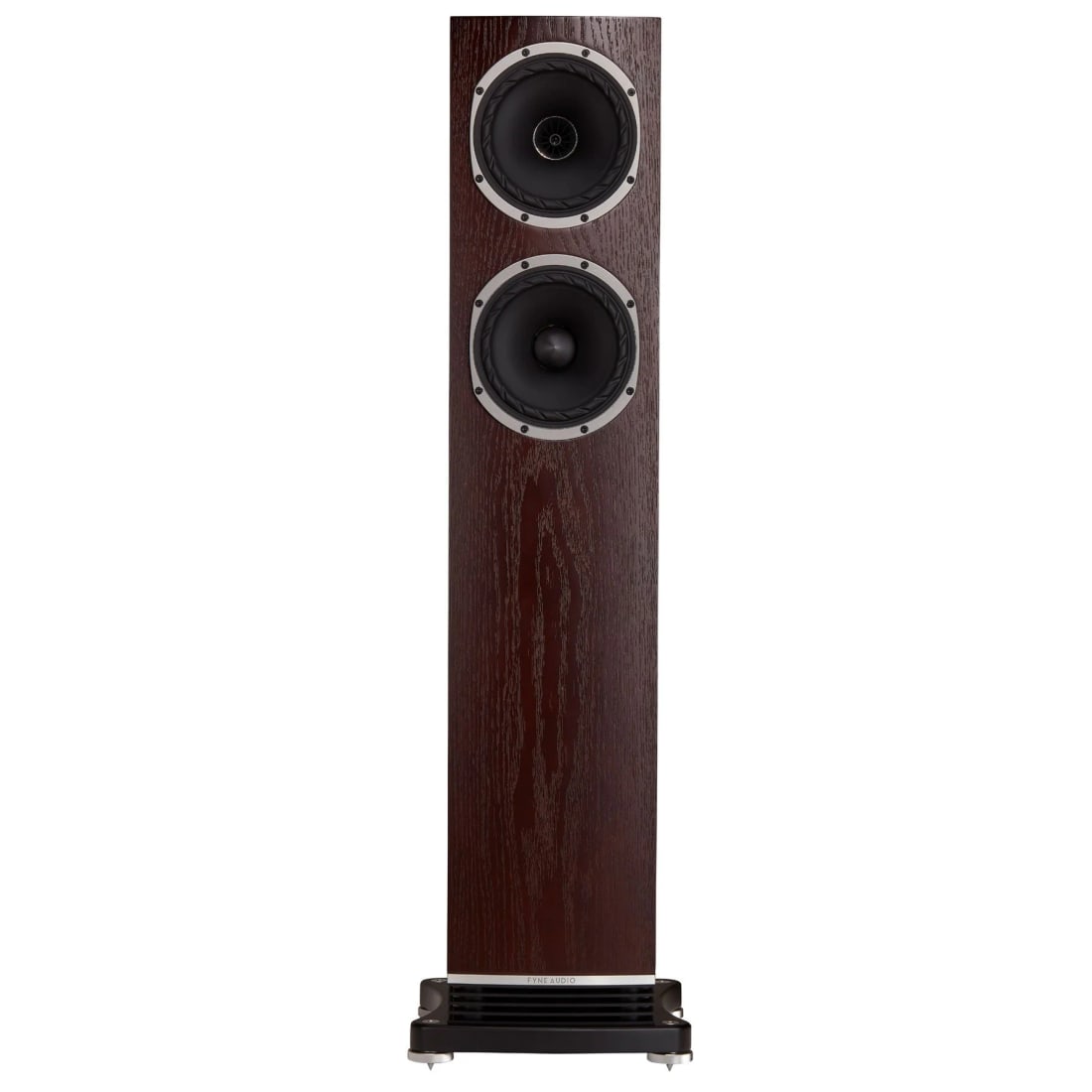
Forty-three centimetres. That's the ear-to-tweeter height that came up in my notes after measuring a reader's listening room in Carlton last year. He'd spent close to $4,000 on a pair of standmounts, another $800 on stands, and his tweeter was sitting about twelve centimetres below his ear level when he settled into his listening chair. The image was vague, the treble sounded recessed, and he'd convinced himself the speakers were underpowered. They weren't. The stands were the wrong height.
This happens constantly. Stands are treated as an afterthought — a base to keep the speaker off the floor, bought cheap or inherited from the last setup. But the relationship between a standmount and its support is genuinely acoustic, not just ergonomic. Get it wrong and you're fighting the speaker's design from the first note.
Why stand height is not a rough guess
Every standmount speaker is designed around a specific listening axis. The tweeter and midrange driver (or mid-bass, in a two-way) are engineered to sum correctly at a defined angle, usually on-axis or a few degrees above. The crossover network is voiced there. Stray too far off-axis vertically and the frequency response at the crossover point changes, often rolling off early or developing a suck-out at a musically annoying frequency like 2–4 kHz, right where voices and upper strings live.
The practical rule: when seated, your ear should be at tweeter height, plus or minus about two or three centimetres. Measure your seated ear height from the floor. Subtract the height of the speaker's tweeter above the bottom of the cabinet. That's your stand height. It's not complicated arithmetic, but almost nobody does it before buying stands.
Some speakers are voiced slightly off their physical axis. KEF's Uni-Q designs, for instance, tend to be quite forgiving because the coincident driver radiates evenly across a wide angle. A speaker like the KEF LS50 Meta (check price) tolerates a bit of vertical slop better than a conventional offset two-way. But that's the exception, not the rule. Most speakers from Focal, Bowers & Wilkins, Fyne Audio and others have a defined sweet spot that rewards getting the height right.
The mass question: heavy stands, light stands, and why it matters
Cabinet resonance is the enemy of clarity. Any vibration the stand introduces into the speaker cabinet — or, conversely, that the speaker introduces into the stand and then back into itself — smears transients and muddies the bass. This is why mass matters.
Heavier stands have more inertia and are harder to excite. A stand built from thick steel tube, properly braced, will store and release energy more slowly than a thin pressed-steel alternative. The speed and quality of the bass you hear from a good standmount is partly a function of how well the stand resists being driven by the woofer. Fill-able stands — those with hollow pillars designed to accept sand, lead shot, or fine gravel — work on the same principle. The fill absorbs vibrational energy rather than reflecting it back. I've heard the same pair of B&W 705s change character noticeably when their stands went from empty to filled with dry kiln sand. The bass tightened, the lower midrange cleaned up.
How much fill? Enough to damp the resonance without over-stiffening the structure. Most manufacturer guidance suggests filling to around 80–90% capacity. Experimentation is honest here; there's no universal formula. I'll admit I spent a slightly embarrassing afternoon at my own place testing sand versus lead shot versus nothing, and the sand won on the KEF R3s I had in at the time — just quieter in the cabinet, less of that low-level haze.
As a reference point, the KEF R3 Meta (check price) is a speaker that rewards exactly this kind of attention. It's capable enough that cabinet resonance from a poor stand becomes audible.
Coupling versus decoupling: what actually goes under the speaker
This is where things get genuinely contested. The traditional hi-fi approach is coupling: spikes underneath the stand that pierce carpet and contact the floor slab, and spikes or a hard interface between speaker and stand top-plate. The theory is energy transfer — get energy out of the speaker cabinet as fast as possible into the (much more massive) floor. Less time vibrating in the cabinet means less colouration.
Decoupling does the opposite. Compliant feet, gel pads, or isolating platforms between speaker and stand aim to prevent the stand (and floor) from feeding vibration back into the cabinet. In rooms with suspended timber floors — which describes a significant portion of older Australian homes — the floor itself can be a problem. A suspended floor is a giant resonator. Couple hard into it and you may be feeding energy from street traffic, footsteps, even the subwoofer in the next room straight back into your speaker cabinet.
My honest position: coupling works well on concrete slabs, decoupling often works better on suspended timber floors. This isn't a hill I'll die on, but after enough sessions in enough rooms it's a pattern I keep seeing. If you're on a concrete slab, good spikes into the floor. If you're on old timber floorboards, try a compliant interface first — even something as simple as a strip of Blu-Tack between speaker and stand top-plate, which sounds ridiculous but genuinely changes the character of some cabinets.
The top-plate connection matters too. A large top-plate that contacts the full footprint of the cabinet spreads energy transfer across more surface area. Some stands use three-point contact (three small spikes), which couples at three defined points. Some speakers ship with foam pads for the top-plate; those are usually designed in as decoupling by the manufacturer. Don't remove them without listening first.
Stand footprint and the stability trap
Australian homes increasingly have hard floors — polished timber, engineered wood, tile, concrete. On these surfaces, a narrow-footprint stand on spikes is dangerous. A 30-kilogram speaker-plus-stand combination with a 20 cm square base sitting on spikes over tiles can tip in a mild tremor, from a dog running past, or from a clumsy evening. I won't lecture about child safety except to say: it's a real consideration and stands with outrigger feet exist for exactly this reason.
Outrigger bases also lower the centre of gravity and increase effective footprint without making the stand look ungainly. If you have hard floors and children or pets, they're not optional. The Atacama Moseco and similar designs handle this well. Some third-party bases from companies like Target (the British stand manufacturer, not the retailer) are worth seeking out, though Australian availability can require a bit of hunting through importers.
Stand rigidity and the resonance you don't hear as resonance
A stand that flexes under the speaker's output introduces low-level modulation that the ear doesn't identify as resonance. You don't hear a ringing stand as ring; you hear it as a slight blurring of timing, a loss of pace in bass lines, a slightly vague stereo image. It's subtle enough that many listeners attribute it to the amplifier, the room, or the recording. It's the stand.
Tap the stand pillar with your knuckle and listen. A good stand sounds dull and dead. A mediocre one rings. It doesn't need to be expensive to be rigid — some welded steel stands at the $300–$400 mark outperform flimsy stands at twice the price. But the correlation between price and rigidity is weak enough at the budget end that you do need to check.
For context: a pair of speakers like the Bowers & Wilkins 705 S3 (check price) or the Fyne Audio F501 (check price) (a floorstander, but Fyne's standmount range deserves the same scrutiny) deserves a stand budget of at least 15–20% of the speaker's cost. If you spent $3,500 on speakers and $200 on stands, you've made a mistake. The stands are structural to the system.
Positioning from the stand out: the room interaction
Stands fix the speaker's height, but they also determine how much freedom you have in the horizontal plane. A heavier, more stable stand lets you push the speaker further from the wall with confidence that it won't tip. And distance from the rear wall is acoustically significant: most standmounts need at least 40–60 cm of clearance behind them before the rear-wall reflection starts becoming a problem at midrange frequencies. Ported speakers — where the port fires rearward — need even more breathing room or the bass becomes thick and slow.
There's a broader conversation about first reflections and room treatment that I've covered elsewhere, but the short version is this: your stand height determines where the tweeter is in the room, and the tweeter's position relative to the ceiling, floor and side walls affects what reflects back to your ears. Getting the height right isn't just about the direct sound.
If you're building a system around a streaming amplifier and haven't settled the speaker placement side yet, have a look at our guide to the best standmount speakers for a sense of which designs tend to be more or less placement-fussy, and the best streaming amplifiers guide for the electronics side of the conversation.
Practical checklist before you buy stands
Measure your seated ear height first. It takes thirty seconds. Then measure the tweeter height above the speaker's cabinet base. Subtract one from the other — that's your stand height. Give yourself a centimetre or two of tolerance and choose accordingly.
Check whether the top plate matches (or slightly undercuts) the footprint of your speaker cabinet. A top plate that's too large isn't a problem, but a small top plate on a wide cabinet creates an unstable connection point and sometimes a contact edge that introduces its own resonance.
Decide on your floor type. Concrete slab: spikes are fine, standard coupling. Suspended timber: consider compliant top-plate interface and either spiked base or soft feet, depending on the floor's own resonant behaviour. Hard tile or polished boards without carpet: seriously consider outrigger bases.
Budget honestly. Good stands for a $2,000–$4,000 pair of standmounts sit around $400–$800. That's not a small number, but it's the correct ratio. Manufacturer-matched stands exist for some speakers (KEF's LS50 stand, for instance) and are usually worth considering because the designer has thought through the interface.
And then fill them. Whatever you fill with, fill them. It's one of the highest-return actions in the whole loudspeaker setup process, and it costs the price of a bag of sand from Bunnings.
The reader in Carlton, by the way, sorted himself out with a pair of filled 60 cm stands and moved the speakers 50 cm further from the rear wall. No new equipment, no room treatment yet. The imaging sharpened, the treble came back into balance, and he stopped thinking the amplifier was the problem. Sometimes the fix really is that straightforward.
— Hannah Reid, Loudspeakers & Acoustics
Common questions
- How do I know what height stands I need for my standmount speakers?
- Measure your seated ear height from the floor. Then measure how high the tweeter sits above the bottom of the speaker cabinet. Subtract the second from the first — that's the stand height you need. Aim to get your ear within 2–3 cm of tweeter height when seated in your normal listening position.
- Should I fill my speaker stands with sand?
- Yes, in almost all cases. Filling stand pillars with dry sand (or lead shot) absorbs vibrational energy that would otherwise re-enter the cabinet and smear the sound. Fill to around 80–90% capacity. Kiln-dried sand from a hardware store works fine and is the most cost-effective option.
- Spikes or soft feet between speaker and stand top-plate?
- It depends on your floor. On concrete slabs, spikes that couple the stand firmly to the floor generally work well. On suspended timber floors, a compliant interface — gel pads, soft feet, or even a strip of Blu-Tack — often produces cleaner results by preventing the floor's own resonances from feeding back into the cabinet. Try both and listen.
- Do manufacturer-matched stands make a real difference?
- They often do, because the designer has considered the coupling interface, top-plate geometry, and sometimes the stand height relative to the speaker's design axis. They're not always the best-value option, but if a manufacturer offers a matched stand — as KEF does for the LS50 series — it's worth comparing seriously before buying a generic alternative.

Hi, I'm Hannah. Speakers are my thing — specifically, the conversation between a speaker and the room it's in, which is where most systems are won or lost. I did acoustics at uni and never quite got it out of my system. I'll measure your room's bass response and then gently break the news that the $20,000 speakers aren't the problem, the untreated wall behind your sofa is. Stand-mounts on good stands are criminally underrated and I will die on that hill.
Acoustics background; loudspeaker and room-treatment specialist
More from Hannah Reid
 Headphone stands and hooks: the desk accessory that changes your soundHeadphone stands aren't just tidy storage. How you park your cans between sessions affects driver life, cable strain and even headband fit.
 First reflections: finding them, and what to actually do about themThe mirror trick still finds first reflection points better than any app. Here's how to locate them and what treatment actually earns its keep.
- Headphone soundstage: why some pairs sound "wide" and others don'tSoundstage in headphones isn't magic or marketing. It comes from crossfeed, driver geometry and pad depth — here's what's actually happening and what you can change.
- Turntable wall shelves versus stands: what actually kills footfall bassFootfall bass in vinyl playback usually isn't the turntable's fault. It's the floor. Here's how to work out whether a wall shelf or a proper stand fixes it.
 Why your amplifier struggles below 4 ohms (and when to actually worry)Impedance dips scare buyers more than they should. Here's how to read a speaker's impedance curve and match it to an amp that won't run out of puff.
- Subwoofer placement: the crawl test still beats any appRoom-correction apps are handy, but the old carpet-crawl method still finds the seat-by-seat bass problems software glosses over.