Standmount vs floorstander: match speakers to room and amp
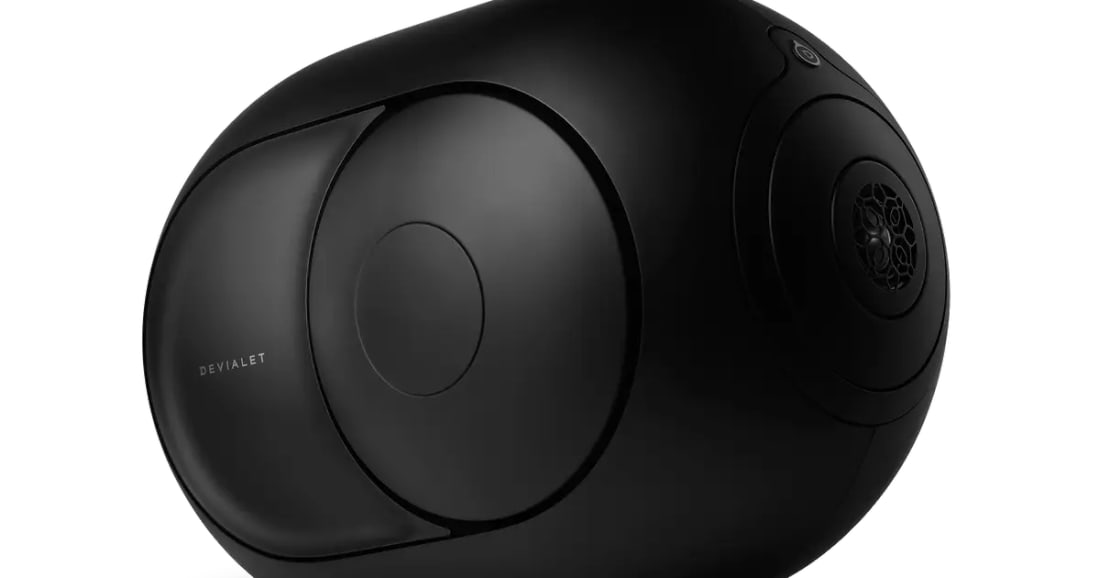
The single most common mistake in Australian listening rooms, from converted terraces in Newtown to open-plan extensions in the outer suburbs, is speakers that are simply too large for the space. Not because the owner was extravagant. Because every review they read told them bigger is better, and nobody stopped to show them why that's only sometimes true. In the standmount vs floorstander decision, size is only one variable.
So let's be precise about this. A floorstander isn't inherently a superior loudspeaker. It's a different engineering proposition, with different tradeoffs, and the room you put it in determines whether those tradeoffs work for you or against you. Our piece on matching the speaker to the room covers the same ground from another angle.
What the cabinet size actually buys you
A larger enclosure allows longer bass extension for a given bass driver diameter and tuning. That's physics, not marketing. A 150-litre floorstander with a pair of 165 mm woofers will, all else equal, produce useful output lower in frequency than a five-litre standmount with a single 130 mm driver. The crossover point to a subwoofer, if you run one, becomes less critical. You're moving more air.
But here's what the specification sheet doesn't tell you: bass energy that your room can't absorb or control becomes distortion. Room modes, the resonant standing waves that build up between parallel surfaces, are strongest in the bass frequencies below roughly 200 Hz. A speaker with strong output at 40 Hz in a room whose longest dimension produces a mode at 42 Hz will excite that mode aggressively. You don't get more bass. You get one note of bass, louder than everything around it, smearing low-frequency transients and muddying the midrange. If this is new territory, room modes explained is a good place to start.
With a calibrated UMIK-1 and REW software, the difference in a 4 m × 3.5 m room between a bookshelf speaker rolled off below 60 Hz and a floorstander reaching to 38 Hz can be a 12–15 dB peak at the primary axial mode. The standmount, counterintuitively, measures flatter in that environment. It sounds tighter and more controlled. The floorstander sounds like it's singing through a blanket.
How room dimensions determine your first decision
Before you choose a speaker format, measure your room. Both dimensions matter: floor area sets the volume of air you're asking the speaker to pressurise, and the ratio of length to width determines where your worst modes will cluster.
As a rough guide, and I want to emphasise this is a starting point, not a law, rooms under about 25 square metres with a standard ceiling height around 2.4 m generally respond better to a standmount that's crossed over to a sub, or a standmount run full-range if the room is already bass-reinforced by boundaries. Rooms above 35–40 square metres, particularly those with higher ceilings or soft furnishings that absorb bass, can genuinely use a floorstander's lower extension to fill the space without inducing severe modes.
The middle ground, that 25–35 m² range, is where you actually need to think harder. In my view, a well-matched standmount on proper stands, positioned correctly, almost always outperforms a floorstander crammed against the back wall of a medium-sized room. Placement freedom matters more than cabinet volume in that bracket. The speaker footprint versus room footprint article goes further on this.
Standmount vs floorstander: placement requirements differ significantly
Floorstanders are typically rear-ported or have floor-coupled bass loading, which makes them more sensitive to rear-wall proximity. Most manufacturers specify at least 600–800 mm of clearance behind the cabinet, and some, particularly those with larger rear-firing ports, need more than a metre to avoid severe bass bloom. In many Australian living rooms, that clearance simply doesn't exist once you've accounted for the television, the media unit, and the practical need to walk behind the sofa.
Standmounts give you more options. Front-ported designs like the KEF R3 Meta (check price) can sit closer to boundaries without the same bloom penalty. Sealed-box designs are even more forgiving; their bass rolls off gently rather than peaking, so boundary reinforcement tends to flatten the roll-off rather than create a hump. You can experiment with toe-in, distance from the rear wall, and height adjustment via stands without fighting an enclosure that's already physically dominating the room.
Stands matter enormously, by the way. A standmount on a cheap, lightweight stand sounds like a different speaker to the same cabinet on a rigid, sand-filled steel stand. The stand becomes part of the resonant system. I'd always budget for quality stands, something like the matching stands from Atacama or Target, before I'd budget for a speaker upgrade. Our standmount placement guide shows how to position them once they're in the room.
Sensitivity, impedance, and the amplifier question
This is where an electronics background is actually useful. Sensitivity and impedance curves together determine how hard your amplifier has to work, and the two are not independent. For a deeper walk-through, see how to match a speaker to an amplifier.
A speaker rated at 88 dB/2.83V/1 m needs roughly half the amplifier power of an 85 dB speaker to reach the same SPL. That's 3 dB, which is one doubling of power. Many floorstanders have higher sensitivity than standmounts from the same range, simply because they have more drivers sharing the load and a larger voice-coil area. But not all do. Some of the more demanding standmounts, certain Magneplanar-derived designs and some transmission-line types, are harder to drive than a typical tower from a mass-market brand.
Impedance dips matter as much as nominal impedance. A speaker advertised as 4-ohm nominal that drops to 2.5 ohms at 80 Hz while simultaneously presenting a difficult phase angle is drawing nearly four times the current of an 8-ohm load at that frequency. A 50-watt-per-channel receiver may clip under those conditions even at moderate listening levels. Check the impedance curve; real manufacturers publish it. If they don't, that's a red flag.
For the Bowers & Wilkins 705 S3 (check price), for instance, the impedance remains fairly well-behaved, which means it's not especially amp-fussy for a standmount in its price range. Pair it with something like the Marantz Model 40n (check price) and you're in sensible territory. A floorstander in the same price bracket, one with multiple drive units and a complex crossover, will often make harder demands.
My honest view: if you're running a streaming amplifier in the 50–100 W class, a well-chosen standmount will almost always sound more composed than a floorstander that's just barely getting enough current on bass transients. You might get more raw output from the tower. You won't get better control.
When a floorstander genuinely is the right answer
There are real cases where you should choose a tower. Large rooms, such as open-plan living areas or dedicated listening rooms above 40 m², where a standmount's output genuinely doesn't pressurise the space adequately. Rooms that have been acoustically treated, where modes have been tamed and you can exploit the floorstander's extension without boom. Systems where you want high SPL capability without a subwoofer, particularly for orchestral music or home cinema use where dynamic range demands are severe.
If you're building a proper home cinema setup, something I'd normally direct you to Jonno for, the speaker-matching principles still apply. Floorstanders as front left and right can make sense because you'll be room-correcting with Dirac Live or Audyssey anyway, and the processor can tame modes that would otherwise be problems. See our core home cinema components guide for how that all fits together, and what room correction software fixes for its limits.
The Focal Kanta No.2 (check price) is a reasonable example of a floorstander that earns its cabinet volume: the W-cone woofers and beryllium tweeter combination is genuinely competent across a wide range of room sizes, and the measured bass extension is real rather than hyped. But I'd still want at least 35 m² of room and a metre of rear clearance before I'd recommend it without reservation.
The subwoofer integration argument
Here's a position that will annoy some people: for most listening rooms, a quality standmount crossed over to a capable subwoofer at 80 Hz will outperform an equivalent-price floorstander running full-range. Not might. Will.
The reason is flexibility. A subwoofer with its own level control, crossover point, and phase adjustment can be positioned independently, typically in a corner or along the wall where room gain is greatest and mode behaviour is more predictable. You can calibrate it separately. The main speakers, freed from bass reproduction duty, operate in a cleaner part of their range with less voice-coil excursion. The amplifier driving them works less hard.
This is the standard practice in studio monitoring, where the goal is accuracy rather than showroom impressiveness. It's why the professional field defaulted to nearfield monitors plus subs decades ago. Manufacturers such as Genelec have long built their monitoring systems around exactly this idea.
If you're browsing options in the standmount bracket, our guide to the best standmount speakers for serious listening covers a range of price points and gives you realistic room-size recommendations for each. And if you're looking at integrated amplifiers to partner with either format, the streaming amplifiers guide has power and impedance context for the current market.
The checklist before you buy
Measure your room. Not estimate, measure. Length, width, ceiling height. Calculate the primary axial modes (speed of sound divided by twice the room dimension gives you the fundamental modal frequency). If your room's longest dimension is 5 m, your primary longitudinal mode is around 34 Hz. A speaker with significant output at 34 Hz will excite it.
Check your amplifier's continuous power rating into the speaker's actual minimum impedance, not nominal. If that number is less than about 50 W for a standmount or 80 W for a floorstander at the volume levels you expect, think carefully.
Audition in a room that resembles yours, not in a dedicated showroom that's been acoustically tuned. Most good dealers in Australia's major cities will let you home-demo. Use that option. What sounds effortless in a beautifully treated showroom on Pitt Street Mall can sound congested and heavy in a plasterboard room in the suburbs.
And resist the urge to fill the space. A speaker that fits the room, matched to an amplifier that can drive it properly, will always outperform a speaker that's too much of either, however impressive the specifications look on paper.
— Marcus Vale, Editor
Common questions
- Can I use a floorstander in a small room if I turn the bass down?
- Electrically reducing bass at the amplifier or via an EQ helps, but it doesn't solve the fundamental problem: a large-cabinet rear-ported speaker excites room modes acoustically regardless of your volume setting. The physical interaction between the port's tuning frequency and the room's resonant modes happens before the signal reaches your ears. A better approach is a sealed or front-ported standmount that produces less bass energy to begin with, or a standmount crossed over to a separately placed and calibrated subwoofer.
- How do I calculate whether my amplifier has enough power for my speakers?
- Start with the speaker's sensitivity figure (dB/2.83V/1m) and your desired listening SPL at your listening position. Every 3 dB of SPL requires a doubling of amplifier power. Add roughly 10–15 dB of headroom for peaks above your average level. Then check the speaker's minimum impedance — if it dips to 3 ohms, your amplifier needs to comfortably double its 8-ohm power output into 4 ohms (many can't). Published impedance curves from the manufacturer are the only reliable reference here.
- Do stands really make that much difference to a standmount's sound?
- Yes, measurably so. A lightweight stand resonates sympathetically with the speaker cabinet, particularly in the upper bass and lower midrange. A rigid, well-damped stand — ideally filled with sand or shot — transfers those resonances to the floor rather than back into the cabinet. The effect on measured frequency response at the listening position can be several dB in the 150–400 Hz region. Budget at least 15–20% of the speaker's cost on stands.
- Is it better to buy a more expensive standmount or a cheaper floorstander for the same money?
- In most medium-sized Australian listening rooms, the more expensive standmount will outperform the cheaper floorstander. Cabinet volume is relatively cheap to manufacture; driver quality, crossover parts, and enclosure damping are not. A budget floorstander often has adequate bass extension but uses lower-grade midrange drivers that a quality standmount bests in resolution and dynamics. The exception is if room size genuinely demands bass extension below 45–50 Hz and a subwoofer isn't in the budget.

I'm Marcus, and I'll be honest up front: I trust a measurement before I trust my own ears, because my ears lie to me daily. I spent fifteen years designing audio electronics before I started writing about them, so when a brand tells me a number, I want to see the graph. That doesn't make me cold about this hobby — I love a system that disappears as much as anyone — it just means I'll tell you when an expensive box is selling you confidence rather than performance.
Former audio electronics engineer; objectivist; runs the test bench
More from Marcus Vale
 Why your turntable's earth wire isn't optionalTurntable earthing fixes most phono hum problems. Here's how grounding actually works, why it fails, and how to track down a noisy connection.
 Why your AVR runs cool on music but throttles on AtmosAVR thermal throttling explained: why nine-channel Atmos mixes push receivers into protection mode that two-channel music never triggers.
- Subwoofer delay settings: why your AVR's number is a guessAVR auto-calibration estimates subwoofer delay from distance, not timing. Here's how to measure and correct it properly for tighter bass.
- AVR auto-calibration: what Audyssey, YPAO and Dirac actually measureAudyssey, YPAO and Dirac Live all run a mic sweep and spit out numbers, but they're not measuring the same things or fixing the same problems. Here's what's actually happening.
- Cartridge break-in: what actually changes in the first 40 hoursDoes a new cartridge really need 40 hours to "open up"? I measured one to find out what's mechanical fact and what's audiophile folklore.
- DAC output stages: what the chip doesn't tell youThe DAC chip gets all the marketing attention, but the analogue output stage after it does most of the work shaping what you actually hear.