The 60/30/10 rule: a giant-killer's guide to splitting your hi-fi budget
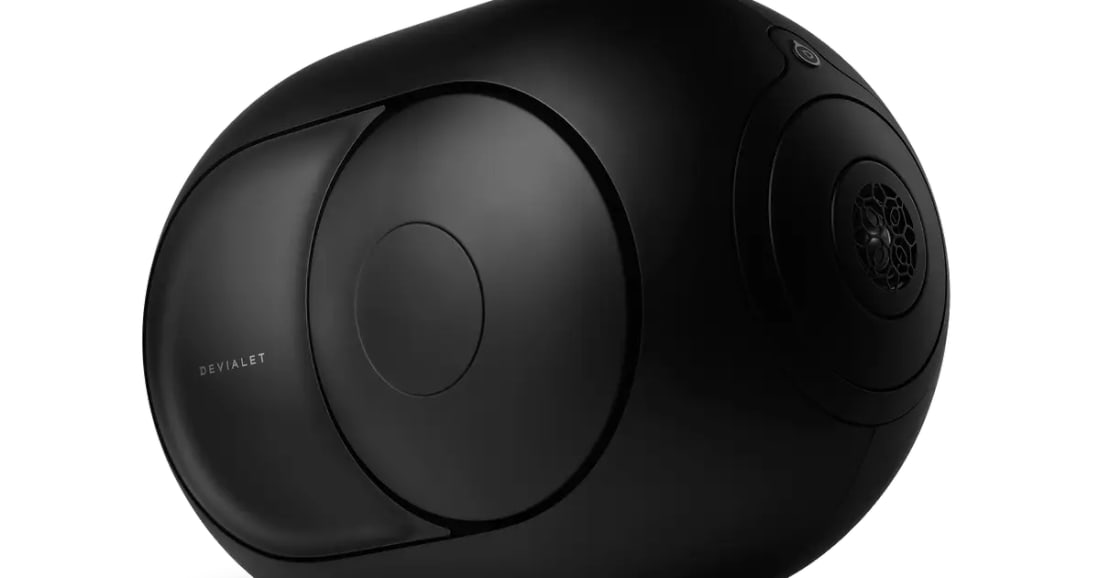
Three grand. That's what a bloke messaged me last week, asking whether to spend it all on a pair of floorstanders and "sort the rest out later." I get some version of this question every fortnight, and the answer is almost never "spend it all on the speakers." I've been building cheap systems that punch stupidly above their price for going on fifteen years now, and if there's one thing I'd tattoo on the forearm of every first-time buyer, it's this: the split matters more than the total.
Here's the rule I actually use, and hand out for free because nobody else seems to be saying it plainly. Roughly 60 percent of your budget goes to speakers, 30 percent to electronics (amp, or amp-plus-source if you're going separates), and 10 percent to the stuff nobody wants to buy — stands, cables, room treatment, isolation. Call it 60/30/10. It's not gospel, and I'll get into the exceptions, but it's a far better starting point than the "spend it all on the shiny box" instinct that gets most beginners into trouble.
Why speakers eat most of the budget
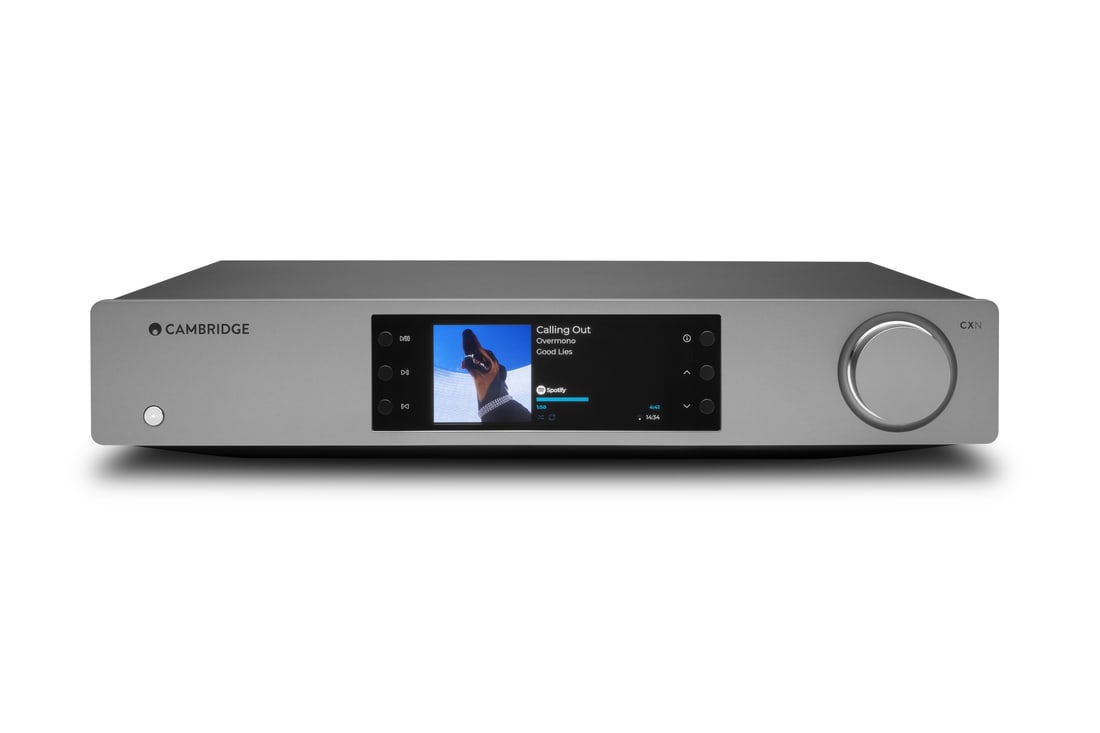
Speakers are the only component in your chain that's still doing genuinely difficult, unsolved engineering. A cheap DAC chip these days is close enough to transparent that the sensible desktop DAC/amps mostly differ in headroom and features, not raw fidelity — I've said this before and I'll keep saying it because it's true and it saves people money. Amplifiers, similarly, are largely a solved problem below silly power levels; a well-reviewed integrated like the Rega Brio Mk7 (check price) or Cambridge Audio CXA81 MkII (check price) will drive most sensible speakers cleanly without breaking a sweat or the bank.
Speakers, though, are still full of compromise. Cabinet resonance, driver breakup, crossover phase behaviour, off-axis response — none of that is "solved" the way a DAC chip is. The gap between a $400 pair of bookshelf speakers and a $1,500 pair is audible to anyone with functioning ears, in a way the gap between a $150 DAC and a $1,500 DAC often isn't. That's the whole logic behind putting 60 percent of the money there. You're paying for physics that hasn't gone away, not marketing that has.
I'll add a mildly unpopular opinion here: I think most beginners under-spend on speakers and over-spend on amplification, largely because amps look and feel more "serious" — knobs, meters, weight. A $2,000 integrated driving $600 speakers is, in my experience, a worse-sounding system than a $600 integrated driving $2,000 speakers. Every single time. If you don't believe me, go listen to a pair of KEF LS50 Meta (check price) off something modest and then compare it to a flagship amp on entry-level speakers. It's not close.
What the 30 percent actually needs to do
The electronics slice isn't nothing — it needs to competently drive the speakers you've chosen, at the volumes you actually listen at, in the room you actually own. This is where a good integrated amplifier earns its keep: enough clean watts, sensible input flexibility, and ideally a phono stage or streaming module if that saves you buying a separate box.
This is also where matching starts to matter more than raw spend. Speaker sensitivity is the spec everyone skips and it changes everything about how much amp you actually need — I won't rehash the whole argument here since we've covered it properly elsewhere, but the short version is that a high-sensitivity standmount needs a fraction of the power a brick-wall-efficiency floorstander demands. Get the sensitivity-to-power matching wrong and you can blow the 30 percent on watts you'll never use.
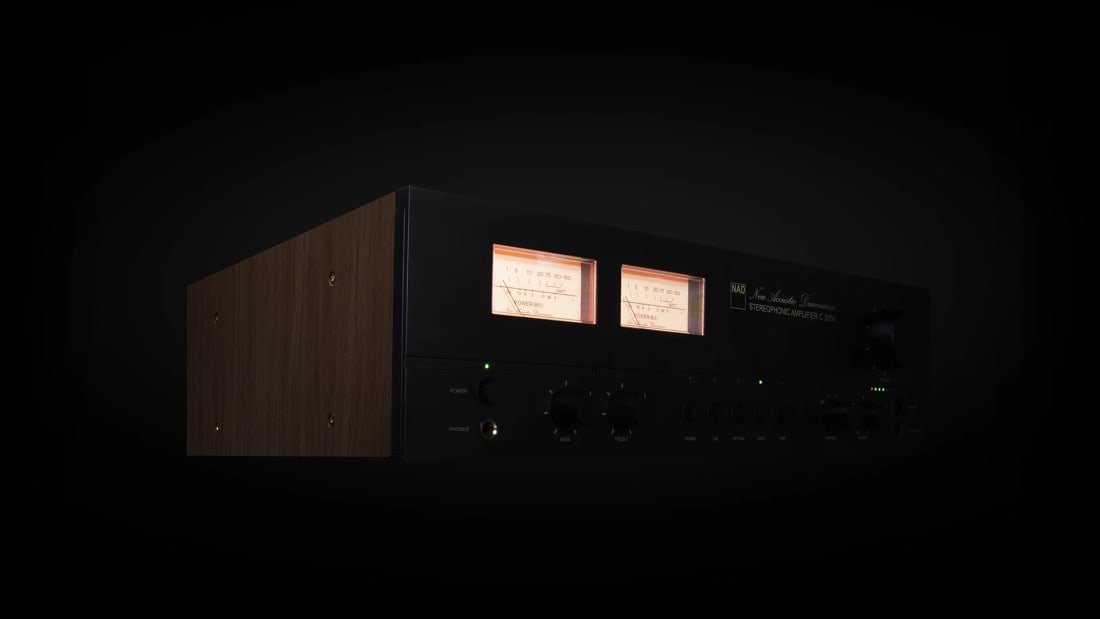
If you're building an all-in-one system rather than separates, something like the Naim Uniti Atom (check price) or NAD C 3050 (check price) collapses the source-and-amp budget into one box, and that's a legitimate way to free up more cash for speakers. I've built entire giant-killer desktop rigs around exactly this logic — a single streaming amp doing three jobs, all the remaining dollars going to transducers, because transducers are where the ear notices.
The 10 percent nobody wants to spend
This is the bit that gets skipped, and it's the bit that quietly costs people the most performance per dollar. Stands for standmount speakers aren't an accessory — they're part of the speaker's design brief, and a $150 pair of decent stands under a $600 standmount will do more for the sound than upgrading that same speaker to an $900 model on a wobbly IKEA shelf. We've made this case before and I'll make it again: cheap stands under good speakers is one of the worst false economies in the hobby.
Room treatment falls in the same bucket. A hundred dollars of foam or a couple of well-placed panels will do more for perceived clarity than the jump from a $1,200 amp to a $2,000 one, in most suburban lounge rooms with hard floors and bare walls. I get that nobody wants to spend money on foam that looks like foam — my own listening room in Southport has a rug and two panels that took me embarrassingly long to actually buy, despite knowing better the whole time. Anyway. It works.
Cables I'll be blunt about: budget for competent, well-made basics, not exotic ones. Spend the money on stands and treatment before you spend it on a boutique speaker cable. This isn't controversial among the objectivist wing of this hobby, though I know Priya would push back a little on the cartridge-loading side of things — different topic.
When the ratio should bend
60/30/10 is a starting position, not a law of physics. A few situations genuinely justify bending it.
Small, difficult rooms bend it toward treatment. If you're in an apartment with a concrete slab, parallel bare walls and a listening position hard against the back wall, I'd trim a few points off the speaker allocation and push it into acoustic treatment and stand quality — a beautifully engineered speaker in a bad room still sounds like a bad room. Room dominates more of what you hear than most buyers expect, and no amount of speaker budget fixes a first reflection point nobody's treated.
Streaming and digital-source-heavy systems can bend it the other way, slightly, toward the 30 percent. If you're relying entirely on a phone app and a network streamer as your only source, something like the WiiM Ultra (check price) or a proper standalone unit from our streamer and DAC guide genuinely earns a bigger slice, because it's doing source duty, not just amplification. Vinyl-first systems bend the other way again — the turntable and phono stage become part of the "electronics" allocation, and I'd argue that's the one area where spending a bit more up front saves you a painful, expensive re-buy down the track.
Headphone-first desks are a special case I'd almost treat as their own ratio entirely — closer to 50 percent headphones, 35 percent amp/DAC, 15 percent desk treatment and cabling — because headphone-amp synergy and desk acoustics both punch harder proportionally than they do in a floorstanding room system. That's a conversation for another day, though Nell's covered a good chunk of that ground already.
A worked example, because I promised the bloke with three grand an actual answer
Here's roughly how I'd have spent his three thousand dollars, assuming a standard-ish living room and no existing gear. Around $1,800 into a speaker pair — something like a pair of Bowers & Wilkins 606 S3 (check price) or Monitor Audio Silver 100 7G (check price), both of which sit comfortably in our under-$2000 bookshelf speaker guide. Around $900 into electronics — a Cambridge Audio CXA81 MkII (check price) or similar integrated with a built-in DAC, covering both amp and digital source duty. The remaining $300 into a proper pair of stands, filled and spiked, plus two basic room panels for the first reflection points.
That's not the sexiest way to spend three grand. There's no six-figure flex, no boutique cable, no big single purchase to post a photo of. But it's a system that will sound genuinely composed in a real room, not just impressive in a showroom for four minutes before the compromises show up. That's the whole giant-killer philosophy in a sentence, honestly: spend where the physics is still hard, and stop pretending the easy 10 percent is optional.
Where this argument runs into diminishing returns
I'll be straight about the ratio's limits too, because it stops being useful once you're deep into serious money. Above roughly the $15,000-$20,000 mark per component, the calculus shifts — you're no longer buying incremental clarity so much as buying refinement, build quality and occasionally just brand cachet, and at that point the 60/30/10 split gets a lot fuzzier. That's a different article, and one for the higher end of this masthead to write. For the vast majority of readers building a first or second serious system on a budget under about $8,000 total, though, 60/30/10 will get you further than almost any other single piece of advice I could give you.
The Australian market makes this easier than it used to be, too — the ACCC's guidance on consumer guarantees means demo units and ex-display gear from reputable dealers carry the same statutory protections as new stock, so don't be afraid of a good demo deal on speakers or an amp if it lets you hit that 60 percent allocation without stretching the budget past where it should sit.
Common questions
- Does the 60/30/10 split apply to a system I already own part of?
- Yes, just apply it to what's left. If you've already got a decent amp, work out what percentage of a hypothetical full budget it represents and split the remaining cash accordingly, rather than assuming your existing gear was 'free' in the calculation.
- What about turntables — where do they fit in the split?
- Treat the turntable and phono stage as part of your electronics/source allocation, but budget slightly higher than 30 percent if vinyl is your primary source, since a cheap deck bought now often gets replaced within a year anyway.
- Is it ever right to spend more than 60 percent on speakers?
- In very good rooms with minimal acoustic problems and a source that's already sorted (like an existing decent streamer), pushing speaker spend to 65-70 percent can make sense. It's rarely wrong to lean toward speakers; it's rarely right to lean away from them.
- Should home cinema systems use the same ratio?
- Not quite — home cinema needs a bigger allocation toward the AVR and subwoofer than a two-channel system does, since processing, bass management and multiple speaker feeds add real cost that a stereo system doesn't carry.

I'm Dave, and I'm the cheapskate of the team — and proud of it. My whole thing is finding the gear that punches three times above its price, the so-called "giant-killers," because most people don't have forty grand for a system and shouldn't feel bad about it. I've heard the megabucks stuff, and a lot of it is gloriously good; I've also heard $800 setups that get you 85% of the way there. I'll always tell you where the law of diminishing returns kicks in.
Lifelong bargain-hunter; budget-to-midfi specialist
More from Dave Okafor
- Matching speaker and amp cost: ignore the price-parity mythForget the old rule of matching speaker and amp cost dollar-for-dollar. Here's what actually decides a good pairing, and why it isn't price.
 Turntable mats and platters: what actually changes the soundFelt, rubber, cork or acrylic — turntable mats and platter materials change the sound more than most upgrades. Here's what actually works.
- Buying a demo unit: the giant-killer move retailers hateEx-demo hi-fi gear can save 20-40% with near-zero risk. Here's how to actually negotiate it, what to check, and when to walk away.
- Flutter echo: the room fault that sounds like nothing's wrongFlutter echo blurs detail in parallel-wall rooms without obvious boom. Here's how to find it cheaply and kill it without over-treating.
 Amp power ratings into 8 vs 4 ohms: the spec sheet trapWhy an amp's 4-ohm wattage figure can mislead buyers, and how to actually match power output to real speaker loads on a budget.
 5.1.2 vs 7.1.4: the Atmos layout decision for real roomsChoosing between 5.1.2 and 7.1.4 Atmos layouts comes down to room shape and seating, not speaker count. Here's the giant-killer logic.