Where to spend your speaker budget: a room-first guide to diminishing returns
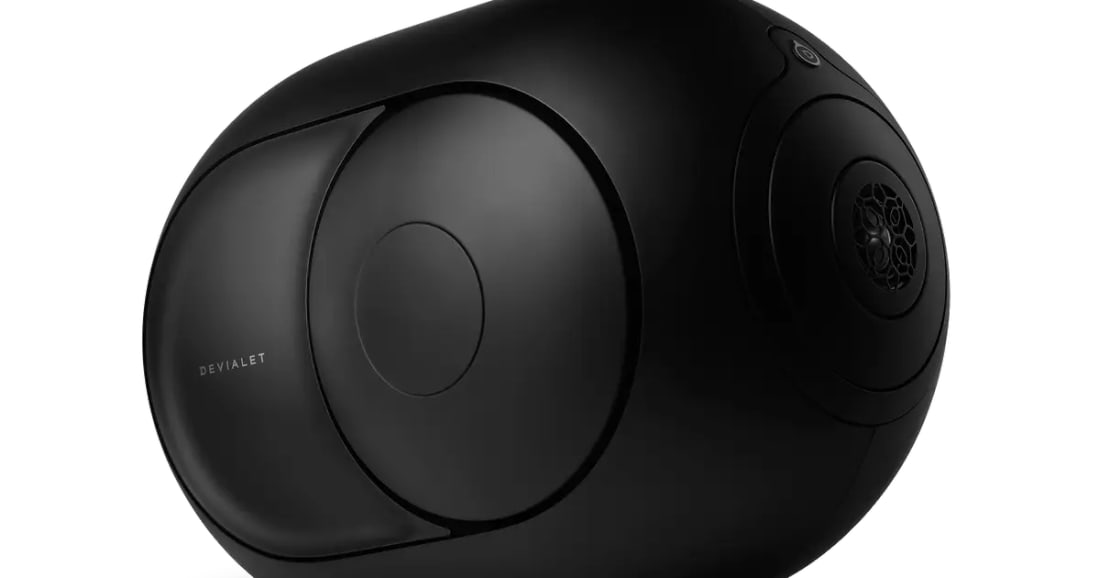
A customer once drove four hours from Ballarat to a shop I know on Smith Street, Fitzroy, to audition a pair of $12,000 floorstanders. He bought them, took them home, and called back two weeks later convinced there was something wrong with the bass. There wasn't. His lounge room had a nasty 63 Hz mode that his old speakers had hidden, and the new ones simply resolved it more honestly. The room was the problem. It had always been the problem.
That story is not unusual. After years measuring rooms professionally, I reckon it plays out in some form for the majority of serious system upgrades. Which is why I want to walk through the whole chain — room, speakers, amplification, source — and give you an honest map of where your money actually translates into better sound, and where it just makes the numbers on the spec sheet look more impressive.
The room is the most expensive component you never buy
Start here. A mediocre speaker in a well-treated room will consistently outperform a great speaker in a difficult one. That's not opinion; it's basic acoustic physics. Below roughly 300 Hz, your room dimensions determine the frequency response you hear. Flutter echo and early reflections smear imaging across the whole range. No amount of speaker quality fixes either problem.
The practical upshot is this: if you're sitting on, say, $5,000 to spend on an upgrade, and your room is untreated, the single highest-return move is to spend $800–$1,200 on a combination of bass traps and broadband absorption panels before you spend a cent on drivers and crossovers. Corner-loaded bass traps (floor-to-ceiling where possible) address the modes that muddy low-end texture. A pair of first-reflection panels on the side walls and a cloud panel above the listening position clean up imaging considerably. The rest of your budget then goes meaningfully further on speakers.
I'll admit I got this ordering wrong for years early in my career. I'd recommend the speaker first because that's what clients wanted to hear about. Embarrassing in hindsight.
Where speaker spending genuinely scales
Assuming the room is at least partially addressed — or that you're working in a reasonably sympathetic space — speaker quality does scale with price, but not linearly, and with some important caveats.
Below roughly $1,000 a pair, the improvements as you spend more are substantial and obvious. Driver quality, cabinet construction, and crossover components all jump meaningfully between a $400 pair and a $900 pair. Something like the KEF LS50 Meta (check price) at its price point represents genuinely excellent engineering — the Uni-Q driver and Metamaterial Absorption Technology are not marketing, they measure and sound demonstrably better than what came before at similar money.
From $1,000 to $3,000 you're still in productive territory. This band is where cabinet resonance gets properly controlled, crossover components get genuinely good, and tweeter quality starts to meaningfully separate brands. The KEF R3 Meta (check price) and Bowers & Wilkins 705 S3 (check price) both sit in this zone and represent the point where most rooms — treated or otherwise — start to become the limiting factor rather than the speakers.
Above $3,000 and running up to maybe $8,000–$10,000, you're buying real refinement: better resolution of low-level detail, more controlled dispersion, lower distortion at realistic listening levels. These gains are real. They're also more room-dependent, because a speaker that resolves more will also resolve your room problems more honestly.
Beyond $10,000, the law of diminishing returns bites hard. You are paying for exceptional engineering, often hand-built cabinets, exotic driver materials, and sometimes genuine acoustic innovation. But you're also paying for brand prestige and the cost of low-volume production. Some of those dollars earn their keep; some don't. My honest view is that most rooms can't justify a $20,000 standmount without serious acoustic treatment — and once you've spent properly on treatment, a very good $4,000–$6,000 speaker often satisfies.
Standmount or floorstander: where value diverges
This question gets conflated with budget, but it's really about room size and bass extension. Floorstanders move more air in the bass, full stop. In a large room — over roughly 35 square metres — a quality floorstander will give you bass weight that a standmount simply cannot. That's physics, not snobbery.
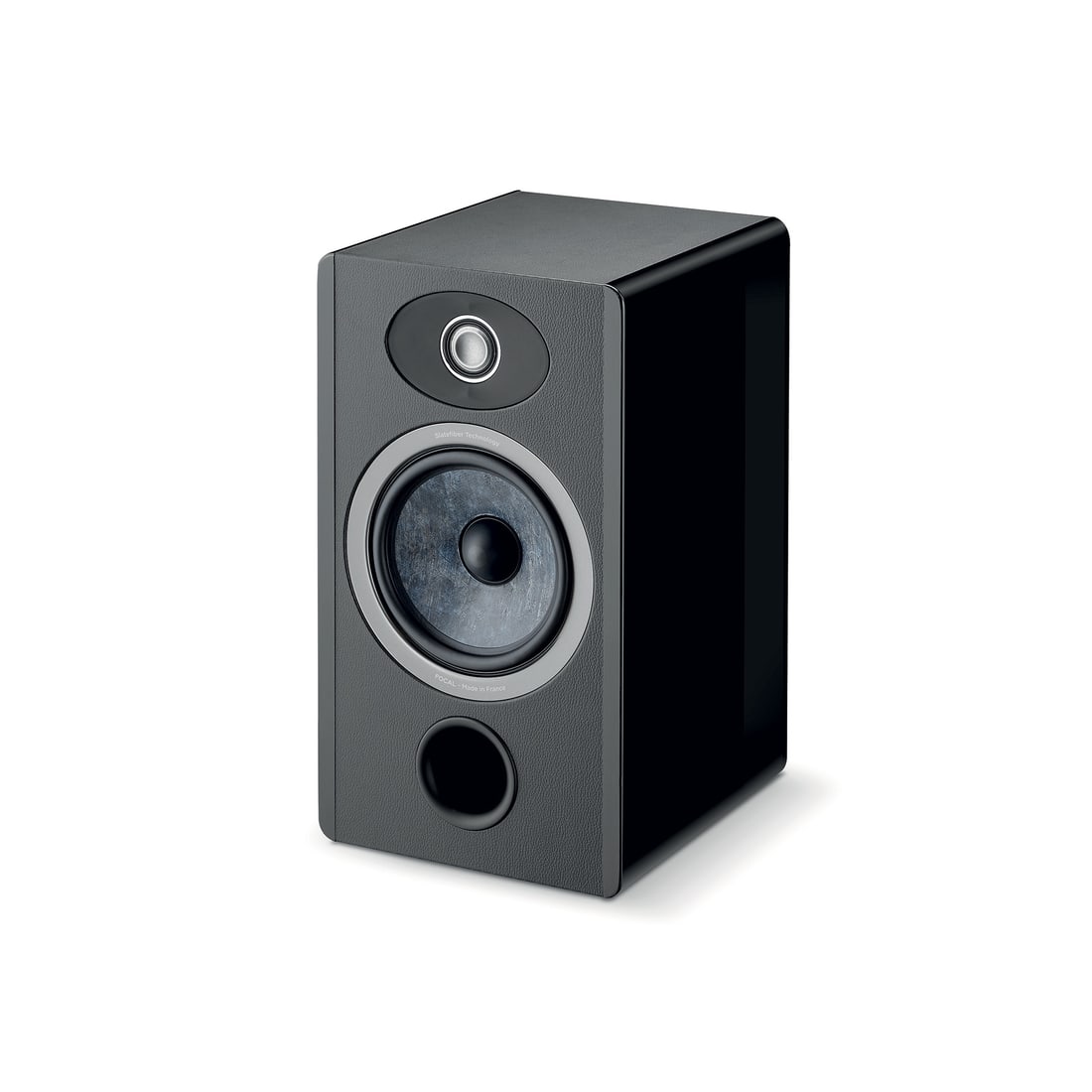
In a typical Australian lounge or dedicated listening room of 20–28 square metres, though, a well-chosen standmount on quality stands, paired with a subwoofer if needed, will often outperform an equivalently priced floorstander in imaging and mid-range clarity. You get more money into the drivers and crossover that handle 90% of the music. Our standmount buying guide goes deep on this if you're working through the options.
The caveat: stands are not optional. Budget for good, heavy, fillable stands — Atacama, Custom Design, or similar — when you buy a standmount. A $3,000 speaker on a $99 B-brand stand is a waste. The stand is part of the acoustic system.
Amplification: enough is enough, but not less
Amplifiers matter. But they matter less than speakers, and they matter least of all when they're adequate for the task. "Adequate" means: enough power for your speaker's sensitivity and your room size, low output impedance relative to your speaker's impedance curve, and reasonably low noise.
The failure mode I see constantly is people buying a $500 integrated for $4,000 speakers and wondering why something sounds slightly off. The amp is compressing on dynamic peaks, or its output impedance is interacting badly with the speaker's varying impedance load. Spend at least 30–40% of your speaker budget on amplification. For a $3,000 pair of speakers, that means $900–$1,200 minimum on the amp — which puts you into genuinely good territory from brands like Rega, Cambridge Audio, or NAD.
An all-in-one streaming amplifier can make excellent sense here. The Marantz Model 40n (check price) is a good example of an integrated that gives you respectable power, a moving-magnet phono stage, and network streaming in one tidy box — simplifying the system without compromising the fundamentals. Our streaming amplifier guide covers the current field if you're shopping this category.
At very high speaker prices — above $15,000 — amplifier quality does start to matter more. Speakers at that level reveal upstream electronics more honestly. But if you're not at that level of speaker, don't over-invest in amplification at the expense of speakers and room treatment.
Sources and streaming: the honest picture
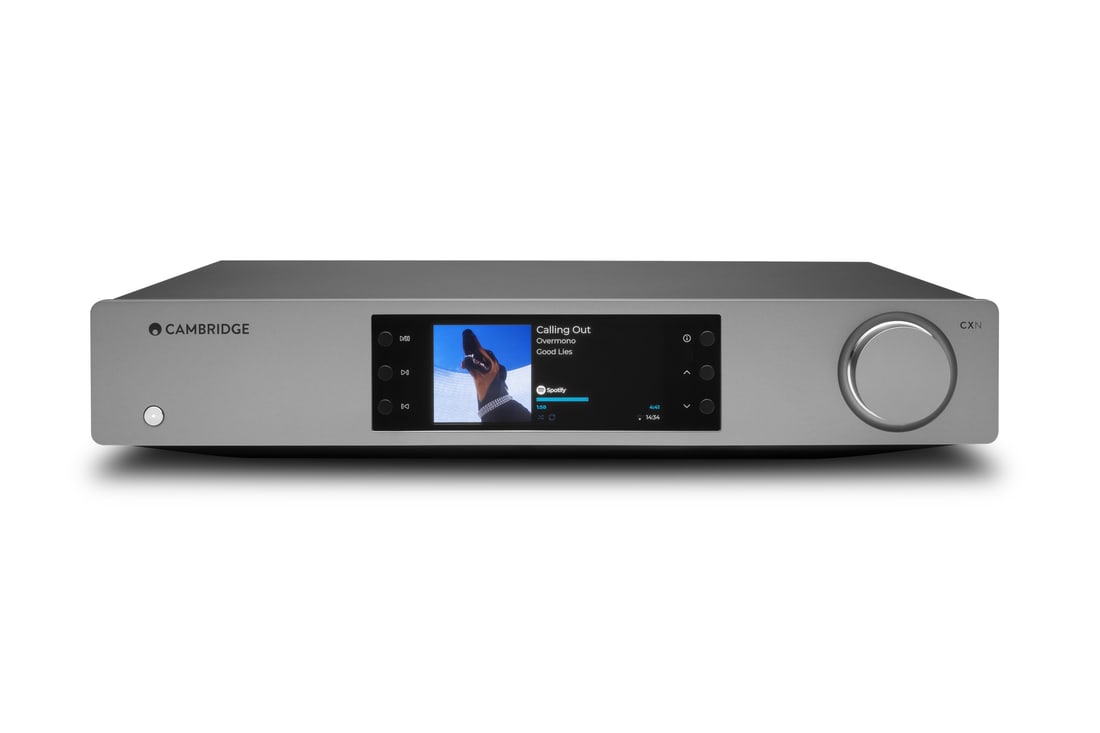
Sources are where I see the most folklore-driven overspending. A competent streaming DAC from a reputable brand — something like the Cambridge Audio CXN100 (check price), which measures well and handles Roon, Spotify Connect, and AirPlay without drama — is genuinely difficult to hear through most speakers and most rooms. You'd need both ears, both a treated room, and very resolving speakers to reliably distinguish it from something twice the price in a blind test.
This doesn't mean sources are irrelevant. A poor DAC with elevated noise or measurable distortion does audibly damage the signal. But the threshold for "good enough source" is actually quite low in absolute terms — lower than most enthusiast forums would have you believe.
Spend enough to get a competent source with lossless streaming capability and a decent reconstruction filter. Spend the rest on speakers and room. The diminishing returns on source spending above roughly $1,500–$2,000 are steeper than at almost any other point in the chain.
A practical budget allocation framework
If I were advising someone starting from scratch with a total budget for a serious two-channel system — say, $6,000 all in — here's roughly how I'd carve it up:
- Room treatment: $600–$900. Bass traps, two first-reflection panels, a basic measurement mic and REW (free software). Non-negotiable.
- Speakers: $2,500–$3,000. This is the heart of the budget. A good standmount on quality stands.
- Stands: $300–$500. Included separately because people forget them.
- Amplifier: $1,200–$1,500. A capable integrated with enough headroom.
- Source: $800–$1,000. A competent streaming DAC. Done.
At $10,000 total, I'd scale the speaker allocation to $4,000–$5,000, the amp to $2,000–$2,500, improve the treatment, and keep the source budget restrained. At $20,000, the speakers and room treatment together still claim the largest share.
The proportions shift slightly at the very high end, but the principle holds at every level: the speaker-and-room pairing is where the listening actually happens.
The upgrade trap: when more spending makes things worse
There's a specific failure mode worth naming. A listener upgrades their speakers to something significantly more resolving, and suddenly the system sounds worse — brighter, harder, more fatiguing. They blame the speakers. The speakers are fine. What's happened is that the new speakers are revealing a problem that was always there: an under-performing amplifier, or a room reflection that the previous speaker's more forgiving dispersion pattern had masked.
This is why I always recommend measuring your room with REW and a cheap measurement microphone before any significant upgrade. The miniDSP UMIK-1 costs under $130 and REW is free. Fifteen minutes of measurement will tell you more about your system's actual limitations than any amount of auditioning. Once you know where the problems are, you can direct spending accurately rather than guessing.
Matching speakers to amps and rooms is a bigger topic in itself — our guide on the best standmounts for serious listening addresses the pairing question in detail, and it's worth working through if you're at that stage of planning.
The short version is: the room wins, almost every time. Sort that first, allocate generously to speakers, keep the amp adequate, and resist the pull of exotic source spending until everything else is genuinely dialled in. Your ears — and your budget — will be better off for it.
— Hannah Reid, Loudspeakers & Acoustics Editor
Common questions
- Should I buy better speakers or a better amplifier first?
- Speakers first, as a rule. They vary more between models and have a larger impact on the sound you hear than amplification does — provided the amp is adequate for the task. A decent integrated with enough headroom for your speaker's sensitivity is the minimum; beyond that, incremental amp improvements matter less than improving the speakers or treating the room.
- How much should I spend on room treatment relative to speakers?
- A reasonable starting point is 15–20% of your speaker budget on basic treatment — corner bass traps and first-reflection panels. In a genuinely difficult room (parallel walls, hard floors, large glass surfaces), you might spend more. The key measurement tool is REW (free) with a UMIK-1 microphone, which will show you exactly where your room is misbehaving before you spend anything on hardware.
- At what price point do speakers stop being worth the extra money?
- Diminishing returns start biting hard above roughly $8,000–$10,000 per pair for most rooms. Below that, improvements in driver quality, cabinet construction, and crossover design are relatively consistent as you spend more. Above that, you're buying exceptional engineering and often exotic materials — real gains exist, but they require a well-treated room and matching amplification to be audible.
- Do I need an external DAC if I'm using a streaming amplifier?
- Probably not, at least not initially. Most competent streaming amplifiers include a DAC that measures well enough to not be the limiting factor in systems up to around $5,000–$6,000. Spend that money on speakers and room treatment first. If you later feel the source is holding things back — and you've genuinely ruled out room and speaker issues — then investigate a dedicated DAC.

Hi, I'm Hannah. Speakers are my thing — specifically, the conversation between a speaker and the room it's in, which is where most systems are won or lost. I did acoustics at uni and never quite got it out of my system. I'll measure your room's bass response and then gently break the news that the $20,000 speakers aren't the problem, the untreated wall behind your sofa is. Stand-mounts on good stands are criminally underrated and I will die on that hill.
Acoustics background; loudspeaker and room-treatment specialist
More from Hannah Reid
 Open-back headphones on a desk: why the "room" still mattersOpen-back headphones don't seal you off from the room. Here's why your desk, walls and even your monitor are still part of the sound.
- Turntable isolation: why footfall and feedback matter more than the plinthSuspended floors, speaker vibration and footfall do more damage to vinyl playback than plinth material. Here's how to actually isolate a turntable.
 Why your streamer's output stage still shapes the sound at the speakerBits are bits, but the analogue stage after the DAC chip in your streamer still colours what your speakers do. Here's what actually matters.
- Subwoofer size versus number: why two small subs beat one big oneA 10-inch sub in two spots usually beats a 15-inch sub in one. Here's the room-mode maths behind why, and when a single big box still wins.
 Toe-in angle: the free speaker upgrade nobody bothers measuringToe-in angle changes your speakers' tonal balance and imaging more than most upgrades. Here's how to actually find the right angle for your room.
- Speaker stands and boundary distance: the invisible spec on your spec sheetStand height, mass and distance from walls change a standmount's measured bass and imaging more than most upgrades. Here's how to get it right.