Closed-back headphones for late-night mixing: do they actually help?
Eleven-thirty on a Tuesday, headphones on, partner asleep two rooms away, and I'm second-guessing a bass line I've listened to four times already. That's the scenario that gets people buying closed-back headphones in the first place. Not because they've read a spec sheet and decided on driver enclosure geometry — because someone in the house needs quiet, and the internet told them "closed-back" is the answer. It mostly is. But there's a fair bit of nuance that gets skipped in the rush to buy, and I've fielded enough of these questions from mates setting up desktop rigs that I reckon it's worth laying out properly.
I'm not a headphone reviewer by trade — that's Nell's patch, and she'll tell you more about driver technologies than I ever will. But I've spent years building rooms where isolation was the whole brief, blacked-out cinemas where the outside world wasn't meant to intrude at all, and the physics of sealing a space against sound doesn't change much whether it's a home theatre or the two cubic centimetres between a driver and your ear canal. So let's talk about what closed-back headphones actually do for late-night listening, where they fall short, and when a good pair of IEMs quietly beats them anyway.
What "closed-back" actually buys you
A closed-back headphone seals the rear of the driver housing. No air escapes, none gets in. That does two things: it stops sound leaking out to whoever's asleep down the hall, and it stops the outside world leaking in. Both matter for late-night work, but they're not the same benefit, and conflating them is where people get their expectations wrong.
Isolation — sound staying out — is mostly about the cups and the seal against your head, not the driver itself. A well-fitted closed-back pair with dense earpads can knock down external noise by a meaningful amount, similar to a decent pair of over-ear hearing protectors, though nobody publishes a proper NRR-style rating for headphones the way they do for hearing protection under AS/NZS 1270. Leakage — sound getting out to your sleeping housemate — depends more on how hard you're driving the cans and how well sealed the enclosure is. A closed-back pair driven hard can still leak enough mid-and-treble energy to annoy someone in the next room, especially if the door's open. I learned this the hard way in my own place, mixing surround content for a client review at midnight with the door cracked for airflow. My other half was not impressed the next morning.
The bit nobody mentions: closed-back changes the bass you hear
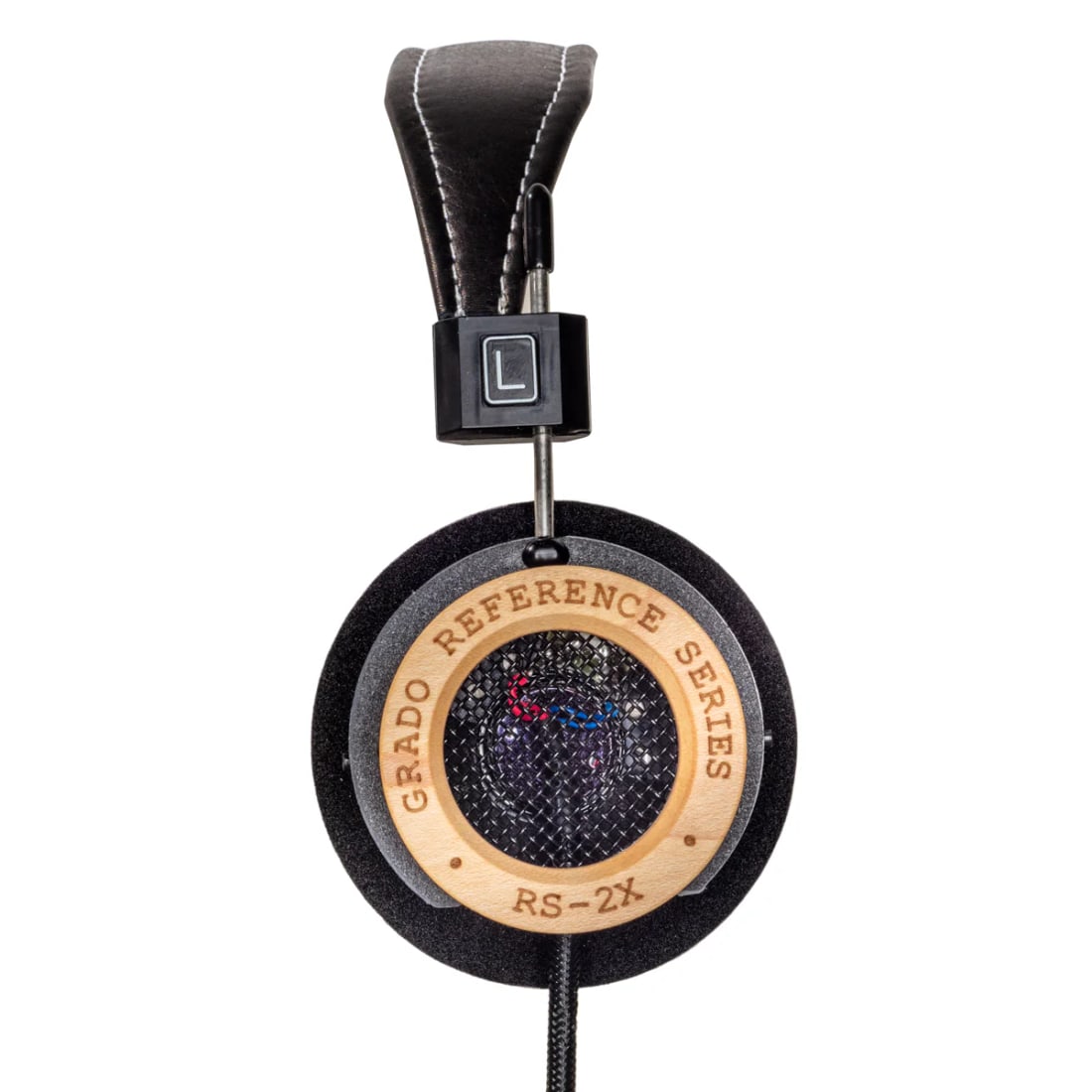
Here's where it gets interesting, and where I think most buying guides undersell the trade-off. Sealing the rear of the cup creates an acoustic cavity between the driver and your ear. That sealed volume of air behaves like a small sealed enclosure — not unlike a sealed subwoofer box — and it reinforces low frequencies in a way an open-back design simply doesn't. Open-back headphones, like the Sennheiser HD 660S2 (check price) or Grado RS2x (check price), let air move freely through the rear grille. That gives a more natural, less "boxed-in" tonal balance and usually a wider, more speaker-like soundstage, but it also means bass rolls off earlier and leaks in both directions — no good after 10pm in a house with light sleepers.
Closed-back cans, by trapping that air, tend to sound bassier and more forward through the mid-bass than the same driver would in an open enclosure. That's not necessarily accurate. It's a side effect of the seal, and it means a lot of people mixing or critically listening on closed-backs at night are hearing more low end than actually exists on the recording. I've had installers — good ones — send me mixes that fell apart on a proper speaker system because the bass was tracked on closed-back monitoring headphones with an inflated low end. It's an easy trap.
The fix isn't complicated: know your headphones' tonal signature before you trust a late-night decision on them, and where possible, sanity-check anything critical the next day on speakers or a reference pair you know well. If your desktop setup allows it, that's exactly the kind of thing worth sorting out when choosing a reference-grade pair in the first place — buy something with a documented, well-behaved response rather than something that just sounds exciting in the shop.
Do you actually need amping for this?
Short answer: usually not much, but it depends entirely on the headphone. A lot of closed-back studio and audiophile designs are relatively easy to drive — sensitivity in the 100+ dB/mW range and impedance under 100 ohms — which means a phone dongle or a basic desktop DAC will get them to sensible late-night listening levels without strain. Planar magnetic designs like the Audeze LCD-X (check price) are a different story; they're notoriously power-hungry and genuinely benefit from a proper headphone amp with decent current delivery, not just voltage swing. If you've bought something like that expecting your laptop's headphone jack to do it justice, you'll hear a flat, gutless version of what the headphone's capable of.
For most people setting up a quiet desktop rig, something like the iFi Audio ZEN DAC 3 (check price) or FiiO K11 (check price) covers the vast majority of closed-back and open-back headphones without drama, and gives you a volume pot with enough resolution at low levels that you're not fighting a channel imbalance at whisper-quiet volumes — a real issue with cheap volume knobs when you're listening at 10pm rather than 10am. If you want to go a step further and add some correction or EQ flexibility on the desktop, the RME ADI-2 DAC FS (check price) is overkill for most, but the parametric EQ built into it is genuinely useful for taming exactly the kind of bass bump we're talking about with sealed designs.
Where closed-back headphones fall short
The honest trade-off is soundstage and a sense of space. Closed-back designs, because they're working in a sealed cavity right against your ear, tend to sound more "in your head" — narrower, more forward, less of that out-of-head presentation that a good open-back pair or a pair of speakers in a treated room gives you. If you've read anything I've written about standmount speakers or acoustic treatment, you'll know how much I bang on about the room shaping what you hear. Headphones sidestep the room entirely, which is exactly why they're the fallback for late-night listening — but closed-back designs sidestep it in a way that's more claustrophobic than open-back.
There's also a comfort dimension people underrate. Sealed cups trap heat against your ears over a two-hour session in a way open-back designs don't, and if you're the sort who works late regularly, that's not a trivial complaint. I'd rather have slightly worse isolation and a headphone I can wear comfortably for three hours than technically-superior isolation that has me pulling the cans off every forty minutes because my ears are cooking.
The case for IEMs instead
This is the bit that surprises people: for genuinely late-night, don't-wake-anyone listening, a good pair of in-ear monitors with proper tips often beats full-size closed-back headphones outright. The isolation from a well-fitted IEM, particularly one using foam or double-flange tips, generally exceeds what an over-ear closed-back cup can manage, because the seal is happening right at the ear canal rather than around the whole ear. Less air to leak through, less cup resonance, no headband clamping heat against your skull.
The catch is fit. A cheap set of stock silicone tips on an otherwise decent IEM will underperform a mediocre closed-back headphone, because the seal is the whole game and stock tips rarely seal well for every ear shape. Swapping to foam tips or getting properly sized silicone tips is, in my experience, the single highest-value upgrade in the entire IEM category — cheaper than any cable swap, and it changes both the isolation and the bass response for the better in one move. If IEMs are on your radar for the desk or the couch, get the tip fit sorted before you spend a cent on anything else.
What I'd actually recommend
If the priority is genuinely not waking anyone and you're doing casual late-night listening rather than critical mixing work, IEMs with well-fitted tips are hard to beat and pack away into a drawer during the day. If you need something for longer sessions at a desk — actual mixing, critical listening, gaming with chat — a well-regarded closed-back like the Beyerdynamic DT 1990 PRO MK II (check price) or something similarly documented gives you isolation without wrecking your ears' comfort over a three-hour stretch. Pair either with a modest desktop DAC/amp rather than assuming your laptop's onboard output is doing the job properly; our rundown of the best desktop DAC/amps covers the sensible options at a few different budgets.
And if you're the one doing actual mix decisions at midnight — vocal levels, bass balance, that sort of thing — build in the habit of checking anything important again the next day on a system you trust. The Audio Engineering Society's guidance on monitoring environments exists for a reason: headphones, sealed or open, are a compromise against a proper acoustic reference, and closed-back cans compromise the bass specifically. Know that going in, and you won't get burned by a mix that sounded perfect at 11pm and fell apart on the car stereo the next morning.
Honestly, I think most people massively overthink the headphone choice here and underthink the tip or pad fit, which does more for both isolation and tonal accuracy than swapping models ever will. Get the fit right first. The rest is detail.
Common questions
- Will closed-back headphones stop all sound from leaking to someone sleeping nearby?
- No. A good seal reduces leakage a lot, especially at higher frequencies, but sustained bass and loud transients still leak through an open door or thin wall. Keep the door closed and levels sensible if someone's asleep close by.
- Are open-back headphones ever okay for late-night listening?
- Only if there's genuinely nobody nearby to disturb — open-back designs leak sound freely in both directions, so they're really a daytime, empty-house option.
- Do I need an expensive amp for closed-back headphones?
- Usually not. Most closed-back studio and audiophile designs are easy to drive off a basic desktop DAC/amp. Power-hungry planar designs are the exception and genuinely need more current on tap.
- Why do closed-back headphones sound bassier than open-back?
- The sealed air cavity behind the driver behaves like a small sealed speaker enclosure, reinforcing low frequencies. It's a side effect of the seal, not necessarily a more accurate tonal balance.

G'day, Jonno here. I spent the better part of twelve years as a custom installer building theatres — everything from a media room squeezed into a Queenslander to a fully blacked-out, acoustically-treated cinema with a hundred grand of gear behind the screen. The thing nobody tells you is that the room matters more than the boxes, and I'll bang on about acoustics until you're sick of me. If you're planning a theatre, talk to me before you spend a cent on speakers.
Ex CEDIA-trained installer; dedicated-theatre and Atmos specialist
More from Jonno Fraser
 Guest Wi-Fi and audio: why visitor networks break multiroomGuest Wi-Fi networks isolate devices by design, which quietly breaks multiroom audio. Here's why it happens and how to fix it properly.
 Ceiling speakers vs upfiring Atmos modules: what actually worksCeiling speakers vs upfiring Atmos modules compared for real rooms: when in-ceiling wins, when upfiring is the better call, and why.
- Why your home cinema amp runs hotter on movies than musicFilm soundtracks push amplifier channels harder and longer than stereo music ever does. Here's why that matters for topology, power supplies and what actually fails.
- Screen-wall speaker placement: building around a UST projector properlyUltra short throw projectors sit right where your centre channel wants to be. Here's how I actually solve that in real theatre builds, not in theory.
- Headphone isolation vs room noise: why your desk setup fights youOpen-back headphones and a noisy home office don't mix. Here's how to actually diagnose room noise before you blame the gear.
 Toe-in and rake: the free speaker tuning most owners never touchToe-in angle and cabinet rake cost nothing but change tonal balance and imaging more than most upgrades. Here's how I set both on site.