Does your DAC need a headphone amp built in, or a separate one?
I get some version of this email at least once a fortnight: "I bought a DAC with a headphone jack on the front, do I still need an amp?" The honest answer is almost always "it depends on the headphones," which isn't the answer people want, but it's the correct one. I've spent enough late nights swapping the same pair of cans between a DAC's built-in output and a dedicated headphone amp fed from that same DAC to know the difference is real, and also that it's smaller than the marketing on either side suggests.
Let's separate the two jobs, because a DAC with a headphone jack and a purpose-built headphone amp are not doing the same thing, even when the box looks similar.
What a DAC's headphone output is actually built to do
A DAC's core job is conversion: turning a digital stream into an analogue voltage that's an accurate representation of the original signal. Most DACs then need some kind of output stage to buffer that signal and send it somewhere, whether that's a preamp, an integrated amplifier, or a pair of headphones. On a lot of desktop DACs, the headphone jack is that same output stage, sometimes with a bit of extra gain stacked on top, routed to a 6.3mm or 3.5mm socket instead of RCA or XLR.
That's fine for a lot of headphones. It's not fine for all of them, and the reason comes down to two things: how much voltage swing the headphone needs to reach a comfortable listening level, and how much current it needs to control the driver properly once it gets there. A DAC's headphone jack is often an afterthought bolted onto a circuit designed primarily to drive a line-level input, not a low-impedance planar driver that wants real current on tap.
Where built-in jacks genuinely struggle
I see this most with two categories: efficient IEMs and hard-to-drive planars, for opposite reasons. Sensitive IEMs on a DAC's headphone jack often pick up audible hiss, because the gain and noise floor weren't optimised for something drawing so little power. Planars like the Audeze LCD-X (check price) sit at the other end; they're not high impedance, but they want current, and a lot of built-in jacks run out of headroom and start sounding flat and underpowered well before you've reached a level that should be comfortable.
Mid- to high-impedance dynamic headphones, the Sennheiser and Beyerdynamic-style designs many of us actually own, sit in the more forgiving middle. A pair like the Sennheiser HD 660S2 (check price) will work off plenty of built-in jacks without embarrassing itself, though it will still open up with a proper amp behind it, particularly in bass control and the sense of the soundstage not collapsing at higher volumes. I've run the 660S2 off a handful of desktop DACs over the past year and the pattern is consistent: it plays, it sounds reasonable, and then you hear what you were missing the moment you add a dedicated stage.
What a dedicated headphone amp actually buys you
The honest technical case for a separate amp is output impedance, current delivery, and gain matching done properly rather than as an afterthought. A well-designed headphone amp is built around the headphone load as the primary job, not a secondary one. That usually means a lower output impedance (which matters more than most people realise — I've written before about how output impedance quietly changes what you hear), more current on tap for planars and low-impedance dynamics, and often selectable gain so you're not trying to find usable volume in the bottom two clicks of a pot designed for 300-ohm cans.
There's also a subtler benefit that's easy to dismiss until you've heard it: isolation. Running a headphone load off the same output stage that's also trying to drive a line-level signal to your amp can introduce interaction effects, however small, that a separate stage avoids by design.
None of this means every dedicated amp beats every built-in jack. I've heard budget standalone amps that measure worse and sound worse than the built-in output on something like the RME ADI-2 DAC FS (check price), which was engineered by people who clearly treated the headphone stage as a first-class citizen rather than an add-on. That unit's headphone output has enough current on tap to drive most planars properly and enough gain range to handle sensitive IEMs without a noise floor problem. It's the exception that proves the rule: the label "built-in" doesn't tell you anything on its own. The engineering does.
The all-in-one units that get this right
A few products in this category are worth calling out because they treat the headphone jack as genuinely core to the design rather than bolted on. The iFi Audio ZEN DAC 3 (check price) and FiiO K11 (check price) both sit in a class of desktop DAC/amps built from the ground up with headphone driving as a primary function, and they compare very differently to a streamer or network player whose headphone jack is there mostly so the box ticks a feature list. If you're buying specifically to drive headphones, that's the category to shop in — our rundown of the best desktop DAC/amps goes through the current options in more depth, and it's worth reading before you assume any DAC with a 6.3mm socket does the job.
The Chord Electronics Mojo 2 (check price) is another one I'd put in this bracket, small enough to sit in a bag but with an output stage that doesn't apologise for itself when you plug in something demanding.
A practical way to work out which camp you're in
Rather than reading spec sheets you can't fully verify, do the listening test properly. Play the same track — something with real low-end extension and dynamic swings, not a compressed pop single — through the DAC's built-in jack at a level you'd normally listen at, then switch to a dedicated amp fed from the same DAC's line output. Listen for three things: does the bass stay controlled at higher volumes, or does it start to sound loose and boomy; is there any hiss or noise floor with the volume at your normal listening position; and does the soundstage stay stable when the track gets busy, or does it seem to compress inward.
If you can't hear a difference, you've saved yourself money and you don't need to keep reading reviews of headphone amps out of guilt. That's a legitimate outcome and I'd argue it's more common than the enthusiast press likes to admit — plenty of mid-impedance headphones on a competently engineered DAC genuinely don't need help. If you can hear the difference, particularly with planars or anything under about 32 ohms, a dedicated amp is solving a real problem, not a placebo one.
Where this fits with the rest of your desktop chain
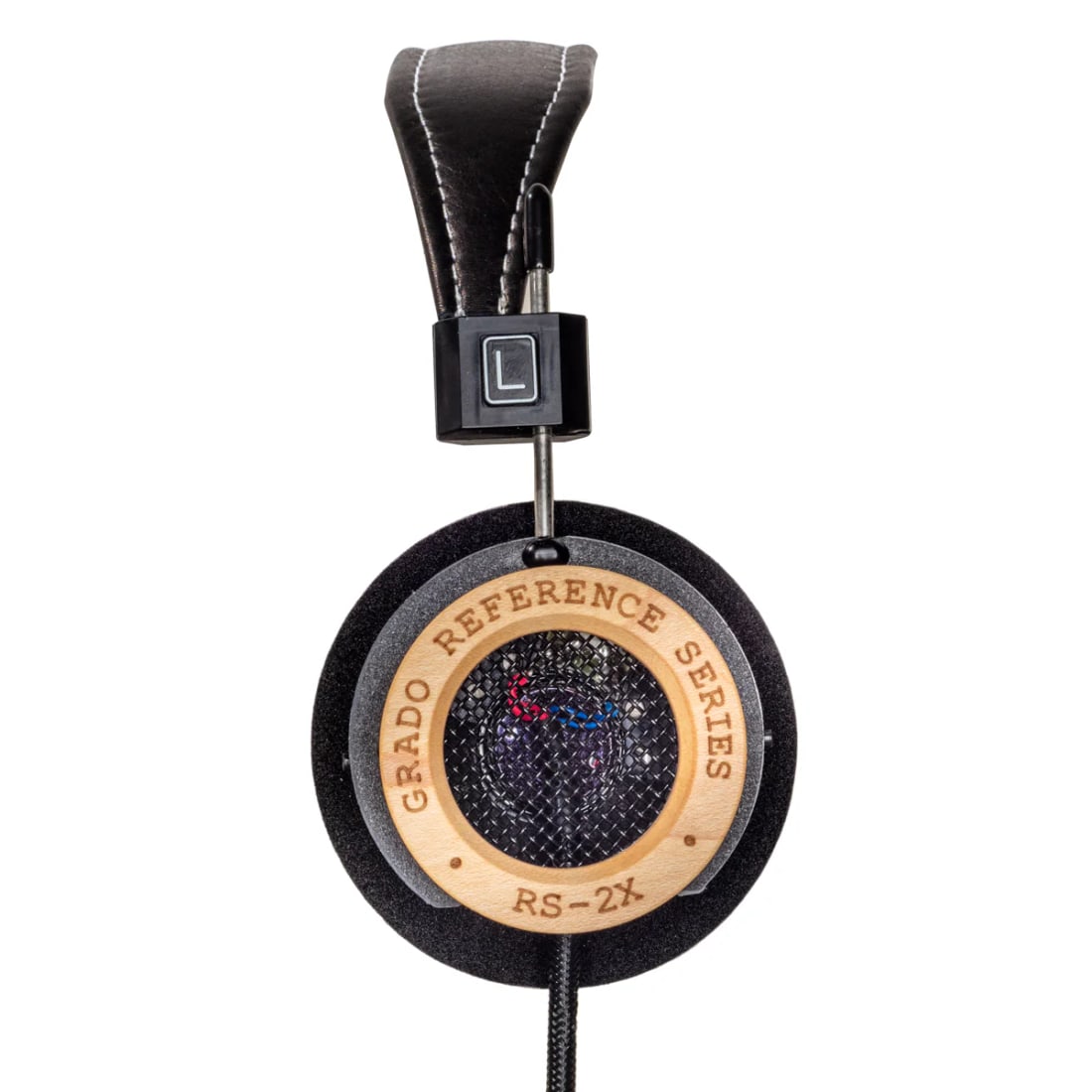
I'd think about this in the order the signal actually travels: source quality, then DAC conversion, then output stage, then headphone. Spending on a dedicated headphone amp before you've settled on headphones you actually want to keep is putting the cart before the horse. I made that mistake myself years ago — bought a headphone amp before I'd properly auditioned the headphones it was meant to drive, and ended up with a pairing that was technically fine and emotionally flat. Get the headphone right first. Cans like the Grado RS2x (check price) or Focal Clear MG (check price) are both relatively easy loads but have very different personalities, and no amp will paper over a headphone that just isn't your sound.
Once you know the headphone, work backwards to whether its impedance and sensitivity profile actually needs more than your DAC's jack can offer. Our broader guide to the best audiophile headphones is a reasonable place to start if you're still choosing, and it's worth reading impedance and sensitivity specs against the AES guidance on headphone measurement standards if you want the engineering detail rather than marketing copy, via the Audio Engineering Society's published standards work. The Bluetooth SIG's technical documentation is also useful background if any of your chain runs wireless, though that's a separate rabbit hole from what we're discussing here.
The bit nobody wants to hear
A dedicated headphone amp is not automatically an upgrade. I've had readers spend $400 on a boutique amp to drive a $150 pair of easy-to-drive dynamics and hear precisely nothing different, because the built-in jack on their DAC was already more than adequate for that load. Meanwhile I've heard $2,000 planars sound genuinely broken — thin, splashy, bass-shy — off a jack that simply couldn't supply the current, transformed the moment a proper amp took over. The spec sheet number that actually predicts which camp you're in is the headphone's impedance and sensitivity pairing, not the price of either box. Check that before you check anything else.
Common questions
- Do all DACs have a headphone jack built in?
- No. Plenty of dedicated DACs, especially ones designed to sit in a hi-fi rack rather than on a desk, skip the headphone jack entirely because it's assumed you'll run headphones through a separate amp. It's mostly desktop-oriented DACs and DAC/amp combos that include one as standard.
- Will a headphone amp make a bad-sounding DAC sound better?
- Not really, and it can't fix conversion quality. What it can fix is the output stage's ability to drive your specific headphone properly. If the underlying digital-to-analogue conversion is mediocre, a better amp downstream won't change that character, it'll just deliver it with more current and control.
- Is gain the same thing as power for headphone amps?
- No. Gain is how much a signal is amplified in voltage; power is what actually moves the driver, which is a function of voltage and current together against the headphone's impedance. An amp can have plenty of available gain and still sound underpowered if it can't supply enough current into a low-impedance load.
- Should I buy a DAC and amp as one box or separately?
- Combined units are simpler, usually cheaper for equivalent performance, and fine for most people. Separates make sense mainly if you expect to upgrade one side independently later, or if you've already identified that your headphones need more current than typical combo units supply.

I'm Eleanor — most people call me Nell. I came to this from the studio side, so I spend more time with headphones on my head than speakers in a room, and I've learned to hear the difference between detail and brightness pretending to be detail. I'm obsessive about fit and comfort, because the best-sounding headphone in the world is useless if it's clamping your skull after twenty minutes. I review everything from $200 daily-drivers to silly flagship planars.
Mastering-adjacent background; IEM and open-back specialist
More from Eleanor Shaw
- Why your headphone chair and desk still need bass trappingClosed headphones don't escape room modes. Here's why bass trapping near your desk changes what you feel through the chair and the leakage you hear.
 Why your headphone desk needs a sub (and how to set it up)A subwoofer under the desk can fix what headphones can't do: chest-felt bass. Here's how to add one without wrecking your headphone sound.
- Dongle DACs vs desktop DACs: when the small one is actually enoughDongle DACs have closed the gap on desktop units for most headphones. Here's where the small ones genuinely hold up, and where they don't.
- Bluetooth codecs and multiroom: why your headphones sound different on Wi-FiWhy the same headphones sound different depending on whether they're fed over Bluetooth, AirPlay or a multiroom app — and how to get the best signal path at your desk.
 Cartridge tracking force: why "close enough" costs you detailTracking force outside the maker's range doesn't just risk your records — it quietly wrecks the detail and channel balance you paid for. Here's how to get it right.
- Streaming to headphones: getting multiroom apps to actually feed your DACMultiroom apps are built for speakers in rooms, not headphones at a desk. Here's how to get Spotify Connect, AirPlay and Roon actually feeding your DAC properly.