Room correction software: what it actually fixes and what it can't
Spend enough time on audio forums and you'll encounter two opposing religions. One side says room correction software — Dirac Live, Audyssey MultEQ XT32, YPAO-R.S.C., take your pick — is the single biggest upgrade you can make to any system. The other side says real acoustic treatment is the only honest answer and DSP is a band-aid on a haemorrhage. Both camps are partly right, which is the sort of nuanced position that satisfies nobody and yet happens to be true.
I've been sitting with this question for longer than I'd like to admit. My listening room is a spare bedroom in a rented house in Subiaco, Perth. I can't bolt rockwool panels to the walls. I've tried software-only correction, treatment-only approaches, and various combinations. Here's what I've actually learned.
What room correction software is actually doing
The first thing to understand is that all room correction products — regardless of marketing language — are doing a variation of the same thing. They play test tones (usually sine sweeps), measure the impulse response at your listening position, then compute a set of filters that push the measured frequency response closer to a target curve. Some also correct for timing errors between drivers or channels. That's the whole trick.
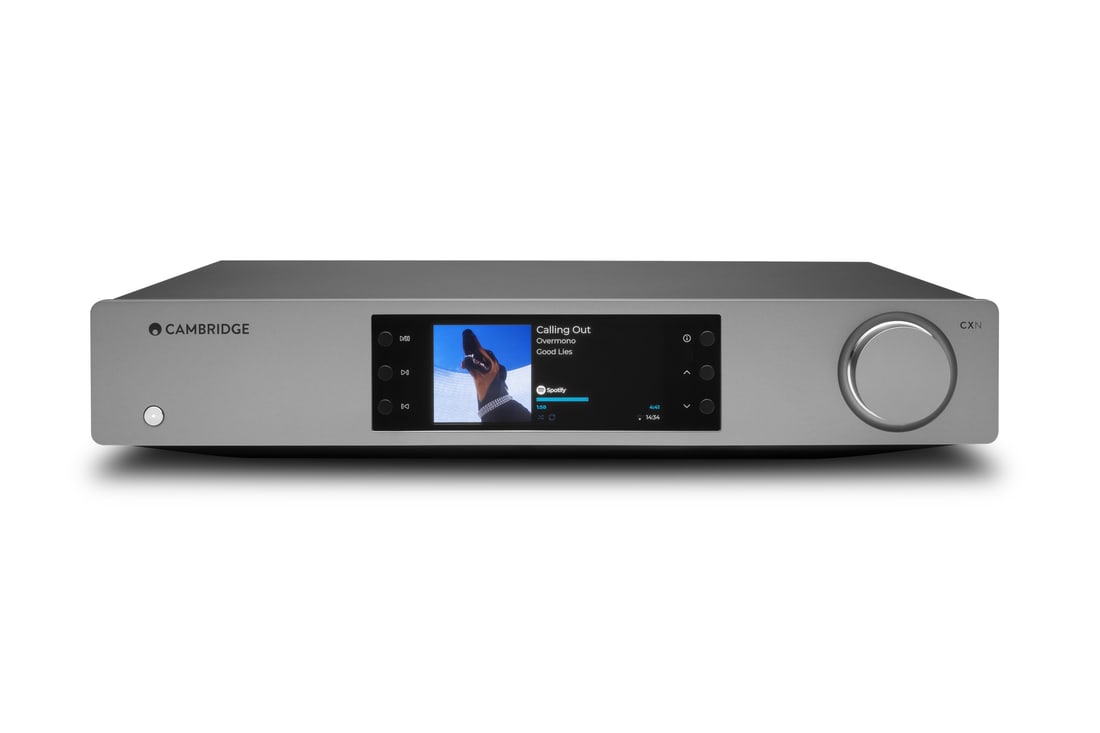
The filters generated are finite impulse response (FIR), infinite impulse response (IIR), or a combination of both. FIR filters can correct both the amplitude and phase of a signal simultaneously; IIR filters handle amplitude more efficiently but touch phase as a side effect. Dirac Live's appeal — and the reason it became the reference implementation in a lot of serious kit, including the Cambridge Audio CXN100 (check price) — is partly that it uses a mixed-phase FIR approach that can genuinely reshape transient response, not just frequency response. That matters. A room that adds 20ms of bass smear before a kick drum arrives is a different problem to a room that's simply 6dB too loud at 80Hz, and the two need different solutions.
Audyssey MultEQ XT32, found in receivers like the Denon AVR-X3800H (check price), takes multiple measurements across several positions in the room and generates an average correction. This is philosophically different: rather than optimising one sweet spot, it tries to smooth the response across a broader listening area. Neither approach is obviously superior — it depends entirely on your use case.
The frequency regions where DSP genuinely helps
Below about 300Hz, room correction software is doing real work. This is the modal region — where your room's physical dimensions create pressure zones that boost some bass frequencies and cancel others. If you've read our earlier piece on room modes, you'll know that these low-frequency problems are determined by the speed of sound and your room's dimensions, full stop. A 4m × 3.5m × 2.4m room will have a predictable set of axial modes whether you've got $500 of gear in it or $50,000.
DSP can reduce the peaks in this region effectively. Pulling down a 6dB hump at 63Hz is something a parametric EQ filter handles cleanly, and the computational cost is trivial. The results are audible and measurable. I ran REW (Room EQ Wizard — free, from Audio Science Review's recommended toolset) in my Subiaco room before and after applying manual EQ corrections via the RME ADI-2 DAC FS (check price)'s parametric EQ, and the before/after waterfall plots look like different rooms. That's not folklore. The 80Hz suckout in the before plot — a classic room cancellation null — went from –14dB to about –4dB after some targeted correction. You can't EQ a null up cleanly without creating other problems, but you can reduce the damage.
Boosting nulls is where the folklore enters. A room-correction system that tries to add 10dB at a frequency where cancellation is occurring will clip your amplifier, stress your drivers, and still produce thin, unconvincing bass at that frequency because the cancellation is happening in the room, not in the signal chain. Good software knows this: Dirac Live, by default, will not boost below a calibration floor. If your system's implementation does apply arbitrary boosts, be suspicious.
The frequency regions where it can't help much
Above roughly 500Hz, the character of the problem changes completely. Early reflections — the first bounces off your side walls, ceiling, and floor that arrive at your ears within 5–25 milliseconds of the direct sound — carry spatial and tonal information that your brain uses to build an image of the room. They're not simply "bad". They become a problem when they're too loud relative to the direct sound, or when they smear the stereo image, or when comb filtering from the reflection combines with the direct sound to create peaks and dips across the frequency response.
DSP can see the comb filtering artifacts. It cannot remove the reflection. It can apply filters to flatten the combined response at the measurement microphone, but those filters are only valid at the measurement point. Move your head 30cm to the left and the comb filtering pattern shifts entirely. You'd need to remeasure and recompute. This is not a software limitation so much as a physics limitation, and it's why the more honest room correction vendors are fairly candid about it — Dirac's own documentation distinguishes clearly between what it can and can't address in the mid and high frequencies.
First-reflection control with physical absorption is different in kind. A 100mm panel of 60kg/m³ rockwool at the side-wall first-reflection point actually removes energy from the reflected path before it reaches your ears. It works at any listening position. It doesn't create filter artefacts. And it doesn't cost anything in your signal path. The tradeoff is that you have to hang something on your wall, which renters can't always do and which some partners find decorating decisions.
Treatment and software aren't competitors — they're sequential
This is the thing that took me too long to internalise. Physical treatment and digital correction work on different problems. The correct order is: treat first, correct second.
Add absorption at first reflection points — even temporarily, even with moving blankets draped over mic stands at the side walls — and your room's impulse response cleans up substantially before you run a single measurement. The correction software then has less to do, and the filters it generates are smaller and more stable. Small correction filters are safer. Large correction filters — the kind a very untreated room forces the software to generate — can cause pre-ringing with FIR implementations or audible phase distortion with aggressive IIR boosts. Neither is invisible.
Bass traps in corners are a different matter. Corner-loaded low-frequency absorbers work on the modal buildup that software also targets, so there is some overlap. But a well-loaded corner trap (floor-to-ceiling, minimum 200mm thick, placed at the room's pressure maximum) will reduce the mode's amplitude before measurement. That means correction software is dealing with a 3–4dB bump rather than a 10dB one. The filter it applies is gentler. The system sounds more coherent. This isn't theory — the Australian firm GIK Acoustics ships corner bass traps to Australian addresses and has a room-analysis service worth using before you buy.
Software limitations that nobody puts on the box
Room correction measurements are only as good as the microphone and placement. The calibration mics bundled with most AV receivers — Audyssey's included — are serviceable but not precision instruments. Running a single measurement at the primary seat is dramatically less useful than five or six measurements in a cluster around the listening area. Dirac Live's guide suggests measuring at the ears-of-a-seated-listener height, not at a convenient coffee-table level. These details matter more than the software brand.
There's also the question of what target curve to apply. Most room correction systems default to a "house curve" that's tilted downward — more bass, less treble — relative to a flat anechoic measurement. The Harman target curve, derived from listener preference research (published in the AES Journal and widely cited in the loudspeaker community), is a common reference. But your speakers' own in-room response, combined with your room, may need a different tilt. Dirac Live allows you to draw a custom target curve, which is enormously useful once you understand what you're doing — and a source of problems if you apply it without understanding room acoustics first.
One more thing worth naming: room correction software cannot fix a poor listening position. If you're sitting in a pressure null, no amount of EQ will put the energy back. Move the chair first. The effect of even a 30–40cm shift in seat position on bass evenness is often larger than any filter correction. I've watched people spend weeks tweaking Dirac's target curve when shifting the couch back 40cm would have solved the problem in an afternoon.
How to actually run a room correction calibration properly
A few practical notes from doing this too many times. First, calibrate at normal listening volume — not at a low "night-time" level, because the measurement signal needs sufficient dynamic range above the noise floor to resolve low-level reflections cleanly. Second, silence the room properly during measurement. Air conditioning units produce a 50Hz hum that will appear in your bass measurement and confuse the software. Third, if your software offers a "target curve adjustment" after measurement, don't touch it until you've lived with the default for a week. Your brain needs time to recalibrate to a corrected room.
For stereo systems specifically, the WiiM Ultra (check price) includes Dirac Live (with room correction across the full 20Hz–20kHz band, not the cut-down bass-only version), which makes it one of the most accessible entry points for proper stereo room correction at a reasonable price. The implementation is genuine — full FIR, full frequency range — not the limited Dirac Bass variant you find in some budget AVRs.
For home cinema contexts, an AVR with full Audyssey MultEQ XT32 calibration — again, not the cut-down MultEQ or MultEQ XT — is meaningful. The difference between XT32 and the cheaper variants is filter resolution: XT32 uses many more filter bands below 500Hz, which is exactly where the problem is. Skipping on that is a false economy.
What room correction can't make up for: speaker placement
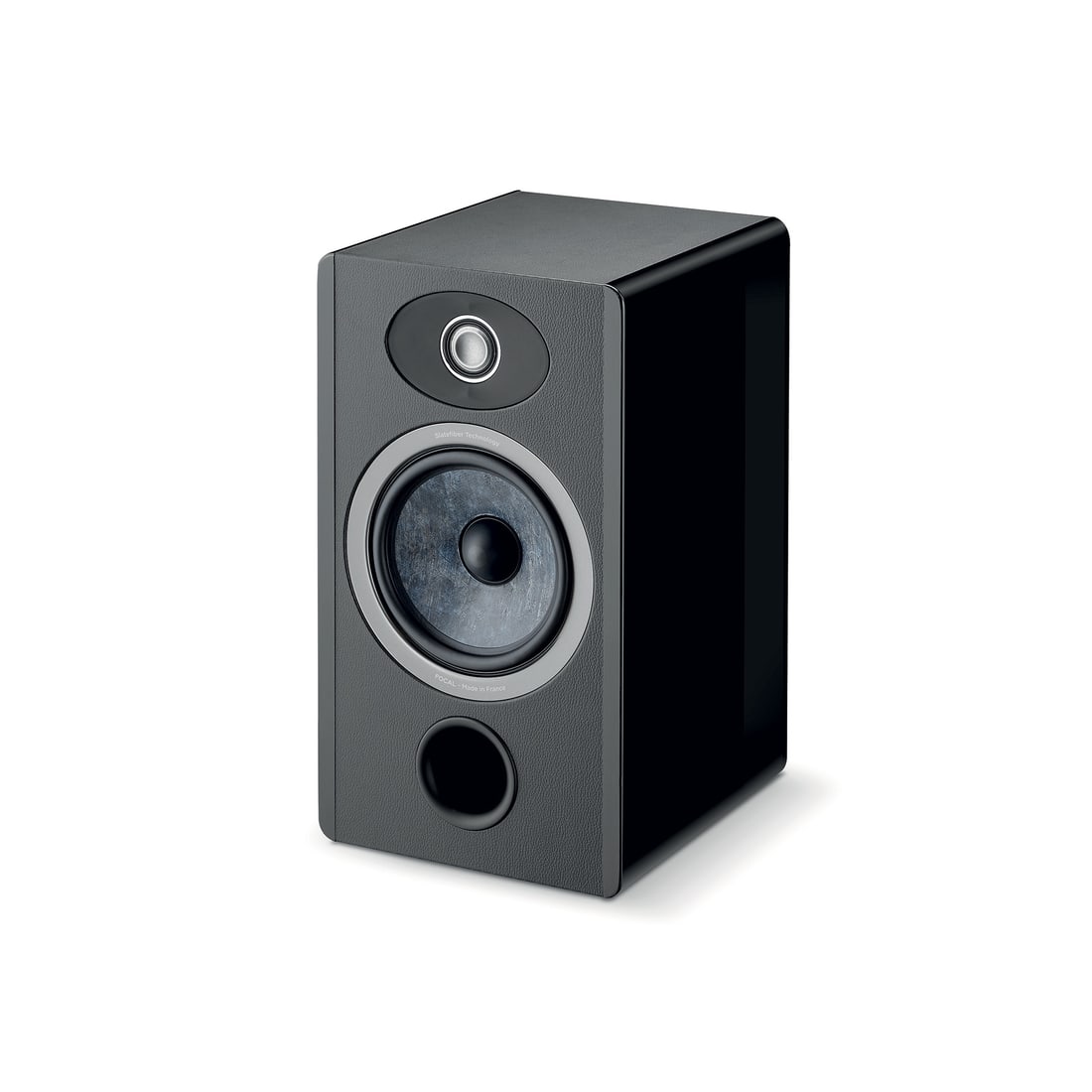
I'll be blunt: I've seen room correction used as a substitute for thinking about speaker placement, and it consistently produces worse results than getting placement right first and correcting second. A standmount speaker that's pulled out from the rear wall far enough to minimise bass boundary reinforcement, toed in correctly for a coherent stereo image, and aimed at ear height will produce a cleaner impulse response than one shoved into a bookshelf and corrected heavily. Software can push the final result further in the right direction, but it can't reverse a fundamentally compromised starting point.
If you're running a pair of standmounts — something like the KEF R3 Meta (check price) or the Bowers & Wilkins 705 S3 (check price) — get them at least 60–80cm from the rear wall, set up the stereo triangle properly, and sort first reflections before you reach for the room correction. The correction then becomes a refinement rather than a rescue operation. That's the right way around.
The honest summary is this: room correction software is the best tool we have for addressing low-frequency room modes without physical renovation, and it pairs well with upstream treatment for mid/high-frequency issues. But it's not magic, and vendors who imply you can skip treatment entirely are overselling. The engineers who build these systems know the limitations. The marketing teams sometimes do not.
— Theo Mensah, Digital, DACs & Streaming Editor
Common questions
- Does room correction software replace acoustic treatment?
- No, and the two work on different problems. Physical treatment removes unwanted reflections and modal energy before it reaches your ears, at any listening position. DSP correction applies filters at a specific measurement point and is most effective in the bass region. Treat first, correct second — the software works better and produces smaller, safer filters when the room is already partially tamed.
- Why can't room correction fix low-frequency nulls?
- A null is a frequency where the direct sound and a room reflection arrive out of phase and cancel. You can't add back energy that physically isn't there — applying a large EQ boost at a null frequency just overloads your amp and drivers without recovering the lost bass. Good correction software like Dirac Live applies a correction floor and won't boost below it.
- Is Dirac Live actually better than Audyssey MultEQ XT32?
- They're doing different things. Dirac Live uses mixed-phase FIR filtering, which can correct both amplitude and timing simultaneously, and typically optimises a single sweet spot. MultEQ XT32 averages across multiple measurements to improve consistency across a wider seating area. For a single-seat critical stereo system, Dirac is generally the stronger tool. For a cinema room with multiple rows, the MultEQ approach has real merit. Neither is universally superior.
- What free tools can I use to measure my room before buying correction software?
- Room EQ Wizard (REW) is the standard starting point — it's free and produces waterfall plots, RT60 measurements, and impulse response data that will tell you exactly where your room's problems lie. You'll need a calibrated USB measurement microphone; the miniDSP UMIK-1 is the most common choice in Australia and costs around $100–$120. Running REW before any correction is the only honest way to know what you're actually dealing with.

Theo here. By day I write software, by night I argue with people on forums about whether bit-perfect playback is "solved" (it mostly is, and then it isn't). I cover the digital end — DACs, streamers, servers, the whole messy ecosystem of getting a file to sound its best. My promise to you: I'll separate the genuine engineering from the audiophile folklore, and I'll never tell you a $500 streaming bridge sounds "blacker" unless I can explain why.
Software engineer; network-audio and DAC specialist
More from Theo Mensah
- Where to spend on a digital front end: the diminishing-returns curve, mappedA software engineer's take on where DAC and streamer money actually buys sound quality, and where the curve goes flat.
 Cartridge alignment: why the last half-millimetre matters more than the cartridgeOverhang, zenith angle and azimuth decide more about vinyl sound quality than the cartridge you buy. Here's the engineering, explained by a digital guy.
- Streamer output stage vs speaker sensitivity: matching the digital front end to your pairYour streamer's output impedance and gain structure interact with speaker sensitivity more than most buying guides admit. Here's how to actually match them.
- Bass management over network audio: why your streamer's DSP matters for subsModern streamers now carry crossover and room EQ duties that used to live in an AVR. Here's what that shift actually changes for your subwoofer.
 Digital source, analogue speakers: why your streamer choice still shapes the pairA DAC engineer's take on why speaker matching starts upstream — how digital volume, output stage and streamer choice interact with standmounts and floorstanders.
- Phono preamp gain and loading, explained by someone who'd rather not own a turntableGain and loading settings on a phono stage aren't optional extras. Here's what they actually do to your cartridge's signal, explained without the mysticism.