When two standmounts beat one floorstander (and when they don't)
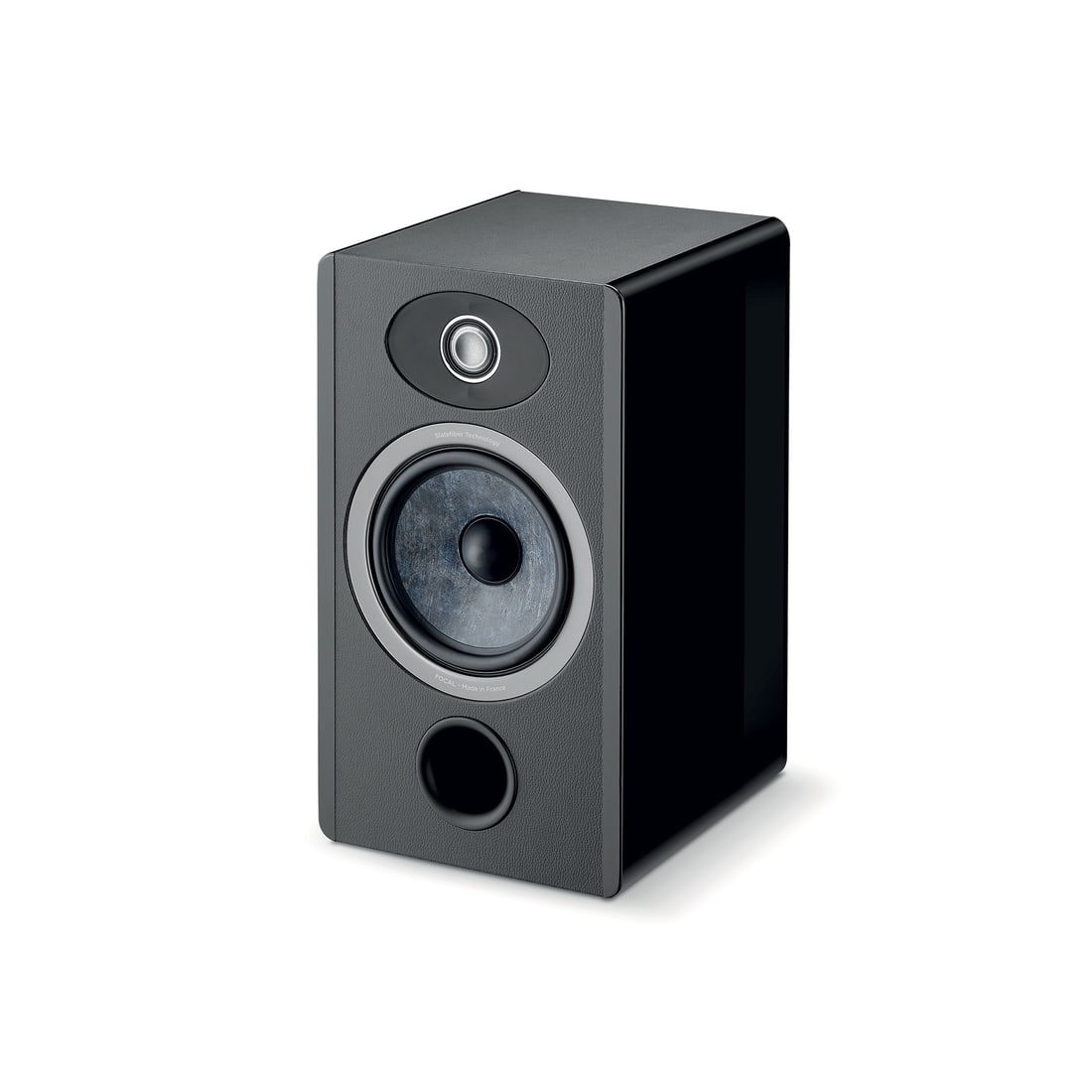
I had a client in Vaucluse last year ask me a question I still think about: "Why would I buy two pairs of small speakers when one pair of big ones does the same job?" He'd priced out a serious floorstander against two pairs of standmounts of similar total cost, plus a stack of stands, and the maths looked mad to him. It doesn't do the same job, though. It does a different job, sometimes better, and the difference has almost nothing to do with driver count and almost everything to do with room geometry.
This isn't a hypothetical for me. I run reference systems for a living and I've swapped between the two approaches more times than I can count, in rooms from a shoebox listening den in Surry Hills to a dedicated 40-square-metre space with proper bass traps in the front corners. The honest answer is that the "two standmounts versus one floorstander" question is really a room and placement question wearing a speaker-shopping disguise.
What you're actually buying with a floorstander
A floorstander gives you more cone area, generally deeper bass extension from a single enclosure, and — critically — a fixed, known relationship between the drivers and the floor. You place it once, you toe it in, and the coupling to the room via the plinth or spikes is part of the design brief from day one. Good floorstander designers voice the crossover and cabinet knowing exactly how close to the floor the woofer sits and how that boundary loading behaves.
The trade-off is that you're locked into whatever bass character that cabinet-and-room interaction gives you. Floorstanders near a rear wall in a smallish room often over-deliver bass in the 60-120Hz range because of boundary reinforcement, and no amount of amplifier quality fixes that. I've heard six-figure floorstanders sound genuinely worse in an average lounge room than a well-placed standmount costing a tenth as much, purely because the big speaker was fighting room modes it had no way of avoiding.
What two standmounts actually change
Here's the bit people miss: a standmount on a proper stand, pulled 40-60cm off the rear wall, is not competing with room boundary gain the same way. You get to choose the coupling. That's the whole point of a stand — mass-loading the cabinet away from the wall so the mid-bass doesn't get boundary-reinforced into mush. We've written before about how stands aren't furniture; the mass and coupling genuinely change what leaves the cabinet (see our guide to the best standmount speakers for serious listening), and rear-wall distance is arguably the single most under-specified number in the whole hobby.
What you lose with standmounts is the bottom octave. Most good standmounts start rolling off somewhere between 45Hz and 60Hz, and no stand trick fixes that — it's driver size and cabinet volume, full stop. So "two standmounts instead of a floorstander" only makes sense if you're either happy losing genuine sub-50Hz extension, or you're adding a subwoofer (or two) to fill it in properly. In my experience the sub route is usually the better one anyway — I'd rather have a pair of small, fast, well-placed subs handling bass than ask a floorstander's built-in woofer to do double duty as both bass driver and room-mode victim.
The imaging argument nobody quantifies well
This is where I'll admit to a mild bias: I think standmounts image better in typical Australian living-room-sized spaces, and I don't think it's close. A smaller cabinet has less baffle to diffract around, the tweeter-to-woofer distance is shorter so the drivers behave more like a point source, and because the whole enclosure is smaller you can get away with wider, more aggressive toe-in without smearing the transition between drivers. We covered toe-in as a free upgrade elsewhere on this site, and it matters more on standmounts because the cabinet doesn't dominate the room the way a 1.2-metre floorstander does.
Floorstanders can image superbly too — I've had a pair of well-engineered three-way floorstanders throw a soundstage that made the room disappear. But it took real work: precise toe-in, careful rear-wall distance, and a room big enough that the tall baffle wasn't creating early reflections off the side walls at ear height. In a smaller room, that same floorstander often sounds more "there," more forward, less like the stage is behind the speaker plane.
Room size is the actual deciding factor
If I had to give a rule of thumb — and I'm hesitant because every room is different — it's this: under about 25 square metres, I lean standmount plus sub(s) almost every time. Above that, and especially in rooms longer than 5 metres with a genuine listening distance past 3 metres, floorstanders start to make more sense because you need the extra cone area and dispersion to fill the space without shouting.
Ceiling height matters too, more than people credit. A floorstander in a room with a 2.4-metre ceiling and a hard floor is going to fight early reflections off the ceiling that a standmount, sitting lower with a more contained vertical dispersion pattern, avoids. I'd argue floor-to-ear-height matching is actually the more overlooked spec — we've covered speaker height and ear level before, and it's just as relevant when you're deciding format as when you're deciding stand height for a standmount you've already bought.
The amp-matching wrinkle
Two standmounts pulling from a healthy integrated amp is usually a gentler load than a floorstander with a complex crossover and an impedance dip down around 3 ohms at some awkward frequency. This is a case where amplifier topology and speaker impedance genuinely interact — a lot of floorstanders present harder loads than their standmount siblings from the same range, because the extra bass driver and larger crossover network add complexity. If you're running something like a Rega Brio Mk7 (check price) or a Cambridge Audio CXA81 MkII (check price), a standmount is often the easier, happier partner. Step up to something with real current delivery — a McIntosh MA352 (check price), say — and the floorstander's harder load stops being a concern.
This is worth thinking through before you fall in love with a particular floorstander at a dealer demo, because dealer rooms are almost always bigger and better treated than a typical home, and the amp on the end is usually the top of the range. Ask what the speaker sounds like on the integrated amp you actually own, in a room the size of the one you actually have. Most won't tell you unhelpfully; a good dealer will actually walk you through the difference. If you're building a system from scratch, our best integrated amplifiers guide is a reasonable starting point for matching amp character to whichever format you land on.
Cost allocation: where the money should actually go
Here's my genuinely contrarian bit, and I'll own it: I think most people buying floorstanders in the $3,000-$6,000 range would get a better-sounding system spending that money on a standmount one tier down plus a proper subwoofer and decent stands. The floorstander tax — paying for cabinet bracing, extra drivers, taller cabinet engineering — buys you convenience and a bit of visual presence, not necessarily better sound in a compact room. A pair of standmounts like the KEF R3 Meta (check price) or Bowers & Wilkins 705 S3 (check price), on solid stands, with a well-placed subwoofer handling the bottom end, will often outperform a floorstander at the same total spend in anything short of a genuinely large room.
That's not a universal truth. If you've got the space and you don't want a subwoofer cluttering the room, a floorstander is the simpler, more elegant single-box solution and a good one will reward you. But "simpler" and "better" aren't the same word, and I think the industry has spent thirty years letting people conflate them because a big speaker photographs better in a lounge room and sells the sizzle at a show.
What I'd actually do
Measure your room before you shop. Actual metres, actual listening distance, actual rear-wall clearance you're willing to live with — most partners have opinions about how far a speaker can sit from the wall, and that number matters as much as any spec sheet. If you're under 3 metres of listening distance and under 25 square metres of floor area, I'd have a serious look at standmounts plus a subwoofer before committing to a floorstander, even if the floorstander is the more obvious purchase on paper. If your room's bigger, or if you genuinely don't want a sub in the mix, the floorstander's single-box simplicity earns its keep.
Either way, don't skip the placement homework. I've watched a $15,000 floorstander get out-imaged by a $1,500 standmount pair simply because someone spent an afternoon getting toe-in and rear-wall distance right on the cheap pair and shoved the expensive one against the wall because it "looked neater." At this end of the hobby the room does at least half the work, and no amount of spending fixes a room you haven't measured.
Common questions
- Can I just add a subwoofer to a floorstander instead of switching to standmounts?
- Yes, and it can work well, but you're now running two bass sources trying to blend below the floorstander's natural rolloff, which is a trickier crossover job than integrating a sub with a standmount that hands off cleanly around 50-60Hz. It's not a reason to avoid floorstanders, just extra setup work most people skip.
- Do standmounts really need stands, or can they sit on a shelf?
- They need proper stands if you want them to sound like they're supposed to. A shelf couples the cabinet to furniture resonance and usually sits the tweeter well below ear height. Mass-loaded stands at the right height, pulled off the rear wall, are part of the design brief, not an optional accessory.
- Is there a room size where the standmount-versus-floorstander question doesn't matter?
- Roughly above 35-40 square metres with a listening distance past 4 metres, both formats can work well and the decision comes down more to aesthetics, bass preference and budget allocation than acoustics forcing your hand.

I'm Sofia, and I get to play with the silly stuff — the statement amplifiers, the reference loudspeakers, the cost-no-object systems that most of us will only ever hear at a show. Someone has to, and I take it seriously: at this level the price stops mapping to performance and starts mapping to engineering, craft and ego, and part of my job is telling you which is which. I love the extreme end of this hobby, but I'm not dazzled by a big number on a price tag.
Covers flagship and cost-no-object reference systems
More from Sofia Laurent
 Negative feedback in amplifier design: the argument that never endsNegative feedback cuts amplifier distortion but divides designers. Here's what it does, why some statement amps avoid it, and what it means for you.
 The synergy tax: why mismatched gear costs more than cheap gearThe synergy tax explained: why pairing mismatched hi-fi components quietly costs more than buying modest, well-matched gear.
- Rear-port floorstanders near a glass wall: a risky pairingRear-ported floorstanders against glass walls cause boundary reinforcement and reflections. Here's how to place, measure and tune them properly.
- Infrasonic bass below 20Hz: chasing the octave you feel, not hearBelow 20Hz is infrasonic bass: felt more than heard. Here's what it takes to reproduce it properly, and whether a statement system should bother.
- Why statement systems still get beaten by the zone two speakerA $150,000 reference system is only as good as the worst-sounding zone it's networked to. Here's why multiroom integration is the statement system's real weak point.
- Why a statement floorstander can be the wrong speaker in the roomSix-figure floorstanders fail in rooms that were never built for them. Here's how to tell if your space can actually support one before you buy.